Technical Knowledge | Plate Failure Analysis | Replacement Parts
Why do plate heat exchanger plates fail after years of apparently reliable service? The answer may involve localized corrosion, cyclic pressure loading, thermal movement, erosive wear, mechanical damage, or a combination of these mechanisms. A leak alone does not identify the failed component. The most useful investigation separates a damaged metal plate from a deteriorated gasket, a wrong plate-pack arrangement, and a process problem that reduces thermal performance without creating a hole.
This engineering guide explains how typical failures develop in gasketed plate-and-frame heat exchangers, what observable evidence can suggest, which inspection methods may be appropriate, and how industrial buyers can specify replacement plates after a confirmed failure. It focuses on practical diagnosis and purchasing decisions rather than providing universal operating limits or repair procedures. The equipment manufacturer's instructions and site safety requirements govern actual servicing.
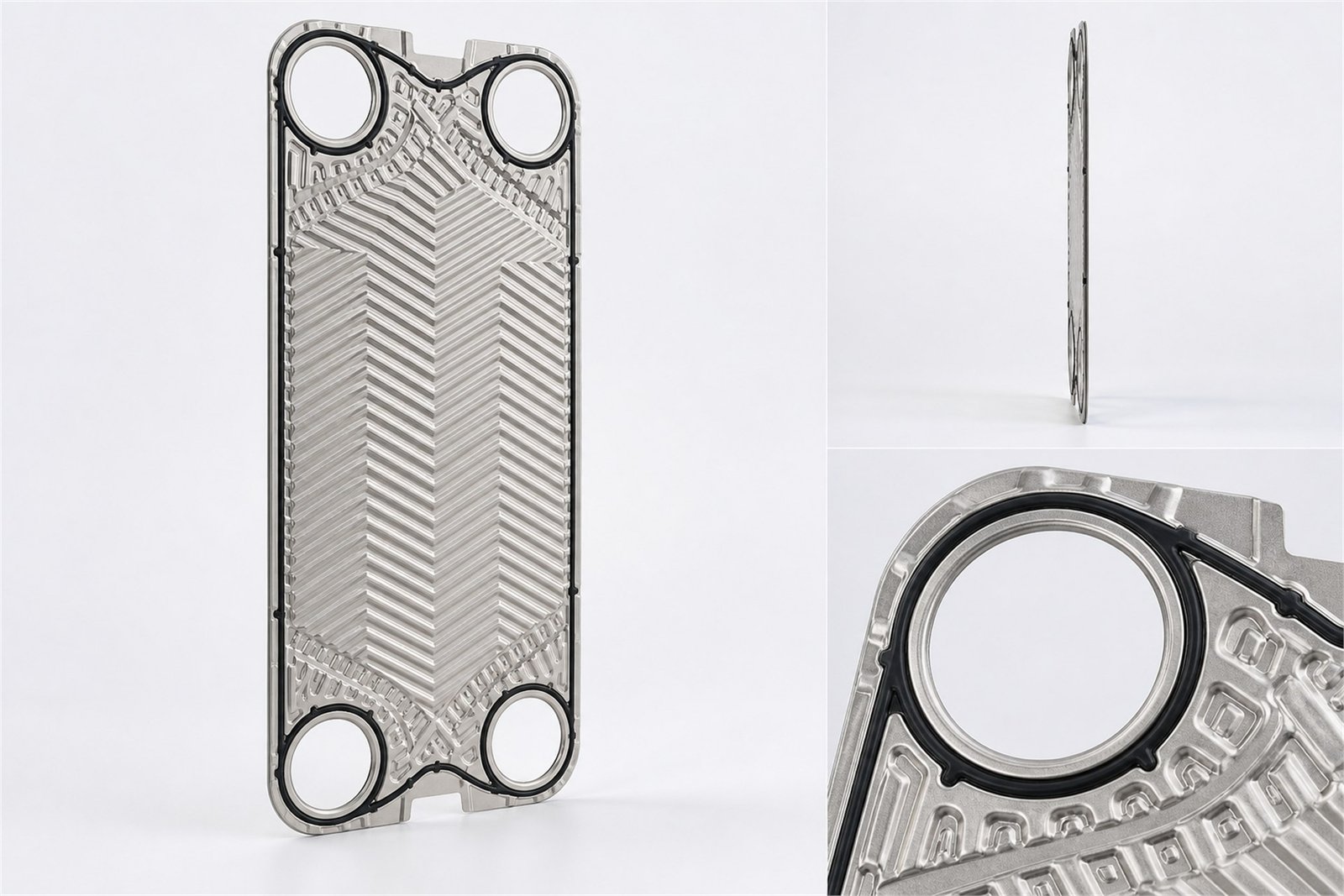
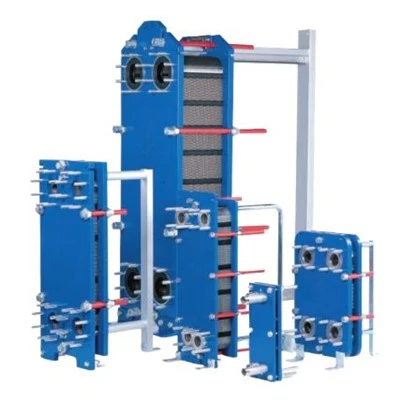
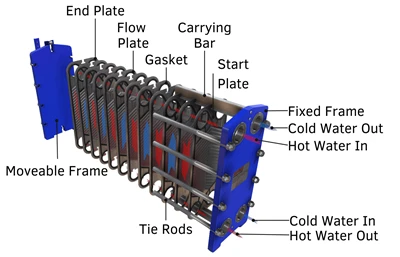
Third-party general plate reference from CHENHE. These are illustrative metal plates, not photographs of proven cracks, pitting or a particular failed customer unit.
In this failure analysis guide- Failure symptoms and leak types
- Pitting and crevice corrosion
- Stress-corrosion cracking
- Fatigue and pressure cycling
- Erosion and mechanical damage
- Plate failure or gasket failure?
- Inspection and leak detection
- Root-cause investigation
- Recondition or replace?
- Replacement plate purchasing
- Technical FAQs
1. Recognize the Failure Symptom Before Naming the Cause
A gasketed plate heat exchanger contains alternating channels separated by thin formed metal plates. Elastomer gaskets seal the outside of the plate pack and direct each medium through its designated passages. When trouble appears, several components can create similar symptoms. Diagnosing a "plate failure" before verifying the leak path can lead to unnecessary plate purchases while the real cause remains unresolved.
External leakage means liquid appears outside the pressure boundary. Common possibilities include gasket deterioration, a dirty or damaged gasket groove, incorrect plate-pack compression, assembly misalignment, a plate-edge defect, or abnormal operating pressure. The location and timing of leakage provide clues but are not conclusive. For example, fluid appearing at a designed leakage detection area may be associated with a particular gasket sealing path, not necessarily a through-wall metal defect.
Internal leakage or cross-contamination means the two process circuits communicate when they should remain separate. A perforation or fatigue crack in the metal plate is an important possibility. The actual flow direction depends on differential pressure and operating conditions. Certain sealing or port-gasket faults may also need consideration depending on the exchanger design. Unexpected product dilution, contamination, chemistry changes, or pressure anomalies can be signs requiring prompt investigation.
Reduced heat-transfer performance is different from loss of containment. Fouling deposits, insufficient flow, an incorrectly reassembled plate pack, changed process conditions or hydraulic restrictions can reduce the achieved duty without a cracked plate. A rise in pressure drop can likewise result from blockage or scaling rather than metal fatigue. Review operating trends before ordering plates based only on a temperature deviation.
| Observed Symptom | Possible Causes | Information to Collect |
|---|---|---|
| Visible external dripping | Gasket aging or displacement, groove damage, compression or assembly problem, localized plate damage | Leak location, fluid identity, pressure history, last maintenance date |
| Media mixing between circuits | Plate pinhole, corrosion perforation, fatigue crack, model-dependent sealing fault | Fluid analysis, pressure differential, circuit history, integrity-test requirement |
| Repeated leaks after regasketing | Groove distortion, incorrect gasket profile, wrong plate arrangement, cracked plate, uncorrected operating upset | Plate and gasket identification, assembly record, closing dimension |
| Falling thermal performance | Fouling, reduced flow, incorrect pass arrangement, changing duty, other heat-transfer restrictions | Flow, inlet/outlet temperatures, pressure drop and trend records |
| Failures in similar positions | Localized chemistry, pressure pulses, thermal cycling, contact stress or repeated mechanical damage | Position map, failed-plate photographs, event history and material evidence |
Safety priority: Suspected cross-contamination, uncontrolled leakage or abnormal pressure may require immediate action under the plant's approved emergency and isolation procedures. Diagnosis and opening of pressure-containing equipment are tasks for qualified personnel, not instructions to attempt while the unit is operating.
2. Pitting and Crevice Corrosion: Small Attacks with Serious Consequences
How pitting can perforate a thin plate
Stainless steels rely on a protective passive film for corrosion resistance. Under sufficiently unfavorable service conditions, localized breakdown of that film may create pits. A pit occupies a small surface area but can penetrate deeply. In a thin heat-transfer plate, a localized attack can eventually form a through-wall pinhole without the widespread uniform thinning associated with general corrosion. The failure may become apparent as cross-contamination between the two fluids.
Chloride exposure is an important factor for many stainless steels, but chloride concentration alone does not determine service life. Temperature, pH, oxygen availability, oxidizing chemicals, stagnant locations, deposits and cleaning practice can change local corrosion behavior. A material acceptable for one cooling-water circuit might perform poorly in another circuit with a different chemical environment or higher temperature.
Why a crevice behaves differently from bulk liquid
Crevice corrosion may occur in restricted spaces where local chemistry becomes different from the bulk fluid. Examples include areas under deposits, poorly flushed interfaces or other creviced geometries. The presence of a gasket groove does not automatically prove crevice corrosion, but its geometry and the surrounding deposits should be considered during an investigation. Where corrosion repeats near a sealing or distribution region, the investigator should review the actual flow path and maintenance history.
It is important to differentiate true corrosion damage from simple fouling. A brown deposit on the plate does not, by itself, establish that the base metal has been attacked. Cleaning and examination may reveal an intact surface underneath or expose a pit that was previously hidden. Avoid aggressive scraping that could create additional damage or erase useful failure evidence before it is documented.
What corrosion evidence should a buyer preserve?
- Both-side photographs showing pit distribution, original orientation and the installed plate position.
- Original plate material and thickness, backed by markings or documents where possible.
- Normal and upset fluid chemistry, including chlorides, pH, temperature and process additives.
- Water treatment, filtration, shutdown periods and stagnant-service history.
- Cleaning chemical identity, concentration, exposure conditions and deviations from the approved procedure.
Replacing an extensively pitted plate with another plate of the same material may restore the geometry but leave the corrosion mechanism unchanged. The service environment, material selection and treatment program may need technical review before repeat purchases are approved.
3. Stress-Corrosion Cracking Is Not the Same as Ordinary Pitting
Stress-corrosion cracking, often abbreviated SCC, occurs when a susceptible material experiences a suitable combination of tensile stress and corrosive environment. The tensile stress can be externally applied or residual from manufacturing and forming. In certain stainless-steel applications, particular chloride-containing environments are associated with SCC risk. The exact susceptibility depends on material grade, temperature and chemistry; a broad statement that all chloride exposure causes cracking would be incorrect.
Plate heat exchanger plates contain formed corrugations, distribution zones and sealing features. These shapes are created by plastic deformation, and operating loads can also produce local stress concentrations. However, the location of a crack is not enough to establish its mechanism. A crack at a formed corner might be associated with cyclic loading, a prior forming defect, chemical exposure or a combination. A technical failure investigation may require crack-surface examination and metallurgical analysis before a root cause can be stated confidently.
Intergranular corrosion and other metallurgical damage mechanisms may also be relevant under particular conditions. They should not be diagnosed from color or appearance alone. If multiple suspected mechanisms exist, record them as hypotheses and obtain appropriate evidence instead of converting an assumption into a firm purchasing requirement.
Evidence that raises an SCC question
Cracks in a susceptible metal exposed to an aggressive environment, especially where temperature and tensile stress may be relevant. The actual crack morphology and chemistry still require examination.
Evidence that is insufficient by itself
A narrow line, an isolated leak, a chloride reading or a cracked gasket cannot independently prove SCC. They are starting points for a competent inspection rather than a final diagnosis.
If SCC is confirmed, replacing the failed plate alone may be insufficient. Possible corrective actions can include revisiting material specification, chemical conditions, cleaning methods and operating loads, subject to a qualified engineering assessment. No alloy should be described as universally immune to all corrosion-assisted cracking mechanisms.
4. Fatigue Cracks from Repeated Pressure and Temperature Cycles
Fatigue results from repeated or fluctuating loading. A metal component may accumulate damage under cyclic stress, even when an individual operating event does not exceed the equipment's nominal pressure rating. In a gasketed heat exchanger, pressure fluctuations, repeated startup and shutdown, thermal transients and local mechanical loading can be relevant to service life. The cycle amplitude, number of cycles, temperature, material, plate geometry and support conditions all matter.
A pump start, rapid valve action or other transient event may create pressure variations that are not obvious from a slowly sampled operating log. A sudden thermal change may also produce differential movement between components. This does not mean every pump start or temperature cycle is harmful; the significance depends on the actual equipment and transient conditions. Maintenance teams should avoid attributing fatigue to a single event without evidence.
Where can cyclic damage begin?
Potentially vulnerable locations include high-stress forming transitions, repeated contact regions, ports, support features and pre-existing surface damage. A deep scratch may act as a local stress concentration. Corrosion pits can likewise provide crack-initiation sites, allowing corrosion and fatigue to interact. Corrosion fatigue describes this combined influence and can be more difficult to diagnose than isolated mechanical fatigue.
Incorrect assembly may contribute to abnormal loading. If the plate sequence, frame alignment or manufacturer-specified closing dimension is wrong, the intended contact and sealing conditions may change. Conversely, evidence of a failed plate does not prove that assembly was wrong. An investigation should compare the actual plate pack and service history with the approved model-specific documentation.
Which operating records are useful?
- Pressure and temperature trends on both fluid circuits, including the fastest available event records.
- Frequency and sequence of starts, stops, valve changes, pump switching and emergency shutdowns.
- Fluid hammer complaints, unexpected vibration or process control instability.
- Locations and quantities of failed plates across successive maintenance events.
- Approved plate arrangement, gasket installation and frame closing information.
Corrective measures might involve process-transient control, suitable equipment review, approved reassembly procedures or a material and plate-design assessment. Replacing cracks with otherwise identical parts while ignoring repeated loading can lead to another failure. The solution must address the demonstrated cause, not simply the visible hole.
5. Erosion, Cleaning Damage and Mechanical Deformation
Not every thin area is caused by electrochemical corrosion. Certain services contain abrasive solids, entrained particles or high local velocities. Under such conditions, erosive wear or erosion-corrosion may damage a metal surface, particularly around inlet regions or areas of intense flow redirection. The presence of erosion must be evaluated using the actual process fluid, velocity distribution and damage pattern. It cannot be established merely by finding a hole near a port.
Deposits may also cause trouble indirectly. Scale can increase thermal resistance and hydraulic loss; aggressive removal can then damage the metal if the cleaning method is unsuitable. Harsh mechanical brushing, abrasive tools or incompatible chemicals can scratch a plate or attack its passive surface. For stainless steel, contamination from ordinary carbon-steel tools may increase later corrosion risk. Cleaning should follow a verified procedure appropriate to the actual alloy, gasket system and fouling composition.
Mechanical deformation is a separate failure category. Bent plate corners, distorted gasket grooves, damaged hanging points or flattened corrugations can occur during handling, transportation, assembly or abnormal service. A deformed plate may still look mostly intact but fail to compress or seal as intended. Inappropriate frame tightening or mismatched plate variants can also create unfavorable contact conditions.
Cleaning caution: Do not copy a generic acid concentration, cleaning temperature or immersion time from an unrelated installation. A cleaning agent that removes one deposit may be unsuitable for another alloy or gasket. The approved procedure must consider chemical compatibility and handling safety.
6. Is the Metal Plate Damaged, or Is the Gasket Leaking?
A damaged gasket and a perforated plate can both cause a plant shutdown, but they demand different corrective actions. Gasket aging may be associated with heat exposure, chemical incompatibility, compression set, swelling, damage or an unsuitable attachment method. A groove contaminated with deposits or adhesive remnants may prevent proper seating even when the gasket itself is new. Gasket extrusion or visible displacement can also reflect operating transients or assembly problems.
Plate failure is more likely to require replacement when a confirmed through-wall pinhole, crack or unacceptable deformation affects the component. Replacing gaskets alone will not restore the metal barrier between two circuits if the plate is perforated. On the other hand, buying a complete new metal pack to solve a simple gasket installation error would not be a well-supported response.
Leak location provides clues but is not a perfect test. External leakage at a seal or detection groove can indicate gasket-related trouble. Internal mixing can raise concern about a plate crack or pinhole, although the complete sealing and port arrangement must be considered. Pressure, chemistry and process trends should be evaluated before deciding which parts are responsible.
Possible gasket-related findings
Rubber swelling or hardening, physical displacement, incomplete gasket seating, adhesive failure, incorrect compound, damaged retention points or contamination in the groove.
Possible metal-plate findings
Verified through-wall pit, surface-breaking crack with relevant depth, mechanically distorted sealing region, severe section loss or a damaged port that prevents correct assembly.
The repair decision should follow qualified inspection and the original equipment requirements. A gasket renewal may be appropriate for a sound plate pack; a damaged pressure-separating plate needs a different engineering decision. For compatibility checks, see our replacement gasket category and replacement heat exchanger plate category .
7. How Are Plate Cracks, Pinholes and Leakage Investigated?
Inspection starts with safe isolation and a documented plan. Depending on the fault and equipment, a qualified service provider may use visual examination after appropriate cleaning, dimensional checks, light-transmission inspection, dye-penetrant examination or an approved leak-integrity test. Different methods detect different defect types; no one method is guaranteed to find every flaw.
Visual and dimensional examination
Visual inspection can document corrosion deposits, pits, scratches, mechanical deformation and gasket condition. It is also useful for preserving the plate's installed position, orientation and suspected leak area. Measurements can identify a mismatch against the original geometry or an abnormal gasket groove. However, visual inspection cannot reliably exclude all fine cracks and microscopic leaks.
Dye-penetrant testing
Where suitable, liquid penetrant examination may help reveal surface-breaking defects. Proper surface preparation, test chemistry, exposure conditions and interpretation are part of the method. The method is not simply a universal proof that a plate is free of through-wall defects. Requirements, coverage and acceptance criteria should be agreed with the inspection provider.
Integrity testing and circuit isolation
Specialist integrity testing may be used to investigate leakage between circuits without assuming that the component causing the leak is already known. Available methods depend on the exchanger and service provider. Alfa Laval, for example, describes engineered integrity-testing services for identifying small leaks associated with plate damage. Such services are useful references for what can be investigated, not evidence that every supplier offers identical testing.
Pressure-containing tests must follow approved equipment and site procedures. This article does not give a universal test pressure, gas mixture, holding period or pass/fail criterion. Unauthorized pressure testing or improvised leak detection can be hazardous and can damage equipment.
| Method or Evidence | What It May Help Establish | Key Limitation |
|---|---|---|
| Visual examination | Visible damage, deposits, deformation and location | Cannot exclude invisible defects |
| Dimensions and profile comparison | Model geometry, ports, groove and forming differences | Does not alone confirm material condition or leak tightness |
| Light-based plate examination | Selected through-wall defects in suitable thin plates | Sensitivity depends on setup and defect location |
| Liquid penetrant examination | Surface-breaking discontinuities under a suitable procedure | Not a universal integrity certificate |
| Specialist leak-integrity test | Possible circuit leakage or small leak paths | Requires approved equipment-specific method |
| Fluid chemistry analysis | Evidence of mixing and potential corrosive exposure | Does not identify the exact failed plate by itself |
8. Root-Cause Analysis: Move from a Damaged Plate to an Explained Failure
A useful failure report separates observation, possible mechanism and confirmed cause. "There is a small perforation near one corner" is an observation. "It may be caused by pitting corrosion" is a hypothesis. Confirming corrosion requires supporting material, environmental and examination evidence. The distinction matters because a replacement order based on an unproven hypothesis may select the wrong material or fail to control the actual operating problem.
Record the unit, plate position, symptom, photographs and process event.
Separate plate damage, gasket faults, fouling and assembly concerns.
Compare findings with chemistry, pressure, temperature and cycling history.
Agree replacement and actions to address the demonstrated cause.
Review whether damage is isolated to one location or repeated across many similar plates. A single plate damaged in handling presents a different pattern from perforations repeatedly found in the same flow-distribution zone. Repetition can help define where to investigate, but the pattern is not automatically proof of a particular failure mechanism.
Preserve physical samples where practical. Cleaning should not erase pit morphology or crack surfaces needed for analysis. Record the dates of previous regasketing and plate replacement, and compare the present stack with the approved plate arrangement. A change in fluid chemistry or cleaning formulation since the original equipment purchase may be just as important as an old metal specification.
When the consequence is high, a specialist materials laboratory may examine crack surfaces, corrosion products or metal composition. The level of investigation should reflect the service risk, available evidence and economic significance of repeat failure. A sound report records uncertainty rather than manufacturing a confident answer from insufficient data.
9. Clean, Regasket, Recondition or Replace: Which Decision Fits?
Not every maintenance problem justifies new metal plates. A fouled but structurally sound plate may be suitable for cleaning using the approved method. A sound plate with a deteriorated gasket may be suitable for regasketing where the equipment design allows it. Reconditioning can combine cleaning, appropriate inspection and gasket renewal. These activities still require inspection of the plate's sealing surfaces and suitability for reuse.
A plate with confirmed through-wall corrosion, unacceptable cracking or major deformation normally requires replacement or another formally approved engineering disposition. It should not be described as restored merely because a new gasket is installed. Welding, drilling, re-punching or bending thin replacement plates in the field should not be treated as routine repair options.
| Condition | Possible Service Path | Important Confirmation |
|---|---|---|
| Fouling without metal damage | Engineering-approved cleaning | Correct deposit diagnosis, chemical compatibility, inspection after cleaning |
| Worn gasket, sound metal plate | Regasketing or authorized reconditioning | Correct elastomer, attachment method, groove condition and assembly |
| Confirmed pinhole or through-wall crack | Replacement or documented engineering disposition | Failure cause, exact plate type, correct port and gasket configuration |
| Multiple corroded or fatigue-damaged plates | Plate-pack renewal assessment and root-cause work | Complete arrangement, material, operating duty, frame condition |
| Leak after rebuilding, defect uncertain | Targeted inspection before ordering | Gasket placement, sequence, pressure history, appropriate integrity checks |
Removing damaged plates from a pack without an approved redesign is not a universal substitute for replacement. Changing plate count can affect flow area, pressure drop, heat-transfer duty, frame closing dimension and overall assembly requirements. Any such change must follow the equipment-specific engineering procedure.
10. How to Specify Replacement Plates After a Failure
Once the damaged component and replacement scope are established, purchasing needs a model-specific specification. A request such as "50 stainless steel plates for an old heat exchanger" is inadequate if the equipment includes different port patterns, special end plates or multiple pressing variants. The original brand, full model and suffix should be retained exactly. Similar model names are research leads, not proof of interchangeability.
The replacement plate should be compared for outer length and width, horizontal and vertical port-center distance, actual openings, hanging features, corrugation profile, channel depth, gasket groove, alloy, thickness and installed plate position. Where the original identification is uncertain, a carefully labeled physical sample or drawing may be required.
For a failure-related purchase, add information that may not appear on an ordinary spare-parts request: location of damage, suspected or confirmed mechanism, operating chemistry, normal and upset temperatures, pressure fluctuations, cleaning history and any proposed material change. These details help prevent the purchase of an apparently identical part that is unsuitable for the underlying service.
| RFQ Field | What the Buyer Should Send | Why It Matters |
|---|---|---|
| Equipment identity | Brand, full model, suffix, serial and nameplate image | Distinguishes similar frames and model generations |
| Plate identity | Markings, both-face photos, geometry, port code, pack position | Identifies the actual plate variant |
| Material and thickness | Original grade, sheet thickness, supporting evidence, proposed change | Supports mechanical and corrosion review |
| Failure information | Leak type, visible defect, location, corrosion photos and investigation status | Highlights unresolved risks of repeat damage |
| Process conditions | Both fluids, temperature, pressure, pressure cycles, cleaning agents | Supports material and gasket suitability |
| Order quantities | Count by channel, end, turning or special plate configuration | Avoids shipment of the wrong plate mix |
| Associated parts | Gasket compound, attachment design, corresponding quantities | Ensures sealing compatibility |
| Commercial details | Destination, delivery date, packing and agreed inspection records | Defines a verifiable procurement scope |
Material substitution is a separate engineering decision. Moving from 316L stainless steel to titanium or 254 SMO, for example, cannot be justified by saying the replacement is "more corrosion resistant" in every medium. The full chemical environment, metal grade, plate geometry, forming feasibility, gasket material and actual duty require review.
Compare the approved quotation and received shipment against the same master specification. Confirm model codes, dimensions, batch identification where ordered, plate orientation and gasket requirements. If any critical difference remains unresolved, obtain technical clarification before fitting the components.
11. Preventing Repeat Plate Failures: Maintenance and Operating Controls
Prevention starts by controlling the conditions that caused or contributed to the first failure. A chemistry-related issue may require better fluid monitoring, water treatment or material selection. A fatigue-related issue may call for a review of pressure transients, operating sequences and equipment design. A handling-related issue may need revised plate cleaning, storage and installation practices.
Keep trend records for pressure, temperature, flow rate and thermal performance, together with water analyses and cleaning records where relevant. Compare values with the approved equipment envelope rather than inventing a generic safe operating threshold. Investigate unusual pressure-drop changes and repeated leaks, but remember that a restriction, a gasket fault and a perforated plate demand different responses.
Scheduled inspection can help detect emerging surface damage, gasket deterioration or pack misalignment, but maintenance intervals depend on process risk and equipment condition. The manufacturer and site engineering team should determine the appropriate inspection scope. For high-consequence applications, a planned spare-plate strategy may reduce downtime when confirmed plate failure occurs.
Record approved model variants, gasket types, plate positions, materials, purchase history and observed failure mechanisms in the plant's spare-parts database. Avoid merging codes from competing aftermarket catalogs without verification. This makes the next procurement faster while preserving the engineering distinctions that protect equipment compatibility.
12. Frequently Asked Questions About Plate Heat Exchanger Plate Failures
What is the most common cause of plate heat exchanger leakage?There is no single universal cause. External leakage can involve aging or incorrectly fitted gaskets, groove damage, pack compression or mechanical problems. Internal leakage can raise concern about a plate crack or pinhole. The leak path and equipment history must be investigated before assigning a cause.
Can corrosion create a pinhole through a stainless steel plate?Yes. Localized corrosion such as pitting can penetrate a thin plate and create a through-wall defect under sufficiently unfavorable conditions. Susceptibility depends on alloy, chemistry, temperature, deposits and other service factors. Chloride content alone does not prove that a particular failure was pitting.
How do fatigue cracks develop in heat exchanger plates?Repeated mechanical or thermal loading can initiate and propagate cracks in susceptible areas. Pressure pulsations, temperature cycling, local stress concentrations and existing surface damage may contribute. A full assessment is needed to distinguish mechanical fatigue from corrosion-assisted cracking.
Does a leaking plate heat exchanger always need new metal plates?No. Some leakage is caused by gaskets, groove condition or assembly issues. Metal plate replacement is considered when a plate has a confirmed unacceptable defect, such as a through-wall crack, pinhole or major deformation. The correct choice follows inspection and the equipment's approved service procedure.
Can dye penetrant detect every crack or pinhole?No. Suitable liquid penetrant testing may reveal surface-breaking discontinuities under a defined procedure, but it has limitations. Different inspection or integrity-testing methods may be needed depending on the defect type, equipment and required acceptance criteria.
Why might the same plate position fail repeatedly?Repeated damage in one area may point toward a localized operating environment, load concentration, flow condition, assembly problem or handling process. It is an important investigation clue, not proof of a single mechanism. Preserve the plate positions and compare incidents with operating and maintenance records.
Is titanium a guaranteed solution to seawater corrosion?No material should be presented as universally resistant to every fluid. Titanium is a valuable option for many seawater duties, but grade, complete chemical composition, temperature, contaminants and cleaning conditions must be checked alongside the specific plate design.
Can damaged plates simply be removed to stop a leak?Removing plates changes the assembled configuration and may change flow area, thermal performance, pressure drop and required compression. It should not be done as a generic workaround. Any change must follow an approved engineering review and model-specific instructions.
What information helps identify a failed replacement plate?Send the full equipment nameplate, plate markings, photographs of both faces, defect location, dimensions, port centers, gasket groove, material, thickness, process conditions, quantity and destination. Include the original plate arrangement drawing or a labeled sample if available.
Related Replacement Plates, Gaskets and Technical References
Aftermarket plate selection combines physical matching with an understanding of how the original equipment operates. The product categories below provide starting points for model-family research and a technically complete replacement inquiry. Third-party brand names identify existing equipment and do not imply affiliation or original-manufacturer authorization.
Engineering reference basis
This article draws on technical topics in the PHE SERVICE project knowledge collection concerning corrosion mechanisms, plate cracks, leakage and maintenance, cross-checked with published industry guidance. Useful external background includes Alfa Laval's plate exchanger troubleshooting overview , its reconditioning and inspection explanation , and the integrity testing overview . Those manufacturers' methods and service capabilities are not claims about what PHE SERVICE has performed on a particular order.
Technical RFQ | Failed Plate Identification & Replacement
Request a Replacement Plate Review After Corrosion, Cracking or Leakage
Send the exchanger brand, full model and suffix, equipment nameplate, photographs of the affected plate, plate position, material and thickness, port dimensions, gasket requirements and required quantity. Include both process fluids, temperature and pressure history, cleaning conditions, observed failure symptoms and destination country. If a failure mechanism is still uncertain, describe it as unconfirmed rather than guessing.
We can review the information required for an independently sourced replacement plate and gasket quotation. Actual suitability, supply options, documentation and any requested testing are subject to order-specific technical confirmation.
Send Failed Plate Details & Request Quote