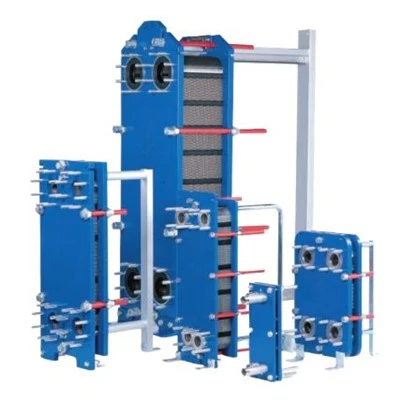
Tranter GC Series
Tranter GC16
Tranter GC26
Tranter GC51
 English


Tranter Replacement Plates | Independent Aftermarket Components
We support replacement heat-transfer plate enquiries for identified Tranter gasketed plate heat exchangers, including selected GC, GX and GL series configurations. Plate matching considers the complete exchanger model, pressed corrugation, port layout, plate orientation, sealing groove and material specification.
GC, GX and GL plate designs may have different flow-channel characteristics. Plates with similar model numbers or outside dimensions are not necessarily interchangeable. We review the existing plate pack and operating conditions before confirming a replacement option.
Stainless steel, titanium and selected special-alloy requirements can be evaluated for compatible configurations. Send your exchanger nameplate, plate markings, photographs or drawings for technical identification and quotation.
Request Tranter Plate Matching & Quote
Replacement plate reference for Tranter gasketed plate heat exchangers.
Historical Tranter replacement plate references include GC, GX and GL series designations. These names help identify existing gasketed plate heat exchangers, but do not establish that every model, material or configuration is currently available for replacement.
Tranter GC16
Tranter GC26
Tranter GC51
Tranter GX16*
Tranter GX18
Tranter GX26
Tranter GX42
Tranter GX51
Tranter GX60
Tranter GX64
Tranter GX85
Tranter GX91
Tranter GX100
Tranter GX145
Tranter GL13
Additional model references in our historical technical database include GC8, GX12, GC60, GX140 and GX205. These identifiers can also be reviewed when the original equipment information is provided.
Model identification note: The GX16 designation above is retained from a historical product list and requires confirmation against the original nameplate or plate markings. Tranter model numbers may also appear with leading zeros or prefixes in different catalogs. Do not remove suffixes or assume matching numbers represent interchangeable plates.
The required replacement depends on the exact pressed pattern, gasket groove, port arrangement, orientation and existing plate-pack design.
For uncertain equipment, a nameplate photograph and an original plate sample can help distinguish visually similar models before a quotation or production decision.
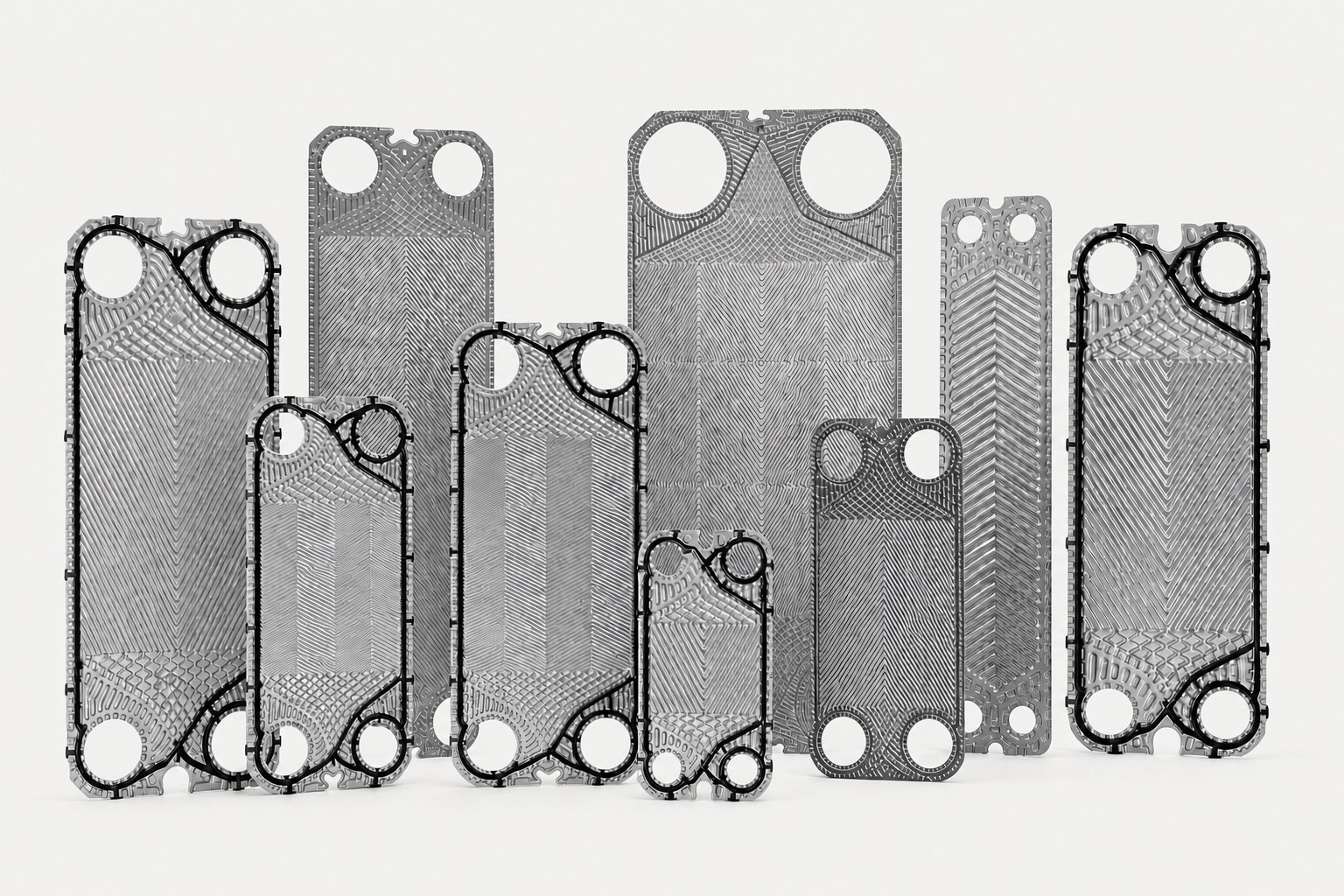
General replacement plate and gasket family reference.
Tranter plate series use different channel geometries to address thermal and hydraulic requirements. Understanding the original series is essential when matching replacement plates.
GC conventional plates include corrugated channel designs used in selected low-pressure-drop and industrial heating or cooling duties. Certain GC configurations use same-side flow arrangements.
Verify the exact pressing depth, channel pattern, ports and gasket groove for the model.
GX plate designs include configurations that can combine different chevron patterns for the required heat-transfer and pressure-drop characteristics. Diagonal-flow arrangements occur in applicable GX designs.
Check plate orientation, flow configuration and the original channel pairing.
GL plates use chevron-style corrugations with different angle characteristics across suitable designs.
Plate selection balances heat transfer, hydraulic resistance and the requirements of the installed equipment.
A common purchasing mistake is to treat GC26 and GX26 as the same replacement because both contain the number 26. However, published dimensional references identify different channel pressing depths for these model families.
Similar differences may occur between GC51 and GX51 or GC60 and GX60. Even when the general plate size is close, corrugation depth and flow-channel configuration can differ.
Compatibility warning: GC, GX and GL plates are not universally interchangeable. Confirm the full model and the exact pressed geometry before approving a replacement plate. Never select an alternative solely from its nominal area or model number.
Match plate length, width, edges, hanging features and support points.
Check port diameters, opening patterns, closures and center distances.
Confirm corrugation angle, depth, contact points and flow-channel geometry.
Match groove geometry, port-ring sealing paths and retaining features.
Identify channel, turning, start or end plates where applicable.
Confirm the alloy, sheet thickness and original design requirements.
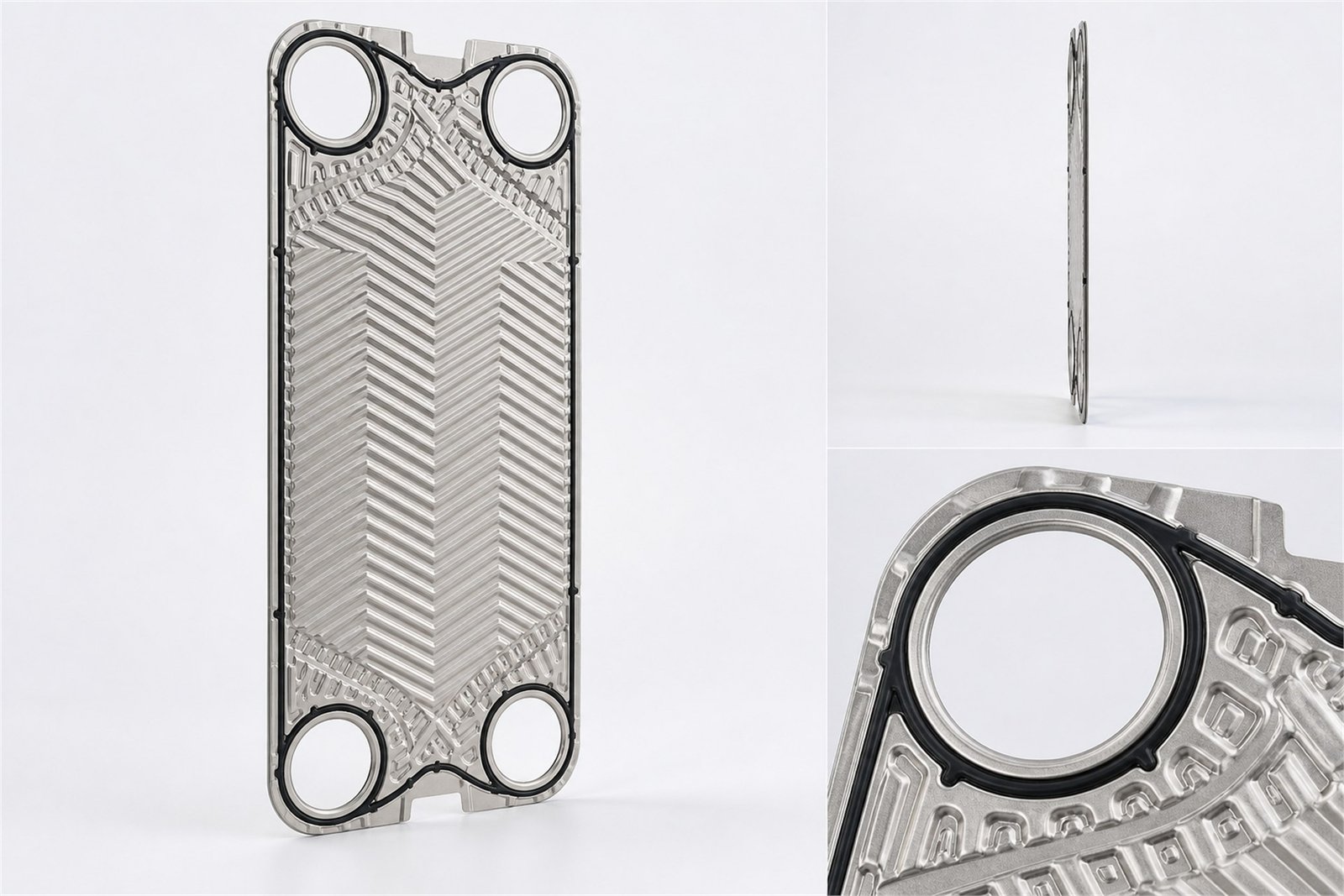
Reference plate geometry: outlines, ports and corrugation patterns.
Dimensions: Overall plate length and width must not be confused with HC and VC port-center dimensions. Record the measurement points, units and plate orientation.
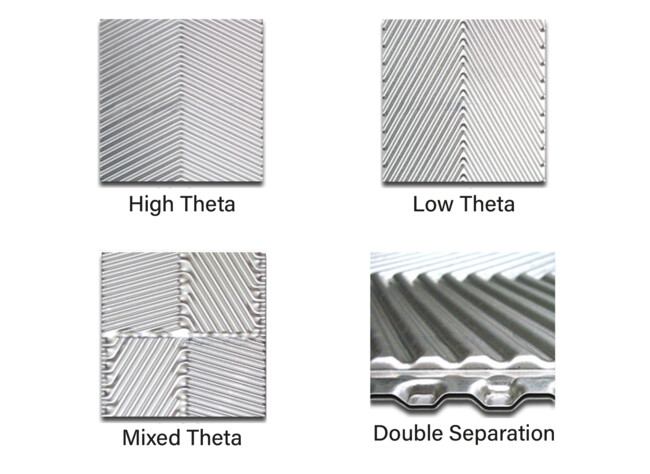
General chevron plate and flow-channel reference.
Chevron corrugations influence fluid turbulence, heat transfer and pressure drop. Different channel combinations can be used to meet specific operating requirements.
High-theta configurations generally encourage stronger flow disturbance and heat-transfer intensity, often with greater hydraulic resistance.
Low-theta configurations generally favor reduced flow resistance under comparable conditions, although the actual performance remains design-specific.
Certain Tranter GX Ultraflex designs allow different plate pairings for high, medium or low thermal-resistance combinations. The actual configuration must match the intended plate-pack design.
In a same-side arrangement, the relevant fluid inlet and outlet are located on the same side of the plate layout. The exact port configuration is equipment-specific.
In a diagonal arrangement, a fluid travels between selected ports located on opposite sides of the plate. Plate handedness and port punch patterns may differ.
Design caution: Plate rotation, chevron pattern changes and flow-arrangement changes must follow the model-specific assembly drawing. A visually similar plate cannot be substituted without checking thermal and hydraulic compatibility.
Replacement plate material depends on fluid chemistry, temperature, corrosion conditions, pressure and cleaning requirements. Historical material references are useful for enquiries but do not confirm that every alloy is available for every Tranter model.
| Material | Selection Context | Required Verification |
|---|---|---|
| AISI 304 / 304L | Suitable industrial water and utility duties where the specified stainless steel grade is compatible. | Fluid chemistry, chlorides, operating temperature and cleaning chemicals. |
| AISI 316 / 316L | Process and utility duties requiring an appropriate molybdenum-bearing stainless steel. | Chloride exposure, pH, temperature, corrosion history and exact grade. |
| Titanium | Considered for suitable seawater and certain chloride-bearing cooling applications. | Complete fluid chemistry, titanium grade, temperature and cleaning regime. |
| Titanium-Palladium | Specialist alloy reference for particular corrosion conditions. | Exact alloy specification, chemical environment and model-specific feasibility. |
| SMO254 | High-alloy stainless steel considered for selected demanding environments. | Corrosion requirements, exact material grade and forming capability. |
| Hastelloy C-276 | Nickel-alloy reference for selected chemically aggressive process duties. | Chemical concentration, temperature, exact grade and production feasibility. |
Material substitution: Titanium or another alloy is not an automatic replacement for stainless steel. The original plate geometry, both fluids, gasket material and mechanical design must be reviewed together.
The historical product record contains broad plate-family specifications. These figures are not model-specific engineering approvals or guaranteed limits for all GC, GX or GL plates.
| Parameter | Historical Reference | Model-Specific Check |
|---|---|---|
| Plate Thickness | 0.5 / 0.6 mm | Confirm exact thickness and pressure-design requirements. |
| Corrugation Depth | 3–5 mm | Verify the original groove and channel geometry. Some plate designs fall outside this broad range. |
| Heat Transfer Area | 0.01–1.8 m² | Confirm effective area for the exact plate. Larger model references may have different values. |
| Port Diameter | DN30–DN450 | Confirm the actual port opening and nominal size. |
| Plate Dimensions | Model-specific | Measure outside length, width and hanging features. |
| Port Center Spacing | HC / VC where defined | Record horizontal and vertical center distances with units. |
| Plate Variant | Configuration-specific | Check punched ports, orientation, chevron pattern and position. |
| Gasket Interface | Model-specific | Check groove profile, retaining method and gasket compound. |
Quotation requirement: The final specification must identify actual plate dimensions, model, material, thickness, port arrangement, quantity and agreed documentation. Historical ranges are not substitutes for approved drawings.
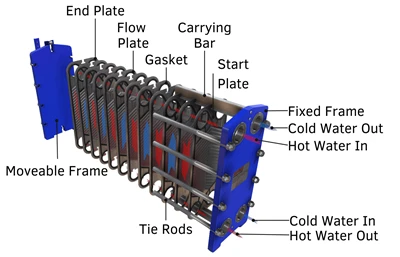
A plate heat exchanger pack contains a specified sequence of heat-transfer plates and sealing gaskets. Incorrect replacement parts can alter the intended flow paths or sealing compression.
Different positions may require distinct port closures or arrangements. Record their locations before disassembly.
Check whether the original gasket is mechanically retained or bonded with an approved adhesive system.
Follow the equipment specification when compressing the plate pack. Do not use a generic closing dimension.
A single plate may be replaced when the damaged position is identified and the remaining pack is serviceable.
More extensive renewal may be considered for widespread corrosion, repeated leakage, fatigue or major refurbishment.
Maintenance warning: Do not arbitrarily remove plates, change their sequence or tighten the frame beyond the approved closing dimension. Changes can affect hydraulic performance, sealing and mechanical safety.
Corrugated metal plates are manufactured by forming sheet material into the required pressed geometry. Matching this geometry is particularly important for aftermarket replacement parts installed in an existing plate pack.
Specific inspection reports, material certificates or testing requirements should be agreed during order confirmation.
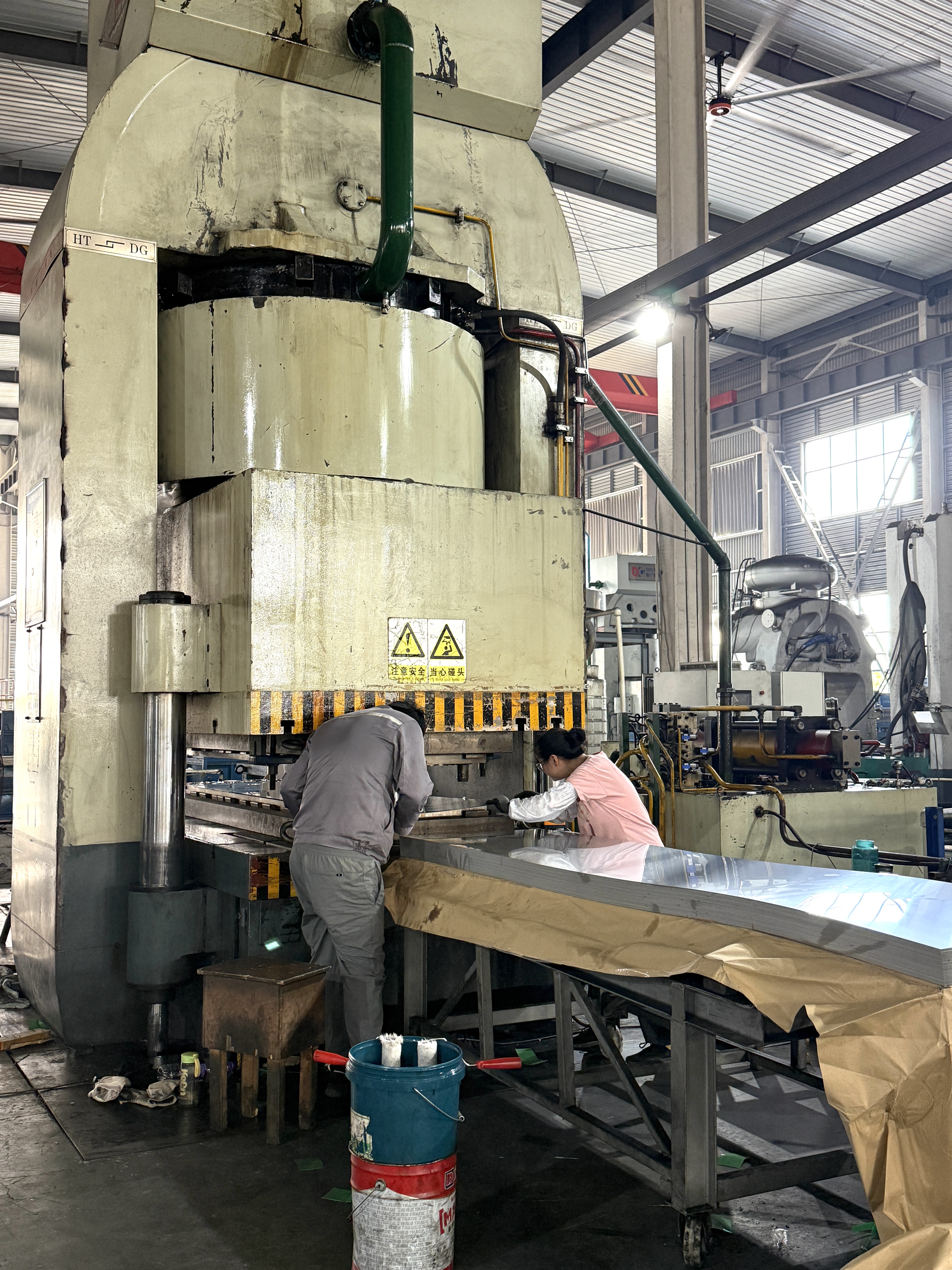
Third-party industry reference: metal plate press-forming process.
Image and quality notice: The process photograph is an industry reference and does not represent a verified Tranter production line or document a specific plate's testing or certification.
Plate replacement should follow an assessment of the actual failure mechanism. Reduced heat-transfer performance may be caused by fouling, restricted flow or process changes rather than plate damage.
Localized corrosion or perforation can allow leakage or unwanted fluid mixing. Review the fluid chemistry before selecting new plates.
Distorted corrugations, cracks or damaged ports may compromise the mechanical fit and seal.
A damaged gasket groove may continue to leak after gasket replacement. Inspect the plate and gasket together.
Before replacing a plate, document the position, failure condition, material, and relevant operating history. Recurrent damage may require a wider equipment and process assessment.
Tranter gasketed plate heat exchangers are used in a range of heating and cooling duties. The correct replacement plate must suit the existing equipment and process conditions.
Heating-water, chilled-water, district-heating and compatible glycol circuits.
Process-water cooling, equipment temperature control and plant utilities.
Freshwater, oil-cooling and suitable seawater heat-transfer duties.
Heating and cooling under specified fluid and corrosion conditions.
Process and utility temperature control subject to hygiene needs.
Auxiliary cooling, heat recovery and industrial thermal systems.
Suitable hydraulic and lubrication-oil temperature control.
Secondary cooling and compatible utility-water circuits.
Record the full Tranter model, nameplate and plate markings.
Provide photos, dimensions, ports and gasket groove details.
Confirm material, thickness, plate type and operating duty.
Confirm quantity, documents, delivery and packaging needs.
Are these genuine Tranter heat exchanger plates?
No. These are independently supplied aftermarket replacement components intended for verified compatible Tranter configurations. The Tranter name is used for equipment identification and does not imply OEM authorization.
Are Tranter GC26 and GX26 plates interchangeable?
Interchangeability must not be assumed. These plate families may have different pressing depths and channel designs. Dimensions, corrugation, ports and gasket interfaces require individual verification.
What is the difference between Tranter GC, GX and GL plate series?
GC, GX and GL series include different pressed channel and flow configurations. Selected GC plates suit low-pressure-drop duties, GX designs offer various channel pairings and GL models provide chevron geometries for suitable thermal and hydraulic duties. Exact features vary by model.
Can one damaged Tranter plate be replaced?
Individual replacement may be possible when the damaged plate position is identified and the remaining plate pack is serviceable. The replacement must match the required geometry, material, thickness, orientation and gasket interface.
Can titanium replace stainless steel in a Tranter heat exchanger?
A material change requires review of fluid chemistry, corrosion conditions, temperature, mechanical requirements and gasket compatibility. Titanium is not an automatic substitute for every stainless steel plate.
What if the Tranter plate model is missing or unreadable?
Send the equipment nameplate, photos of both plate faces, port openings, gasket groove, overall dimensions and port-center distances. A drawing or physical sample may be needed for an uncertain legacy model.
Can Tranter replacement plates and matching gaskets be ordered together?
Yes. Replacement plates and compatible gasket requirements can be reviewed together. Provide the model, gasket groove, attachment method, material, process fluids and required quantity.
What information is needed for a Tranter replacement plate quotation?
Provide the full equipment model, plate photographs, markings, dimensions, material, thickness, flow configuration, operating conditions, quantity, gasket needs and destination country.
Please send your complete Tranter model, nameplate and plate photos, dimensions, port configuration, material, thickness, plate-pack arrangement, operating conditions, quantity and destination country.
Include matching gasket requirements and any inspection or material documentation requested for your order.
As one of the most professional tranter plate manufacturers and suppliers in China, we have world-leading production equipment and strong manufacturing capabilities. We warmly welcome you to wholesale advanced tranter plate made in China here from our factory. Customized orders are welcome.
channel plate replacement, chevron stainless replacement