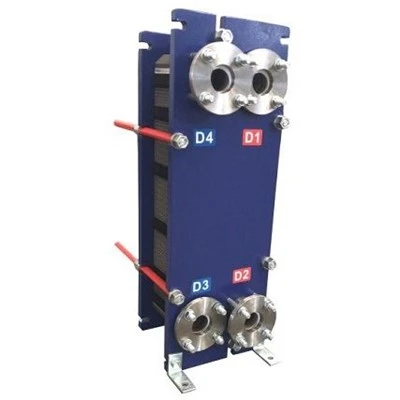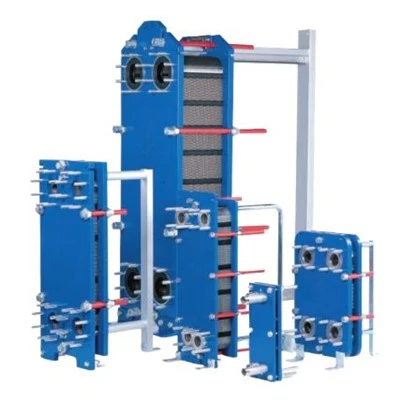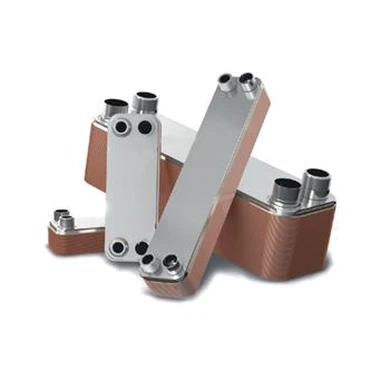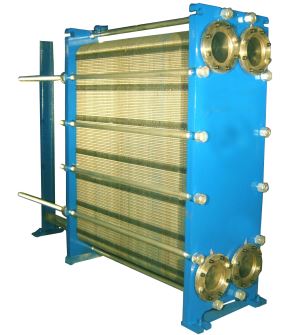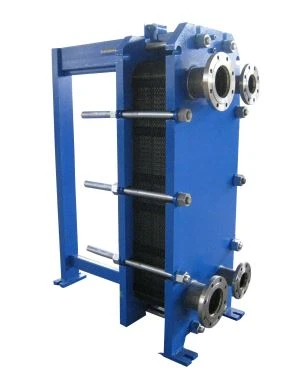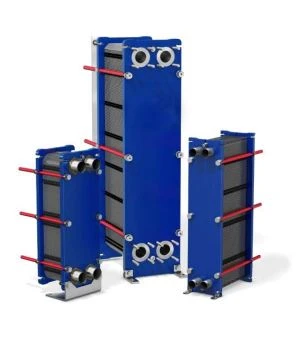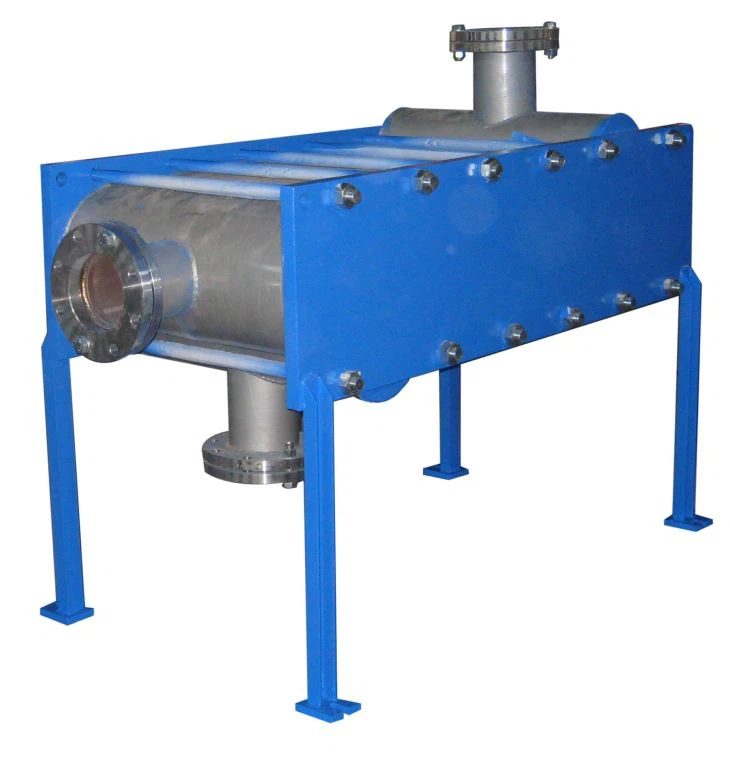
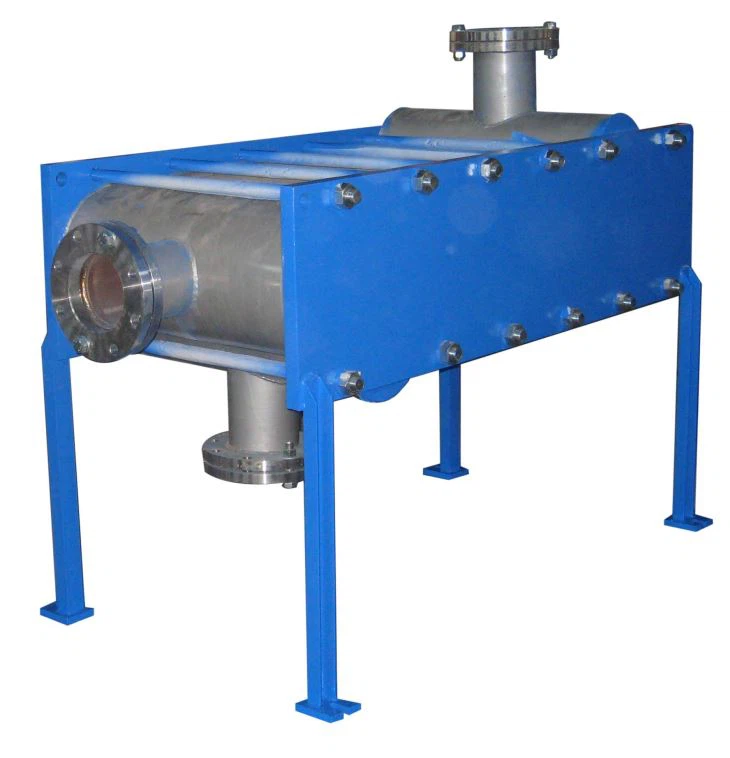
WTSML factory environment. The original fully welded product photograph is available on the historical product page.
A Permanently Joined Plate Bundle for Demanding Process Conditions
Fully welded plate heat exchangers are built around metal plate channels joined by welding rather than conventional elastomer gaskets between the heat-transfer plates.
The historical WTSML design describes adjacent welded plates forming separate paths for fluids at different temperatures. Heat moves through the common metal surface separating those passages.
This equipment family is considered where process requirements make conventional gasketed plate construction unsuitable, subject to the specific materials and certified operating envelope.
What Distinguishes a Fully Welded Plate Assembly?
The important difference is the permanent joining of the heat-transfer plate bundle. The welded flow channels eliminate the conventional interplate elastomer gaskets of a demountable plate-and-frame unit.
Welding introduces its own engineering requirements: joint geometry, material suitability, fabrication quality and inspection must be considered alongside the thermal design.
Metal-Sealed Channels
Welded joints establish the intended separation of process streams within the plate bundle.
Corrugated Flow Passages
Pressed plate geometry creates the flow paths and influences thermal and hydraulic behavior.
Defined Mechanical Design
The welds, pressure boundary and material combinations must suit the actual operating duty.
Fluid Routing Through the Welded Plate Core
The original WTSML description refers to dividing plates and channel arrangements that control the flow area and flow length of each medium.
These internal features determine how long the fluid remains within the thermal passages and how the process streams approach one another thermally.
Channel design also affects hydraulic resistance. For industrial projects, the required duty must be balanced with allowable pressure loss and potential fouling.
Original WTSML Technical References
The following table keeps the material and connection entries from the old product page without combining different historical design envelopes.
| Product Family | Fully Welded Plate Heat Exchanger |
|---|---|
| Frame Materials | Carbon Steel, Stainless Steel |
| Plate Materials | AISI 316, Titanium, Nickel, SMO254 |
| Maximum Working Pressure | 40 bar - historical product details |
| Connections | Thread, Liner, Flange |
| Plate Bundle | Welded corrugated metal plate channels |
| Joining Process Reference | Argon arc welding mentioned in the original description |
| Heat-Transfer Area | Determined by the selected equipment design |
| Connection Dimensions | Confirmed against model documentation |
Understanding the Different Historical Pressure and Temperature References
The old product description contains three distinct sets of values. They must remain separate because the source does not establish that they describe the same model.
| Old-Site Reference | Temperature | Pressure |
|---|---|---|
| Product Details | Not specified | 40 bar |
| General Welded-Unit Operating Example | 300°C | 3.0 MPa |
| MAX Fully Welded Series Mention | −195°C to 538°C | Vacuum to 8.2 MPa |
Which Process Conditions Require Special Attention?
Fully welded plate equipment may be evaluated where process pressure, temperature or fluid characteristics create challenges for conventional gasketed arrangements. The absence of interplate gaskets does not eliminate all sealing or material compatibility requirements elsewhere in the complete unit.
High-Temperature Process Streams
The thermal expansion of the plate bundle, welded joints and connected components must be assessed throughout the operating cycle, including startup and shutdown conditions.
Pressure Fluctuation and Operating Transients
Pressure cycling, unexpected valve operation and rapid temperature changes can place additional mechanical demands on welded components. Such conditions should be disclosed during equipment selection.
Corrosive and Specialized Fluids
Fluid composition determines the need for careful alloy selection. Compatibility must include base metals, welded regions and any wetted connection components.
Fouling-Prone Processes
Because a fully welded plate bundle cannot normally be dismantled like a gasketed pack, fouling potential and cleaning access should influence the equipment decision at the design stage.
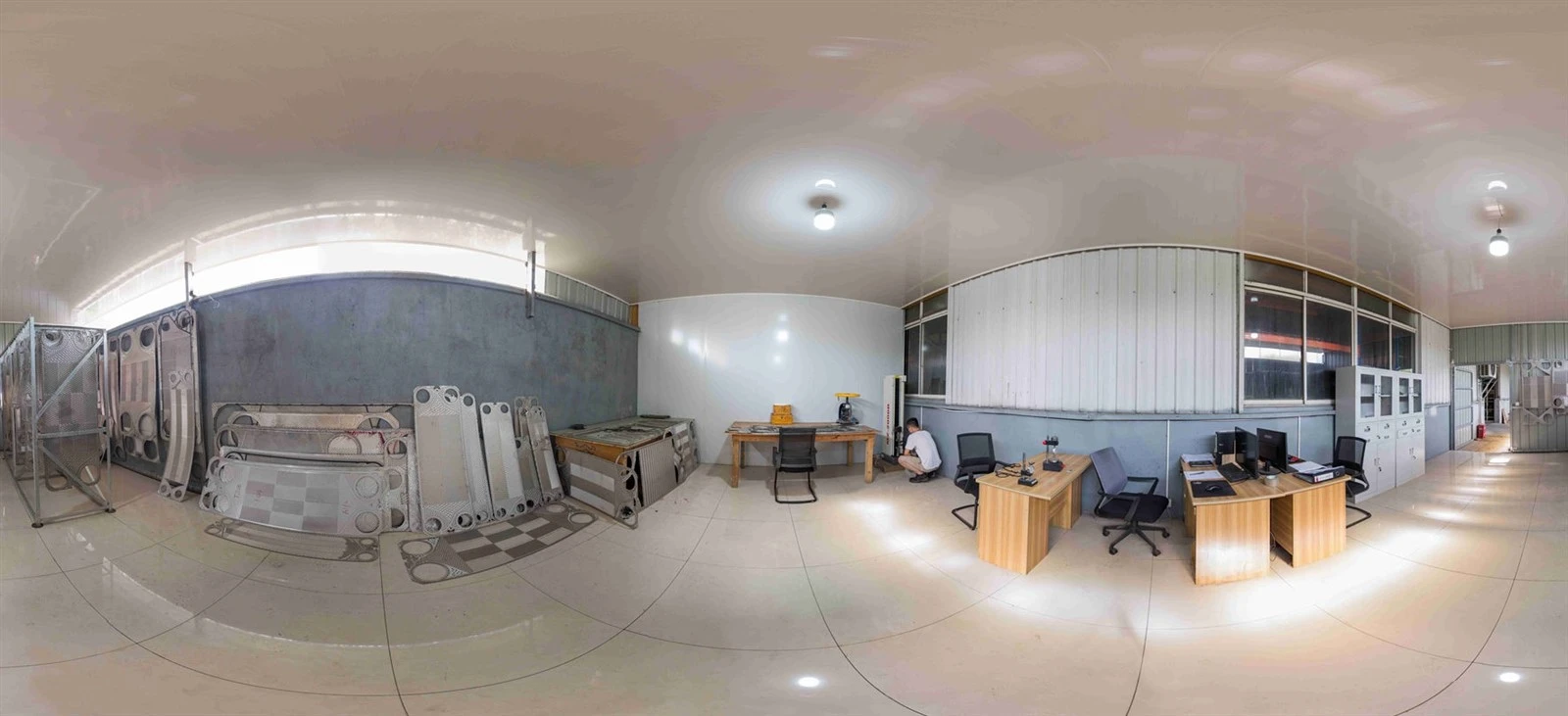
WTSML VR facility photograph. The exact production and inspection operations must be confirmed for each order.
Welding Quality and Inspection Requirements
For welded equipment, the purchase specification should identify which fabrication procedures, inspection methods and documentation are required for the service.
A buyer may need confirmation of material identification, weld quality requirements, pressure-boundary inspection and the testing scope applicable to the exact equipment.
The WTSML factory photo illustrates its industrial facility environment; it is not evidence that a particular weld inspection or pressure test has already been completed.
Specify a Fully Welded Plate Heat Exchanger for Your Process
Send a complete operating envelope, not only the normal working temperature and pressure. Include transient conditions and any inspection requirements.
When Does a Fully Welded Plate Bundle Make Sense?
A welded exchanger should be chosen for a specific engineering reason, rather than simply because its historical catalog suggests a high maximum pressure or temperature.
Fully Welded Construction
Uses permanently joined plate channels. The design requires careful consideration of welded pressure boundaries and non-demountable core maintenance.
Removable Gasketed Construction
Uses elastomer-sealed plates compressed inside a serviceable frame. Maintenance can include plate-pack opening, provided the operating requirements are compatible.
A comparison should consider the required mechanical rating, fluid chemistry, fouling tendency, service access and overall installation constraints.
Industrial Sectors Referenced by WTSML
The historical catalog associates this equipment family with metallurgy, mining, petroleum, chemical processing, electric power, pharmaceutical and food-related industrial environments.
Such sectors represent potential application areas. They do not establish that any one welded exchanger meets the sanitary, pressure-equipment, chemical compatibility or other requirements of every process within those industries.
For an individual project, confirm the required operating medium, construction materials, thermal performance and applicable documentation before equipment selection.
Cleaning and Service Planning for Welded Cores
A fully welded plate bundle is not ordinarily opened for gasket replacement or individual plate removal. This difference should shape maintenance planning from the beginning.
Cleaning methods must account for the plate geometry, deposits, weld materials and chemical compatibility. Where fouling is severe, the equipment may require a different cleaning strategy from a conventional demountable plate heat exchanger.
Fully Welded Plate Heat Exchanger FAQs
1. Does fully welded mean the unit has no gaskets anywhere?
No. It refers to the welded plate-channel construction. Connections or other components of the complete equipment may still use seals, depending on the design.
2. Can the old catalog's 40 bar value be used as the design pressure?
Not without verification. It is a historical product reference. Design pressure must be documented for the specific equipment model and operating conditions.
3. Is the −195°C to 538°C range available on every welded exchanger?
No. The old text associates that range with a separately mentioned MAX series. It cannot be applied to an unspecified WTSML unit.
4. Can a damaged welded plate be replaced individually?
The welded bundle is not intended to be dismantled like a gasketed plate pack. Repair or replacement possibilities depend on the actual construction and qualified inspection of the equipment.
5. What records should accompany a welded exchanger RFQ?
Provide the process conditions, materials, design pressure and temperature, required welding and inspection documentation, connection arrangement and delivery requirements.
Related WTSML Equipment References
This page preserves historical WTSML product specifications and differentiates separately described design envelopes. Actual ratings, weld construction, materials and inspection compliance must be verified for each selected model or project.
Hot Tags: fully welded plate heat exchanger, China fully welded plate heat exchanger manufacturers, suppliers