ITT Standard P Series
ITT P4A
ITT P7A
ITT P8
ITT P8A
ITT P15
ITT P20
ITT P20A
ITT P21
ITT P21A
ITT P22
ITT P30
ITT P35
ITT P37
ITT P38
ITT P39
ITT P43
ITT P47
ITT P50
ITT P62
ITT P64
ITT P65
ITT P100
ITT P120
 English


ITT Standard P / PF Series | Independent Aftermarket Plates
We support aftermarket replacement plate enquiries for identified ITT Standard gasketed plate heat exchangers, including P and PF series model references. Correct selection requires verification of the full model, pressed plate geometry, port arrangement, gasket groove, material and installed plate position.
Stainless steel, titanium and selected corrosion-resistant alloy requirements can be reviewed against the operating conditions. Individual replacement plates and complete plate-pack requirements are evaluated after technical identification.
Request ITT Plate Matching & Quote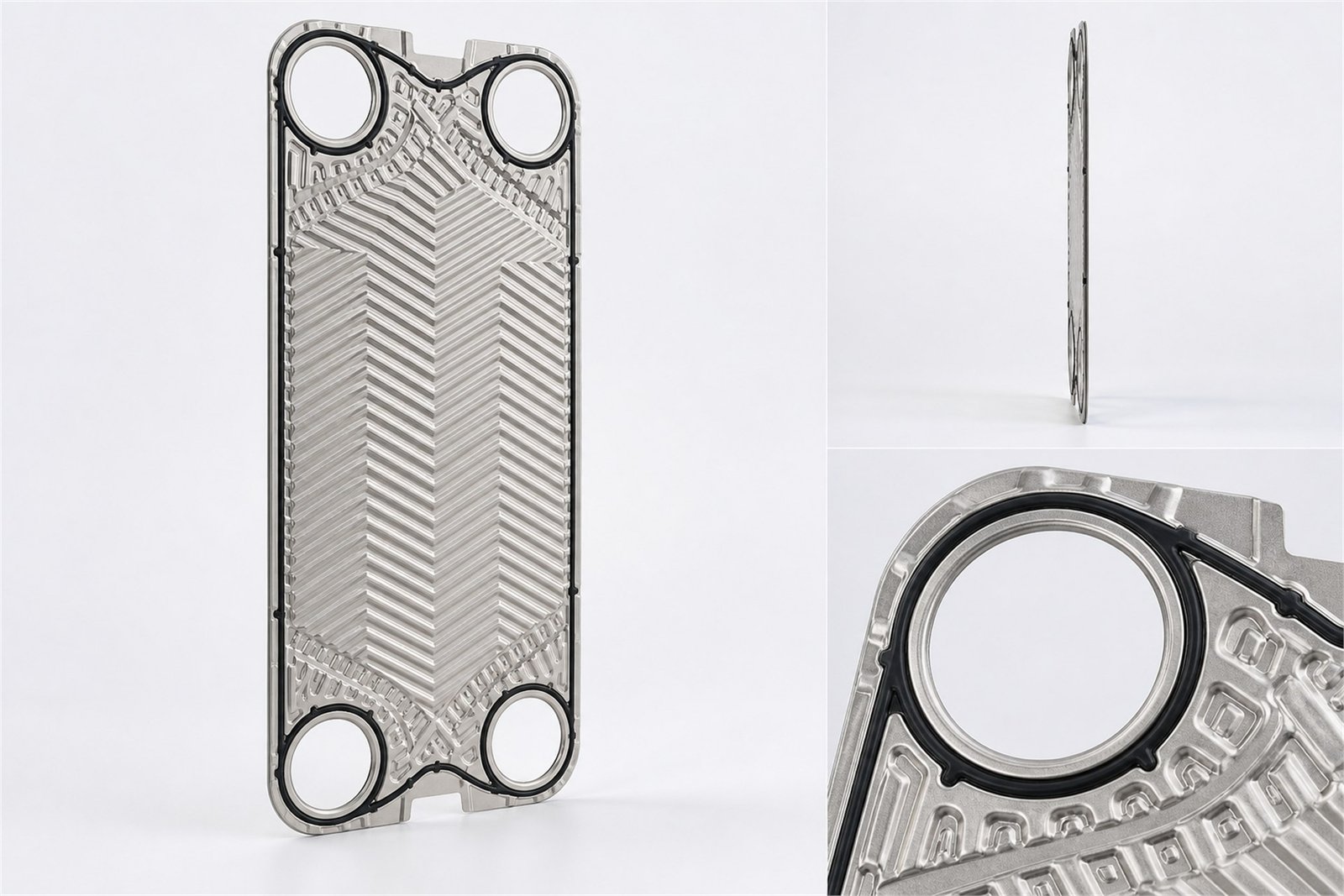
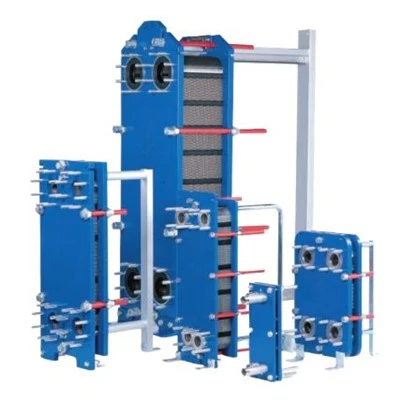
General plate geometry reference. The exact ITT Standard replacement is identified by model and sample.
ITT Standard heat exchanger replacement catalogs include P and PF series model references. These identifiers help maintenance teams, distributors and industrial buyers identify existing equipment when ordering replacement heat-transfer plates.
The model lists below are compiled from third-party aftermarket references. Actual compatibility, tooling, material options and supply status require confirmation.
ITT P4A
ITT P7A
ITT P8
ITT P8A
ITT P15
ITT P20
ITT P20A
ITT P21
ITT P21A
ITT P22
ITT P30
ITT P35
ITT P37
ITT P38
ITT P39
ITT P43
ITT P47
ITT P50
ITT P62
ITT P64
ITT P65
ITT P100
ITT P120
ITT PF8
ITT PF10
ITT PF15
ITT PF20
ITT PF21
ITT PF25
ITT PF30
ITT PF35
ITT PF40
ITT PF41
ITT PF42
ITT PF45
ITT PF50
ITT PF51
ITT PF55
ITT PF60
ITT PF61
ITT PF65
ITT PF66
ITT PF70
ITT PF71
ITT PF75
ITT P7
ITT P14
ITT P14A
ITT P86
ITT P110
ITT P181
ITT P201
ITT PF6
ITT PF80
Additional historical references require individual verification against the existing equipment and original plate markings.
The P and PF prefixes are part of the equipment identification and must be preserved. The same numeric designation does not establish that two plates use the same pressing pattern or gasket interface.
For example, ITT P20 and P20A, ITT P8 and P8A, or ITT P8 and PF8 should be treated as distinct identification references until the exact physical configuration has been checked.
Model availability notice: The names shown are research-based identification references. They are not a confirmed stock list or a guarantee that every plate can be manufactured. A nameplate, clear plate photographs, dimensions or a sample may be needed for older configurations.
A compatible replacement plate must reproduce the features needed by the existing exchanger frame and assembled plate pack. Matching only the overall plate size is not sufficient.
Confirm overall length, width, corner shape and frame contact features.
Verify port diameter, center distances and open or closed ports.
Match channel profile, pressing depth and chevron orientation.
Check sealing profile, port-ring areas and gasket attachment features.
Identify channel, turning, start or end positions where applicable.
Confirm the specified alloy, sheet thickness and operating requirements.
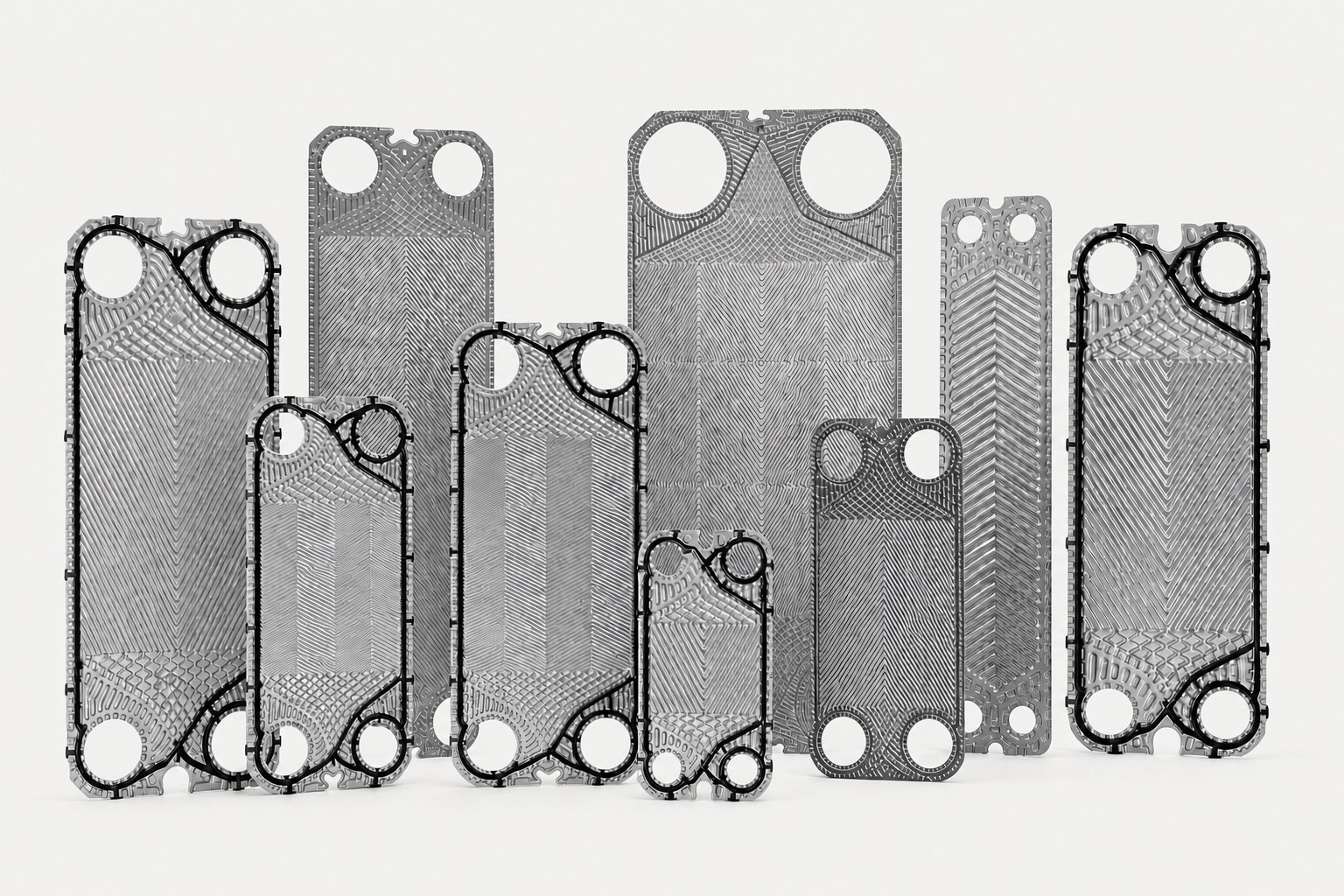
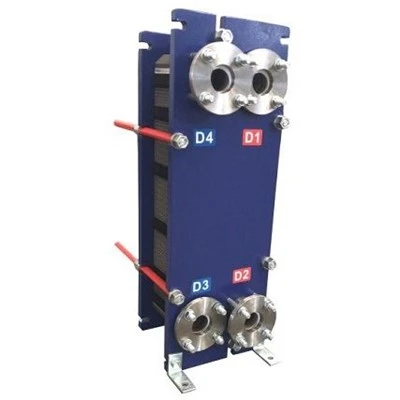
General replacement parts reference. Exact ITT geometry requires model-specific verification.
Measurement note: Port-center distances are not the same as overall plate length and width. Record all dimensions in millimeters and identify the measurement points.
Technical dimensions should be checked against the actual ITT model and installed plate. General catalog ranges must not be treated as certified specifications for every P or PF series configuration.
| Parameter | Information Required | Why It Matters |
|---|---|---|
| Equipment Model | Full ITT Standard P or PF model and available suffixes. | Prevents mixing different series and plate variants. |
| Plate Dimensions | Outside length and width, hanging and locating features. | Supports mechanical fit inside the existing frame. |
| Port Diameter | Measured size and port position for each required plate. | Determines fluid passage and sealing configuration. |
| Port Centers | Horizontal and vertical center-to-center distances. | Helps distinguish similar plate outlines. |
| Plate Thickness | Exact material thickness of the existing plate. | Important for matching mechanical requirements. |
| Corrugation Depth | Original pressed channel depth and pattern. | Influences flow resistance and contact geometry. |
| Plate Material | Original alloy grade and available material evidence. | Supports corrosion and operating-condition review. |
| Plate Configuration | Orientation, port closures, gasket and pack position. | Preserves the required flow and sealing layout. |
Technical limitation: The exact thickness, pressed depth, heat-transfer area and port diameter depend on the model and plate type. Confirm these values against an approved drawing or original sample before ordering.
The appropriate replacement plate alloy depends on both fluid streams, chemical concentration, temperature, pressure, cleaning conditions and previous corrosion history.
| Material | Selection Consideration | Required Review |
|---|---|---|
| AISI 304 / 304L | General utility and water-based services where the stainless steel grade meets corrosion requirements. | Water chemistry, chlorides, temperature and cleaning agents. |
| AISI 316 / 316L | Industrial duties requiring a suitable molybdenum-bearing stainless steel. | Chloride concentration, pH, temperature and corrosion history. |
| Titanium | Selected seawater and chloride-bearing duties where the specified titanium grade is suitable. | Complete fluid chemistry, titanium grade, cleaning regime and mechanical design. |
| 254 SMO / SMO254 | Selected demanding corrosion environments requiring high-alloy stainless steel. | Exact grade, process chemistry and model-specific production feasibility. |
| Nickel-Based Alloys | Specialist chemical applications where an alternative corrosion-resistant alloy may be necessary. | Detailed chemical duty, alloy specification and forming capability. |
Alloy availability: These are technical material options for review, not confirmed material choices for every ITT Standard model. A requested alloy change must be checked against plate geometry, gasket material and the complete duty.
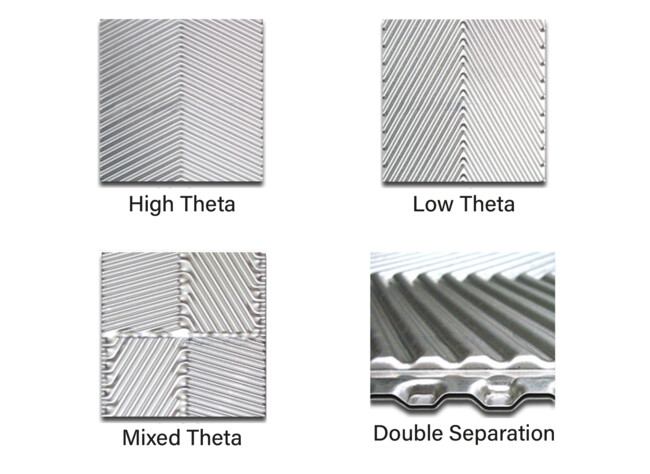
Corrugated heat-transfer plate patterns shown for reference.
Pressed metal plates create alternating hot- and cold-side channels inside the exchanger. The corrugation geometry affects turbulence, fluid resistance and thermal performance.
Chevron angle, pressing depth and neighboring plate orientation influence how the fluid moves through each channel. Different patterns are not automatically interchangeable.
Some channel arrangements produce stronger flow disturbance and heat transfer, often with higher pressure drop. Others favor lower flow resistance. Selection depends on the existing thermal duty and pumping system.
The replacement plate should maintain the intended channel geometry and plate arrangement. A different pressing pattern can change overall thermal performance.
The channel pattern and number of flow passages influence hydraulic resistance. Plate substitutions should not be approved without evaluating the complete operating conditions.
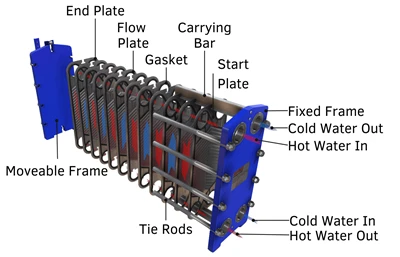
A gasketed heat exchanger pack may contain several plate configurations. The intended sequence determines the flow passages between hot and cold circuits.
Alternating plate orientation forms the required heating and cooling flow passages.
Multi-pass designs may require special port openings or closures to redirect fluid.
Terminal positions may use configurations different from standard channel plates.
The gasket sealing path, port-ring profile and attachment features are part of plate compatibility. A correctly sized plate can still be unsuitable if the gasket cannot seat and seal properly.
Where matching gaskets are required, provide the existing elastomer material, gasket attachment method and fluid conditions with the plate request.
Assembly precaution: The plate orientation, original sequence, number of plates and frame closing dimension are equipment-specific. Do not change them without the approved assembly procedure.
Heat-transfer plates are formed from metal sheet into a defined pressed channel geometry. Accurate dimensions and consistent sealing surfaces are important for replacement components installed in an existing plate pack.
Any required material certification, dimensional report or additional testing must be agreed for the specific order.
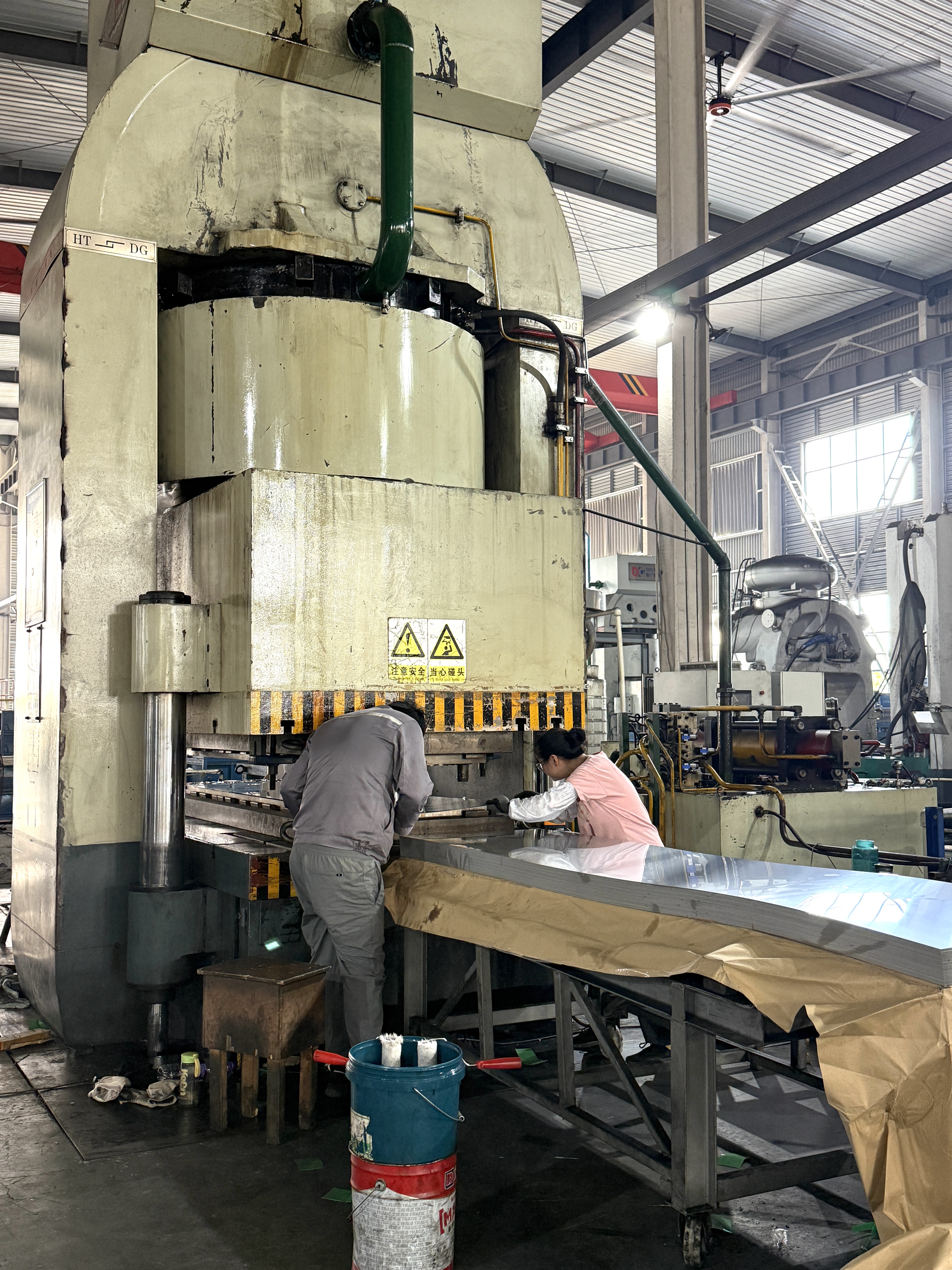
Third-party industry process image showing metal plate press forming. Not a photograph of our facilities.
Technical verification: A general process photograph does not confirm that a particular ITT plate has been manufactured, inspected or certified using the equipment illustrated.
Replacement should follow assessment of the actual failure condition. Fouling, gasket deterioration, corrosion and mechanical damage require different maintenance responses.
Localized corrosion may cause external leakage or fluid cross-contamination. Investigate fluid chemistry before selecting new plates.
Damage to ports, corrugations, edges or hanging points may prevent correct assembly and sealing.
Sealing-surface defects can cause repeated leakage even when a new gasket has been installed.
Targeted replacement may be possible if the damaged plate position is known and the remaining pack is serviceable.
Widespread corrosion, repeated failures or major refurbishment may require evaluation of a larger replacement set.
ITT Standard plate heat exchangers may be used across different heating and cooling duties. The replacement plate specification must match the actual equipment, fluids and operating conditions.
Heating water, chilled-water systems and compatible glycol circuits.
Process-water cooling and equipment temperature control.
Freshwater, oil-cooling and selected seawater heat-transfer duties.
Process heating and cooling with corrosion and material compatibility review.
Product and utility temperature control subject to hygiene needs.
Auxiliary cooling, heat recovery and plant thermal utilities.
Hydraulic and lubrication oil cooling where equipment compatibility has been confirmed.
Suitable secondary cooling and utility heat-transfer applications.
Record the equipment model, nameplate and plate markings.
Provide both plate faces, dimensions and port details.
Confirm material, thickness, position and operating duty.
Confirm quantity, matching gaskets, destination and documents.
Are these genuine ITT Standard heat exchanger plates?
No. These are independently supplied aftermarket replacement components intended for identified compatible ITT Standard heat exchanger configurations. The ITT name is used for equipment identification only.
What ITT Standard replacement plate models can be reviewed?
Historical enquiries may include ITT Standard P and PF series references, such as P20, P30, P47, P100, PF10, PF25, PF40, PF60 and PF75. Exact plate design and supply availability require verification.
Are ITT P20 and P20A plates interchangeable?
Interchangeability must not be assumed. Model suffixes can identify different configurations. The pressed geometry, port arrangement, gasket groove, material and installed position must be checked.
Can an individual damaged ITT plate be replaced?
Individual replacement may be possible when the damaged position is identified and the remaining plate pack is serviceable. The correct geometry, material, orientation and sealing interface must be confirmed.
Can stainless steel ITT plates be replaced with titanium?
A material change requires review of both fluids, corrosion conditions, temperature, pressure, gasket compatibility and the original mechanical design. Titanium is not automatically suitable for every application.
How do I identify an ITT plate with no readable model number?
Provide the equipment nameplate, both plate faces, gasket groove, port openings, hanging features and accurately measured dimensions. A physical sample or approved drawing may be required.
Can matching ITT gaskets be ordered with the plates?
Plate and gasket requirements can be reviewed together. Provide the gasket fixing method, compound, fluids, temperatures and required quantities so compatibility can be checked.
What information is needed for an ITT replacement plate quotation?
Send the complete model, nameplate, plate photographs, dimensions, material, thickness, port configuration, operating conditions, quantity and destination country. Include gasket requirements where applicable.
Please provide your complete ITT Standard P or PF model, exchanger nameplate, photographs of both plate faces, dimensions, plate markings, material, thickness, gasket configuration, operating conditions, quantity and destination country.
Include matching gasket requirements and any agreed material or inspection documentation.
As one of the most professional itt plate manufacturers and suppliers in China, we have world-leading production equipment and strong manufacturing capabilities. We warmly welcome you to wholesale advanced itt plate made in China here from our factory. Customized orders are welcome.
channel plate heat exchanger