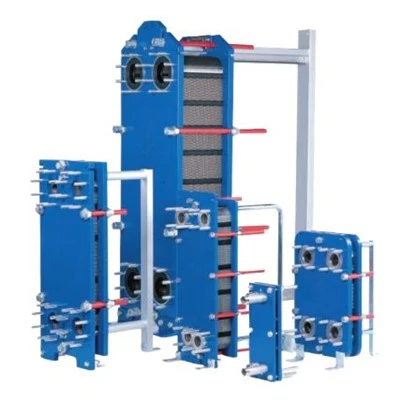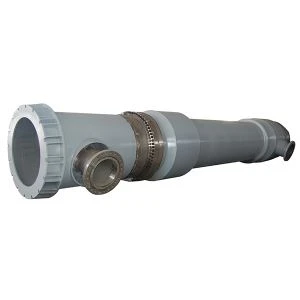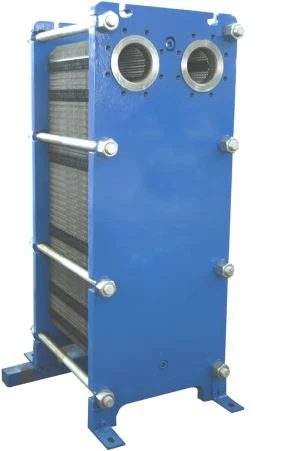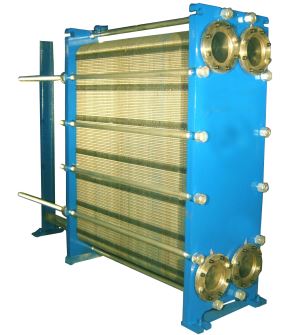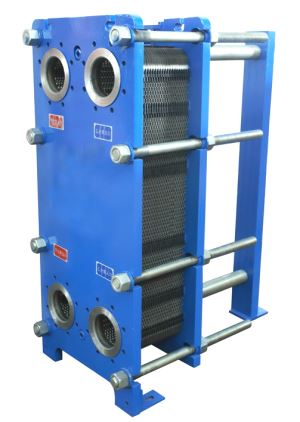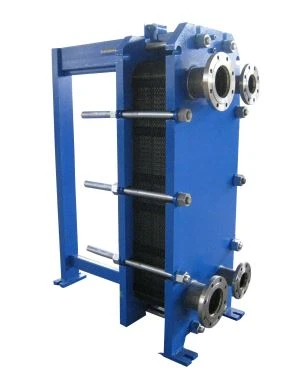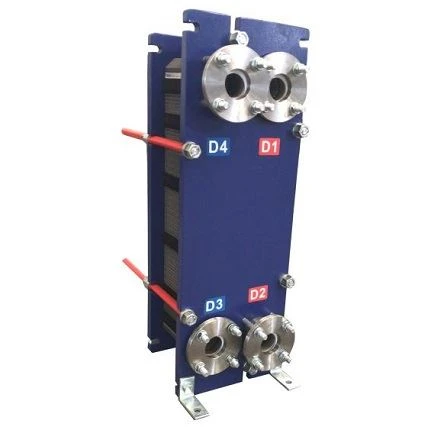
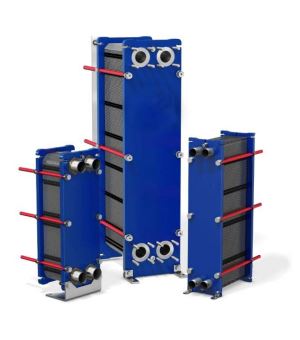
WTSML plate-and-frame equipment photograph used as a construction reference.
A Bolted Frame Designed Around a Removable Plate Pack
The defining characteristic of a removable plate and frame heat exchanger is its accessible plate assembly. A series of gasketed metal plates is held between two pressure plates and secured by tightening bolts.
When authorized maintenance is required, the compression system can be released according to the equipment procedure, allowing access to the individual heat-transfer plates.
This construction is especially relevant when a plant expects periodic internal inspection, gasket renewal or replacement of damaged plate elements.
What Makes Up a Removable Plate Heat Exchanger Frame?
Unlike a permanently joined plate core, a demountable assembly incorporates several structural components that work together to locate, align and compress the plate package.
Fixed Pressure Plate
The stationary frame end provides a structural reference for the assembly and may carry the process connections.
Movable Pressure Plate
This plate moves during approved opening and closing operations, allowing access to the suspended heat-transfer elements.
Upper Carrying Bar
The upper member supports the hanging plates and contributes to their alignment within the frame.
Lower Guide Bar
The lower guide helps maintain plate alignment as the individual elements are moved during servicing.
Support Column
The support column anchors the frame members and forms part of the equipment structure.
Tightening Bolts
Bolts apply the specified compression to the assembled pack. Their tightening pattern and final position are design-dependent.
How the Plate Pack Maintains Separate Flow Paths
Every gasketed plate has a formed surface and a sealing arrangement appropriate to its installed position. The gaskets guide liquid through designated channels and provide sealing around the relevant ports.
The required flow routing depends on the plate sequence and port configuration. A unit with more than one pass may need connections arranged across the fixed and movable pressure plates.
Historical Frame and Component Specifications
The earlier WTSML product listing contains the following construction and material references. They describe a product family rather than one fully defined equipment model.
| Equipment Type | Removable / gasketed plate and frame heat exchanger |
|---|---|
| Frame Materials | Carbon steel or stainless steel |
| Plate Alloy References | AISI 304, AISI 316L, titanium, nickel, SMO254, Ti-Pd |
| Gasket Material References | NBRB, NBRP, HNBR, EPDM, EPDM-HT |
| Historical Maximum Working Pressure | 21 bar - subject to model-specific verification |
| Connection References | Threaded, lined or flanged arrangements |
| Plate-Pack Quantity | Determined for the selected assembly |
| Frame Closing Dimension | Must be confirmed from the actual equipment drawing |
| Design Temperature | Depends on the selected components and verified rating |
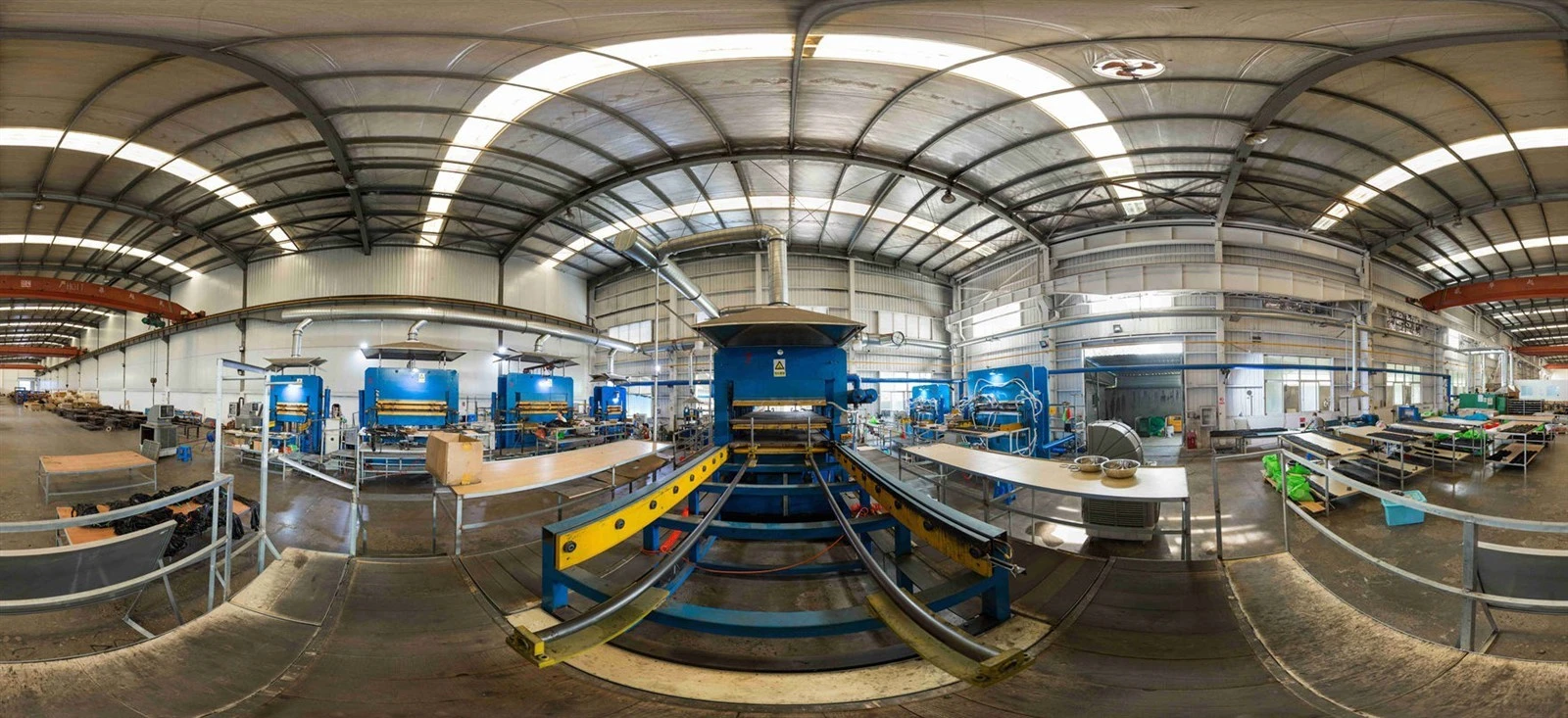
WTSML industrial factory reference from its VR image collection.
Frame Alignment, Component Matching and Quality Review
For a removable frame assembly, proper alignment of the plate pack is essential to the intended mechanical construction.
A buyer should review the available frame dimensions, plate profile, connection arrangement and component inspection requirements before confirming the equipment.
The WTSML facility photograph provides context for its industrial operations. Actual assembly procedures, testing and documentation must be verified for each order.
Service Access Is Part of the Equipment Design
A removable plate heat exchanger needs enough free space for the movable pressure plate to travel and for individual heat-transfer elements to be handled safely.
An installation can meet its thermal duty yet still be difficult to maintain if piping, nearby equipment or walls restrict access.
Reserve space for moving the pressure plate and removing individual plates.
Record the approved plate-pack compression dimension before opening the unit.
Maintain an accurate record of sequence, orientation and special plate positions.
Check the correct groove profile, retention type and elastomer before replacing seals.
Need a Serviceable Plate and Frame Heat Exchanger?
Describe the existing assembly or the service-access needs of your installation. The frame construction and spare-component requirements can then be reviewed.
What to Check During Plate-Pack Maintenance
The ability to open a plate pack is valuable only when the servicing process preserves the required plate sequence, sealing surfaces and mechanical assembly condition.
Prior to opening, the equipment must be isolated from the process, cooled to a safe temperature, depressurized and drained under the site's approved procedure.
Following inspection, replacement components should be matched to the original geometry. The frame must then be reassembled in the specified order and tightened using the approved sequence and closing dimension.
Buying a Replacement Frame or Rebuilding an Existing Unit
A complete new frame may be considered when the original assembly has structural damage, insufficient capacity or unsuitable installation dimensions.
For an exchanger whose main frame remains serviceable, replacement plates and gaskets may be a different procurement approach. That decision should follow an inspection of the existing equipment rather than a purely visual comparison.
When requesting support for a legacy unit, provide the nameplate, frame photographs, plate geometry and available maintenance records.
Frequently Asked Questions About Removable Plate Frames
1. What allows the plate pack to be opened?
The movable pressure plate and tightening bolt arrangement allow access under the approved equipment procedure. The plate pack must first be safely isolated and depressurized.
2. Why are upper and lower guide bars necessary?
They support and guide the individual plates so the pack can remain aligned within its frame.
3. Can the closing dimension be chosen by the operator?
No. The required closing dimension comes from the specific equipment design and approved maintenance instructions.
4. Can old gaskets always be reused after opening?
No. Reuse depends on gasket condition, material, age and the manufacturer's requirements. Damaged or unsuitable gaskets must be replaced with correctly matched parts.
5. Can a new frame accept any plate of the same size?
No. Hanging features, plate geometry, port arrangements, gasket grooves and compression requirements must be compatible with the specified frame.
Related Equipment and Service Components
Product material and pressure entries are historical catalog references. The specific frame design, rated conditions, component compatibility and maintenance procedure require verification for the selected model.
Hot Tags: removable plate and frame heat exchanger, China removable plate and frame heat exchanger manufacturers, suppliers