Technical Knowledge | Gasket Groove Engineering | Replacement Parts
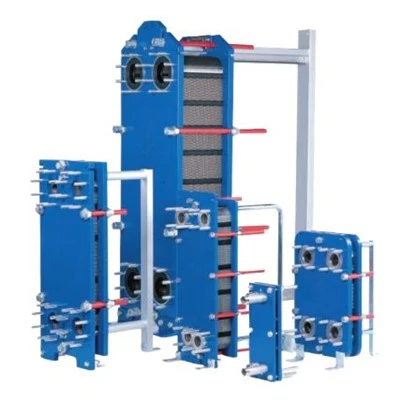
The gasket groove is one of the most important and most easily overlooked features of a gasketed plate heat exchanger. Buyers may correctly identify the exchanger brand, plate material and rubber compound yet still receive a gasket that cannot be installed, remains unstable in its groove or fails to follow the required port-sealing path. Understanding the difference between a sealing profile and a gasket attachment system is essential for maintenance planning and reliable replacement-part purchasing.
This guide explains how gasket grooves work, why the cross-section and port-ring details matter, and how common attachment methods such as glue-on, clip-on, snap-in and stud-type designs differ. It also examines compound selection, gasket displacement, groove damage, special plates, inspection evidence and a practical request-for-quotation checklist. The emphasis is on identifying an existing configuration rather than assuming that all gaskets from a model family are interchangeable.
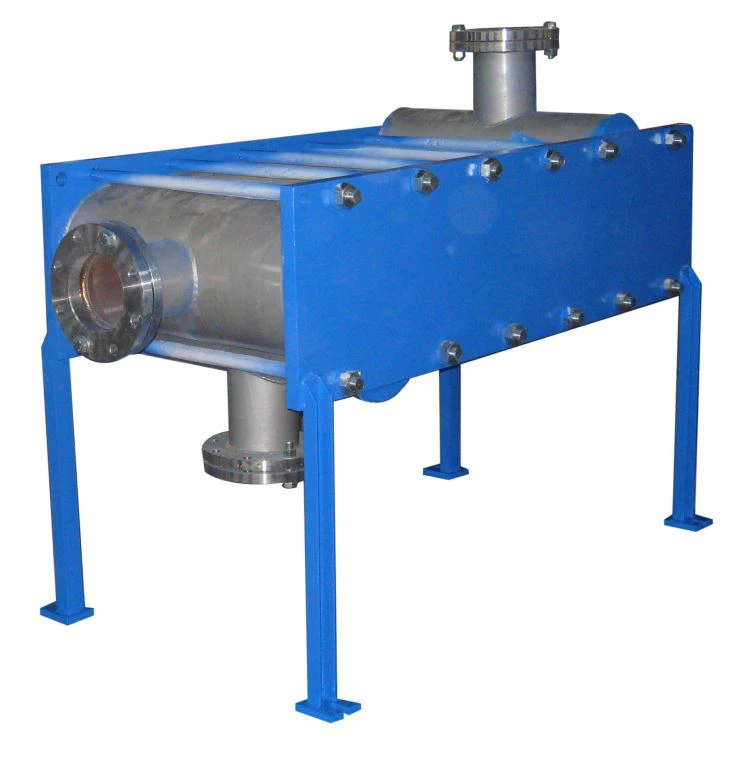
This article covers removable gasketed plate-and-frame heat exchangers. Semi-welded cassettes, sanitary constructions and other specialized designs may have different gasket positions or replacement requirements. All actual dismantling, cleaning, installation and testing must follow the equipment-specific instructions and the site's safety procedures.
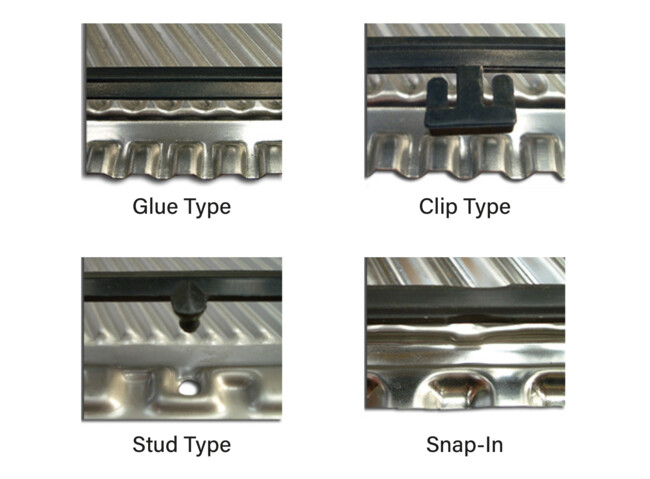
Industry reference from Heat Exchanger Spares showing glue, edge-clip, stud and snap-in attachment details. Image is third-party reference material, not our own factory or a universal installation specification.
In this technical guide- How compression creates the seal
- Groove and cross-section geometry
- Attachment method comparison
- Glue-on and adhesive systems
- Clip-on, snap-in and studs
- Port rings and leakage paths
- Elastomer and operating duty
- Common installation and leak problems
- Inspection and replacement scope
- Buyer identification and RFQ
- Frequently asked questions
1. How Does the Gasket Groove Create a Reliable Seal?
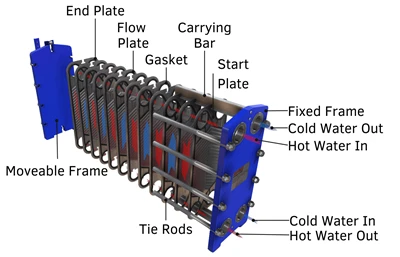
A removable plate heat exchanger contains a stack of formed metal plates compressed between the fixed and movable frame members. The plates provide the heat-transfer surfaces and fluid channels, while elastomer gaskets follow designated paths around the perimeter and selected ports. When assembled according to the approved configuration, the gaskets deform elastically between neighboring metal surfaces and establish the required sealing contact.
The critical distinction is that the attachment feature normally positions and retains the gasket; the seal itself depends primarily on correct compression, the designed contact surfaces and the gasket material's ability to maintain suitable contact stress in service. An adhesive is not a substitute for the required plate-pack compression. Similarly, an edge clip may retain a loose gasket during handling but cannot correct an unsuitable cross-section or damaged sealing land.
The groove controls where the rubber sits and how it is supported during assembly. Its width, depth, cross-sectional contour and transitions around ports all matter. The plate pack is intended to compress a designed gasket shape, not just any strip of rubber that appears to fit within the recess. If the groove is damaged, contaminated or from a different plate generation, an otherwise correct elastomer compound may not seat properly.
Elastomers also change with time and operating conditions. Under sustained deformation, gasket contact stress may relax. Chemical swelling, hardening, compression set, thermal cycling and pressure fluctuations can reduce sealing reliability. This is why gasket choice cannot be reduced to the statement that an EPDM or NBR compound is suitable for a nominal temperature. The complete service history, media and mechanical configuration must be considered.
Core engineering principle: groove geometry establishes the gasket's location and support; the approved plate-pack compression establishes sealing contact; the elastomer and operating conditions influence how that seal performs over time. Attachment clips or adhesive primarily retain the gasket before and during assembly.
2. Gasket Groove Geometry: Cross-Sections, Sealing Lands and Retention Details
Plate heat exchanger gaskets are molded with model-specific cross-sections. Technical literature describes rectangular, trapezoidal and more complex multi-sided shapes, including profiles with curved or inclined sealing faces. The shape is selected together with the corresponding formed metal groove. Two gaskets may look almost identical when viewed from above, but a small difference in cross-section can affect fit, compression and resistance to displacement.
Some sealing profiles are symmetrical; others are not. An asymmetrical design may require a particular orientation or create a defined contact pattern against the adjacent plate. The groove may include local depressions, ribs or formed areas that support the gasket. Mechanical attachment systems add further detail: edge cutouts for clips, narrow retention zones for snap-in designs or holes and formed features for studs. A photograph of the gasket loop alone cannot confirm these interfaces.
Five dimensions or features to identify
- Sealing path: the complete perimeter route and all branches around the port regions.
- Cross-sectional profile: height, width, shape and designated seating face.
- Groove condition: continuous seating surface, local deformation, scratches, deposits and residual adhesive.
- Retention locations: clip intervals, snap-in constrictions, holes, studs or other model-specific fixing features.
- Plate variant: normal channel, start, end, turning or other position with potentially different sealing or port arrangements.
Where original drawings are absent, an uncompressed gasket sample, a clean representative plate and clear photographs of the seal path are useful for comparison. Measuring a used gasket can be misleading if it has swollen, stretched, shrunk or taken a permanent compression set. The original model designation and an approved reference are preferable to guesswork from a visibly aged part.
A supplier should also identify whether the groove is intended to receive a standard gasket loop, a separately designed port-ring gasket, or an integrated arrangement. This is particularly important in plate packs that use special end or turning components. The correct geometry is a complete system rather than a single nominal gasket diameter.
3. Glue-On vs Clip-On vs Snap-In vs Stud: What Actually Changes?
Attachment methods determine how the elastomer is retained on a plate before the exchanger is closed and, in some cases, how it behaves during washing or maintenance. They are not universal quality grades. A mechanically retained gasket is not automatically superior to a bonded gasket, and a bonded gasket is not automatically unsuitable for field service. Suitability depends on the original plate construction, maintenance procedures and approved parts specification.
| Method | Retention Principle | Procurement and Service Implication |
|---|---|---|
| Glue-on / adhesive-bonded | Approved adhesive holds the gasket against its designated groove. | Confirm adhesive system, preparation, curing method and service compatibility; removal may leave residue. |
| Clip-on / edge clip | Gasket tabs or clips engage features along the plate edge. | Match tab geometry, clip spacing and plate-edge details; do not assume every clip system is interchangeable. |
| Snap-in / push-in | Selected portions engage constricted groove features or formed retention points. | Confirm the precise groove shape and molded retaining sections; an ordinary smooth groove may not accept the gasket. |
| Stud-type | Molded studs engage dedicated holes or plate-side retaining features. | Verify hole positions, stud dimensions and the required model-specific fitting method. |
| Hybrid / special attachment | Mechanical retention and a designated adhesive or tape system may be combined. | Use the exact manufacturer's arrangement; hybrid names and requirements vary between models. |
These terms are often used informally in spare-parts discussions. One supplier's "snap" may not describe the same geometry as another manufacturer's "clip." Proprietary names can identify particular designs rather than universal industry standards. Preserve the original designation and compare the physical features, not only the commercial label.
The choice also affects maintenance logistics. Where an exchanger is frequently opened and the original design provides mechanical retention, a correctly matched glue-free gasket may simplify replacement. Where a bonded gasket is specified, the cleaning and preparation requirements can be more involved. Neither observation proves that a different attachment method can be installed on the existing plates without redesign.
4. Glue-On Gaskets: Adhesive Selection, Surface Condition and Bond Quality
In a glue-on system, an approved adhesive keeps the gasket positioned in the plate groove. The adhesive should not be described as the element that seals operating pressure. The sealing function still depends on the completed plate pack and compression of the rubber against the adjacent surfaces. When the exchanger is opened or cleaned, however, the bond may influence whether the gasket remains attached to the plate.
Different industrial gasket systems may employ contact adhesives, two-component adhesive formulations or other model-specific arrangements. Some equipment designs use limited adhesive or tape in selected areas together with mechanical retention. The supplier must identify the approved bonding system instead of assuming a single general-purpose glue will work with all NBR, EPDM or FKM gaskets.
Bond quality can be influenced by residual oil, old adhesive, moisture, contamination and groove surface condition. A strong new adhesive does not correct an incorrectly formed groove or damaged sealing land. Conversely, incomplete preparation can cause a suitable gasket to lift or shift during handling. Cleaning chemistry itself must be compatible with the metal, rubber, adhesive and site safety requirements.
Why adhesive residue needs special attention
Old adhesive can create irregular seating surfaces and interfere with new gasket contact. But removing it by scraping, aggressive chemicals or uncontrolled heating can damage thin metal plates and their sealing geometry. Some historical manuals describe particular solvents or heating methods; those instructions must not be generalized to different alloys, adhesives, environments or safety systems. Follow the original manufacturer's procedure or an approved professional regasketing process.
Adhesive curing must also match the selected system. Some suppliers use controlled curing equipment; others specify a different approved method. A finished gasket should not be accepted merely because it appears to be attached. Correct positioning, surface condition, cure requirements and the agreed inspection basis should be established before the plate is returned to service.
Buyer reminder: request the gasket's original attachment type and the agreed adhesive or installation specification. Do not substitute a generic construction adhesive or use an arbitrary solvent, curing temperature or heating procedure.
5. Mechanical Retention: Clip-On, Snap-In, Stud and Brand-Specific Systems
Glue-free retention uses mechanical features on the gasket and metal plate to hold the seal in the intended position. Edge clips may wrap around designated parts of the plate, while snap-in sections can engage constrictions or features within the groove. Stud-type arrangements may use molded projections that fit into dedicated holes. These mechanisms explain why two gaskets with similar overall outlines can be completely different replacement parts.
For clip-on designs, examine the number, shape and location of tabs. A replacement whose clips engage at the wrong location may be loose, overstretched or impossible to seat. For snap-in designs, inspect the groove sections where the rubber locks into place. Stud-type seals require matching molded features and corresponding plate geometry. Damaged or missing retaining sections can allow a gasket to move during plate handling or pack closing.
Some manufacturer manuals describe proprietary glue-free configurations, such as Alfa Laval Clip-on and ClipGrip systems. Other equipment uses different names and geometries. Treat those terms as design identifiers rather than evidence that every mechanically retained gasket can be exchanged with another. A product labeled "clip-on" still needs model, groove and plate-variant verification.
What changes during maintenance?
Mechanical retention may avoid adhesive cleanup, but a gasket can detach from its plate if it is handled roughly or exposed to a cleaning process inappropriate for the design. The service team must check the gasket's position and attachment condition during the approved assembly process. Do not stretch an elastomer to reach clips or force retaining parts into unmatched holes; this may damage the gasket or the plate.
For procurement, a photograph of one attachment detail is often more useful than a description such as "rubber gasket, black, clip type." Include photographs of a corner port, a long side, the back of the gasket and its retaining points. If the old part is distorted, compare it with the plate groove and the full equipment identification.
Special plate positions may also require different gasket designs. End-plate and channel-plate gaskets are not necessarily interchangeable, and the difference may not be obvious until their port-ring branches are compared. Order quantities by actual gasket configuration instead of using one total pack count.
6. Port Rings, Main Sealing Paths and Leakage-Detection Areas
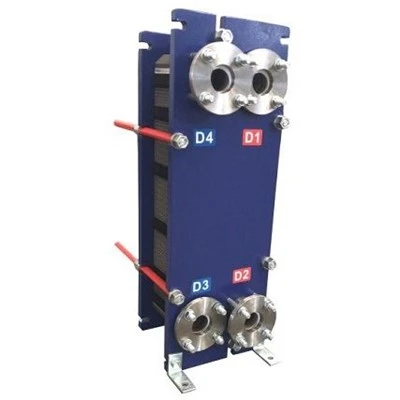
The gasket around the plate perimeter helps prevent process liquid from escaping externally. Gaskets and formed sealing regions around the ports direct hot and cold media into their designated passages. This routing function is as important as the external seal. A replacement that fits the perimeter but follows the wrong port-ring path can be unsuitable for the installed flow arrangement.
Many gasketed designs incorporate double-sealing or tell-tale arrangements at selected port regions. Their intent can be to allow certain sealing failures to become visible externally instead of permitting unnoticed communication between fluids. Exact construction varies by model; not every visible notch or vent has the same function. The buyer should use the equipment-specific drawing to identify these regions and should never block an apparent vent simply because it looks like an unnecessary opening.
The flow arrangement may be single-pass, multi-pass, diagonal or another model-specific layout. This influences which ports are opened, closed or sealed at particular plate positions. Gasket type and plate port punching must therefore be reviewed together. Replacing a regular channel-plate gasket with an end-plate pattern may change the intended sealing path even if the elastomer compound and external profile appear similar.
When leakage occurs, the visible location does not by itself distinguish a defective metal plate from a damaged gasket. External leaks, leaks at a designed detection region and internal cross-contamination require different investigations. The source may also involve groove deformation, wrong plate order, abnormal pressure, gasket aging or corrosion perforation. A leak investigation should precede a bulk gasket order where the cause remains uncertain.
7. Choosing the Elastomer: NBR, EPDM, HNBR, FKM and Special Compounds
The attachment method and elastomer compound answer different purchasing questions. A clip-on gasket may be available in more than one rubber compound, while two gaskets made from the same compound can require different attachment geometry. Chemical suitability must be evaluated for both process circuits, the full temperature cycle, cleaning agents, pressure conditions and any hygiene requirements.
| Compound Family | Common Selection Context | Important Qualification |
|---|---|---|
| NBR | Considered for selected oil, hydrocarbon or industrial fluid duties. | Compatibility varies with oil type, additives, concentration and operating temperature. |
| EPDM | Often considered for compatible water, hot-water and certain chemical duties. | Not a universal choice for mineral oils and hydrocarbons; confirm the exact medium. |
| HNBR | Potential option where a particular oil-service or temperature-performance balance is required. | Exact compound formulation, fluid and application determine suitability. |
| FKM / fluoroelastomer | Considered for selected chemicals, oils and elevated-temperature duties. | Performance is highly chemical-specific; not all FKM formulations are equivalent. |
| Special or food-contact grades | Used where an agreed regulatory, hygiene or specialty process specification applies. | Request documentation for the exact compound and application; do not infer certification from color or family name. |
Temperature figures in generic catalogs may refer to different assumptions such as continuous operation, intermittent exposure or an individual compound formulation. A heat exchanger also sees changing temperatures during startup, shutdown and cleaning. The buyer should state normal, maximum, minimum and cleaning conditions rather than supplying only a single setpoint. Pressure cycling and gasket compression behavior may also be relevant to sealing life.
Material selection is not a guarantee against leakage if the groove shape is wrong. Conversely, a perfectly fitting gasket will not last if it is chemically incompatible. The purchase specification should therefore identify the elastomer and attachment design as two separate controlled characteristics.
8. Why Gaskets Lift, Move, Extrude or Leak After Service
A gasket can fail to remain in its designated groove for several reasons. It may be the wrong model, stretched during fitting, damaged at its clips, incorrectly seated around a port, contaminated by old adhesive or affected by a deformed groove. Incorrect plate alignment or compression can produce additional problems. Environmental conditions such as fluid exposure, temperature changes and pressure transients may contribute to loss of sealing performance over time.
Gasket moves during assembly
Possible factors include missing retention tabs, a mismatched fixing method, overstretching, residue or oil on the plate, and rough handling. Inspect the original retention features before assuming that stronger adhesive will solve the problem.
Repeated external leakage
Potential causes include gasket aging, incorrect rubber, damaged sealing land, groove contamination, wrong plate sequence, uneven frame condition or operating transients. Diagnose the actual leak path before replacing the same parts again.
New gasket will not fit the groove
Check the full plate model and suffix, gasket cross-section, attachment features, port-ring layout and original plate generation. Do not cut, stretch or force a replacement gasket merely to make the perimeter appear correct.
Seal looks correct but mixing occurs
Internal cross-contamination can indicate a plate perforation or another equipment-specific fault. A new gasket alone will not repair a confirmed through-wall crack. A qualified inspection is needed to isolate the cause.
Rubber aging and stress relaxation are also important. A gasket that has been compressed for years may no longer recover sufficiently when the plate pack is opened. Even if it looks intact, reusing it requires an approved assessment based on condition, compound, duty and manufacturer guidance. A scheduled gasket renewal should consider the complete pack rather than replacing only the visibly damaged parts without a technical basis.
Important: do not solve a leakage problem by tightening beyond the manufacturer-approved closing dimension. Excessive compression can damage the gasket, plates or frame. Pressure-containing equipment must be isolated and serviced by qualified personnel.
9. Inspection and Regasketing: What Should Be Checked?
Before a replacement project is approved, document the existing equipment and actual gasket design. The plate-pack arrangement, original position of special plates, attachment method and operating conditions should be recorded. After safe isolation and opening under an approved procedure, inspection can distinguish gasket deterioration from metal-plate damage or a mismatch introduced during earlier maintenance.
Inspect the metal before deciding on a new gasket
Look for scratches, deformation, corrosion, cracks or deposits in the gasket groove and port sealing areas. A new gasket cannot compensate for an unacceptable damaged sealing surface. If a plate is distorted, the correct response may be plate replacement rather than choosing a different rubber compound or applying more adhesive. Suspected cracks and pinholes need appropriate examination by competent personnel.
Verify the original attachment method
Determine whether the gasket is bonded, edge clipped, snapped into a local groove feature, retained by studs or secured using a special arrangement. Preserve the full model designation and take detailed photographs before removing old parts. Pay special attention to the corners and port rings, which often carry more identification information than straight gasket sections.
Use the approved maintenance process
Removal of old adhesive, cleaning, gasket fitting, curing and reassembly vary by equipment. Some historic maintenance notes specify chemical solvents or heating methods, but those are not universally safe instructions. Solvent exposure, sharp plate edges, chemical burns, fire and damage to sealing grooves are real hazards. The exact procedure belongs to the manufacturer or an approved professional service plan.
Upon receiving new parts, compare the labeled gasket type, compound, cross-section, attachment geometry and quantity with the approved order. Where replacement plates are included, verify their grooves and port patterns before regasketing. Installation inspection and return-to-service testing remain separate responsibilities under the applicable approved procedures.
10. Replacement Gasket RFQ: From a Model Name to an Approved Specification
Industrial buyers frequently send enquiries such as "200 EPDM gaskets for a plate heat exchanger." That identifies a material family and quantity but leaves critical compatibility questions unanswered. A more reliable request includes the exchanger brand, complete model and serial reference, the plate and gasket variant, attachment design, sealing profile, port-ring configuration, operating conditions and any required documentation.
Collect equipment nameplate, full model, suffix and existing gasket designation.
Show the plate groove, gasket cross-section, clips, studs, corners and port rings.
Confirm compound, both fluids, temperature cycle, cleaning chemistry and quantity by type.
Agree matching evidence, supply status, inspection scope, packing and delivery requirements.
| RFQ Field | Buyer Information | Reason |
|---|---|---|
| Equipment | Brand, full model, suffix, nameplate, serial reference | Identifies the correct heat exchanger family and version |
| Gasket profile | Full-loop photos, cross-section, port-ring geometry, sample or drawing | Confirms the metal-to-rubber sealing interface |
| Attachment design | Glue-on, clip-on, snap-in, stud or special system, plus close-up photos | Prevents wrong fixing-method selection |
| Plate condition | Groove photos, plate markings, cracks or deformation, and relevant positions | Determines whether gaskets alone are appropriate |
| Elastomer | Known grade or proposed compound; hygiene or other documentation needs | Supports chemical and service compatibility review |
| Process duty | Both fluids, additives, concentrations, temperatures, pressure cycles and cleaning agents | Checks material and service suitability |
| Quantities | Count by regular, start, end, port-ring or special gasket configuration | Prevents incomplete or mixed replacement sets |
| Delivery | Destination, labeling, packaging, required date, agreed records | Defines a verifiable purchase and receiving scope |
Do not merge gasket model aliases simply because two supplier catalogs use similar numbers. Keep brand, suffix and original identification together, especially for legacy installations. Even when a supplier can source independent aftermarket components, compatibility should be confirmed against the actual plate groove and service conditions. "Universal gasket" and "100% compatible" are not useful technical substitutes for a matched specification.
Related product information is available in our heat exchanger gasket category , replacement plate category , plate and gasket replacement service overview and Sondex replacement gasket reference . Manufacturer names on aftermarket pages identify equipment compatibility requirements and do not imply original-brand authorization.
11. Three Realistic Purchasing Situations
Case A: An old glued gasket has been removed
The buyer plans to order a glue-free replacement because it seems easier to install. The critical first question is whether the existing metal plate has the clips, openings or retention geometry required by that mechanical design. If it does not, the different attachment method may be incompatible even if the rubber loop has a similar outline. The approved original gasket or a manufacturer-supported conversion must be identified before sourcing.
Case B: A marine cooler repeatedly leaks after regasketing
The contractor knows the elastomer family and has replaced the complete gasket set, but a leak returns during operation. Possible concerns include incorrect compound for the coolant or oil circuit, displaced port-ring seals, damaged grooves, pressure transients, wrong plate-pack compression or a metal plate defect. Ordering the same gaskets again without inspection may repeat the problem. A qualified leak diagnosis and review of both fluids and assembly records are more useful than a guess based only on the visible external leak.
Case C: Several gasket variants are packed under one exchanger model
A large plate pack may require standard channel gaskets and different end or port-sealing arrangements. The purchase order should therefore separate quantities by actual plate position and part configuration. Labels, photographs and a controlled parts list help the receiving team avoid a shutdown delay. Total gasket quantity is not sufficient if the delivered mix is wrong.
In all three situations, the most valuable supplier response is not an unverified assurance that a gasket will fit. It is a documented request for the missing identification information, followed by model-specific confirmation of profile, attachment, elastomer and required quantity.
12. Plate Heat Exchanger Gasket Groove and Attachment FAQ
Does adhesive make a plate heat exchanger gasket seal against pressure?The primary seal depends on the designed compression of the gasket between the plates and its contact with the sealing surfaces. Adhesive normally retains a glue-on gasket in the intended groove during handling and assembly. It cannot compensate for a wrong profile, damaged groove or unapproved closing dimension.
Are clip-on and snap-in gaskets interchangeable?Not automatically. Clip-on systems can engage the plate edge, while snap-in designs may rely on specially formed groove features. Their retaining geometry, gasket profile and plate generation must be matched to the actual equipment.
Can a glue-on gasket be converted to a glue-free version?Only where an approved compatible design or conversion is established. The existing plate must provide the required mechanical attachment features, and the sealing geometry must remain suitable. A similar gasket outline is not enough.
What is the difference between a gasket groove and a gasket clip?The groove is the formed metal seating and sealing interface for the elastomer. A clip is one possible retention feature that helps hold the gasket on the plate before final compression. Both must be correct for the original design.
Why does a gasket keep coming out of the groove?Possible causes include the wrong gasket model, broken retention tabs, stretched rubber, groove contamination, deformation, rough handling or an incompatible attachment arrangement. Investigate the physical fit and assembly conditions before adding adhesive.
Can old adhesive be removed with any solvent?No. Solvent and cleaning methods must be compatible with the plate metal, gasket, adhesive and safety procedures. Historical manuals may name particular chemicals, but their instructions should not be generalized across models or workplaces.
Do gasket materials and fixing methods mean the same thing?No. NBR, EPDM, HNBR and FKM describe elastomer families; clip-on, snap-in, stud and glue-on describe retention arrangements. The material and mechanical profile are separate procurement requirements that must both be confirmed.
Are end-plate gaskets identical to channel-plate gaskets?Not necessarily. End plates, turning plates and other special positions may use different port sealing paths or gasket branches. The approved plate arrangement and model-specific parts schedule determine the required quantities and variants.
Can a gasket be reused after the plate pack is opened?Reuse depends on the specific gasket condition, compound, age, deformation, chemical exposure and the equipment manufacturer's procedure. An intact appearance alone does not prove that sealing recovery remains adequate.
What should I send when the gasket part number is missing?Send the complete exchanger nameplate, photos of the gasket and metal groove, close-ups of clips or studs, port-ring layout, available dimensions, process fluids, temperature and pressure conditions, quantities and destination. A clean sample or approved drawing may be needed for uncertain legacy models.
Related Products and Technical References
The engineering discussion above reflects the sealing-groove, elastic-compression and attachment concepts documented in our technical knowledge collection. Additional public guidance on mechanical and adhesive attachments is available from Heat Exchanger Spares , while Alfa Laval's industrial gasketed plate exchanger manual illustrates model-specific Clip-on, ClipGrip and special retention methods. These external examples do not certify any particular aftermarket part or supplier's work.
Technical RFQ | Gasket Groove Identification & Matching
Request a Matching Gasket or Plate-and-Gasket Set
Send the full exchanger brand and model, nameplate, photos of the gasket profile, metal groove, corner ports and retention features. Include the original gasket material if known, both process fluids, operating and cleaning temperatures, pressure history, quantity by gasket configuration and destination country. If the attachment method is uncertain, mention that uncertainty rather than guessing. We can review the information needed to prepare an independent aftermarket replacement quotation; actual compatibility, availability and documentation are confirmed for the particular order.
Send Gasket Details & Request Quote