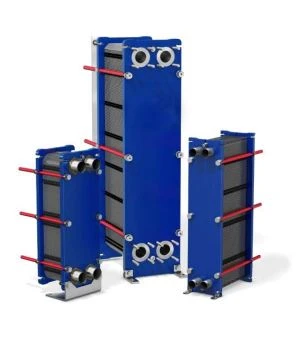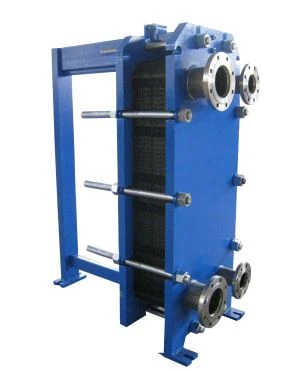
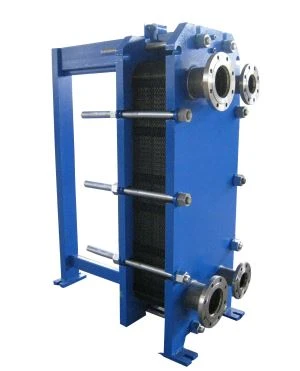
Chevron plate heat exchanger from WTSML's historical product catalog.
Chevron Plate Geometry and Heat Transfer
Chevron plate heat exchangers use angled corrugations pressed into heat-transfer plates. The shape of the corrugations influences channel geometry and flow behavior between adjacent plates.
Chevron patterns can improve fluid mixing and thermal performance, but they also influence hydraulic resistance. A suitable selection balances heat transfer against allowable pressure loss.
The final plate and channel arrangement must account for the actual operating temperatures, flow rates and fluid characteristics.
How Chevron Plate Design Influences Performance
Thermal Driving Force
Thermal performance depends on the temperature program, channel configuration and total effective surface area.
Pressure Drop
The selected channel pattern must remain within the available pumping capacity of both circuits.
Flow Configuration
Port sealing and plate arrangement establish the intended flow passages and connection layout.
Materials and Sealing
Plate alloy, gasket type and connection materials are checked against process-fluid and cleaning requirements.
Historical Product Reference Specifications
The original Chevron product listing contains the following material and connection references. They must be confirmed for the final equipment configuration.
| Type | Chevron Angle Plate Heat Exchanger |
|---|---|
| Frame Materials | Carbon steel; stainless steel |
| Plate Materials | AISI 316; titanium; nickel; SMO254 |
| Maximum Working Pressure | 21 bar, historical catalog reference |
| Connection Options | Threaded; lined; flanged |
| Thermal Performance | Determined from the selected model and duty |
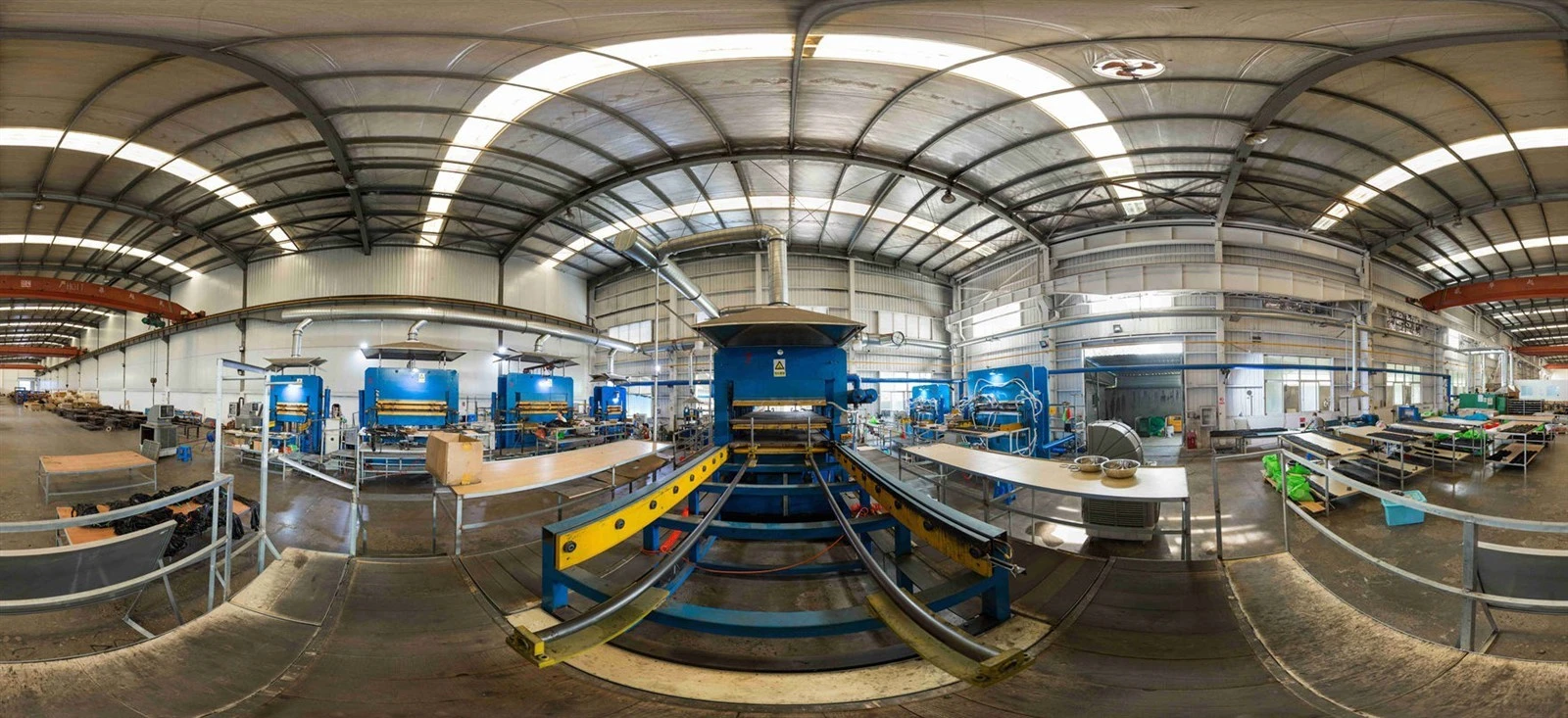
WTSML factory photograph for industrial manufacturing context.
Plate Forming and Component Consistency
Chevron plate performance depends on the specified pressed geometry. For replacement projects, the original corrugation pattern, plate outline, ports and gasket groove must be compared with the requested component.
The factory photograph illustrates the broader industrial environment; it is not evidence of a particular chevron press or tooling configuration.
Industrial Application Considerations
Chevron plate configurations may be evaluated for liquid heating, process cooling, utility water systems and heat recovery. The selected equipment must suit the process fluids, pressure limits, corrosion risk and expected cleaning regime.
Find a Suitable Chevron Plate Heat Exchanger
Send the hot- and cold-side fluid data, flow rates, inlet and required outlet temperatures, allowable pressure drops, materials and connection specifications.
Request Chevron PHE Quotation →Replacement Plates and Gasket Matching
Replacement plates must match the original pressing geometry, dimensions and port configuration. Gaskets must be selected using the correct plate groove, attachment method and elastomer suitability. A similar-looking component is not necessarily interchangeable.
Frequently Asked Questions
1. What is a chevron plate heat exchanger?
It uses angled corrugations on heat-transfer plates to form fluid channels and provide thermal contact between process streams.
2. Does a larger chevron angle always improve performance?
No. The overall relationship between heat transfer and pressure drop depends on the complete plate pattern and operating duty.
3. Can different chevron plate patterns be exchanged?
Not automatically. Plate geometry, port arrangement, sealing and thermal design must be verified.
4. Is every Chevron unit rated to 21 bar?
No. The value is a historical reference and must be verified for the actual configuration.
5. What data is needed for thermal selection?
Both fluids, flow rates, temperatures, pressure-drop limits, material requirements and installation details.
Hot Tags: chevron plate geometry and heat transfer, China chevron plate geometry and heat transfer manufacturers, suppliers