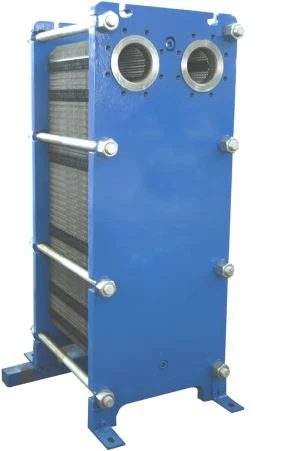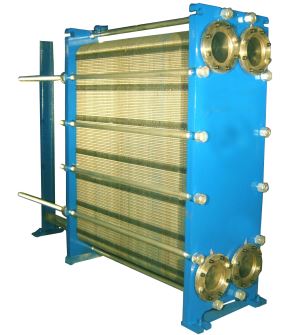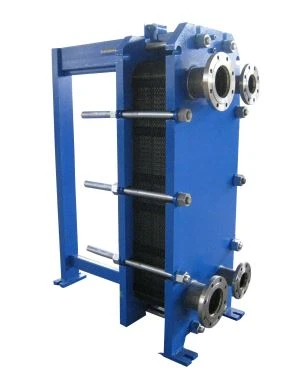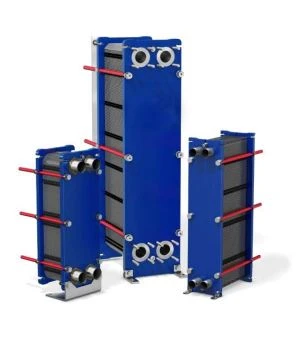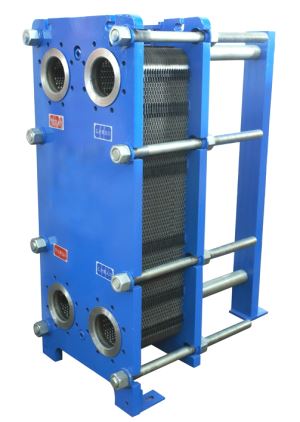
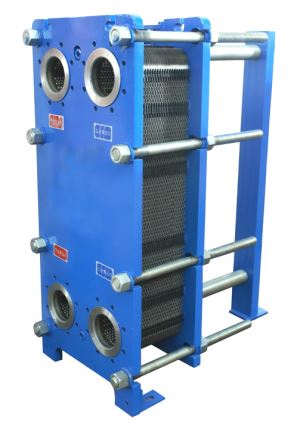
Corrugated plate heat exchanger from WTSML historical product range.
Corrugated Heat-Transfer Plates and Channel Design
A corrugated plate heat exchanger uses pressed metal plate surfaces to form flow passages between adjacent plates. The corrugations influence thermal performance, channel pressure loss and the contact geometry of the plate pack.
For process cooling and heating, the selected plate pattern must provide the specified duty while meeting allowable hydraulic and mechanical limits.
Plate configuration and material compatibility should be reviewed against the complete operating conditions rather than chosen by appearance alone.
How Corrugated Channels Work
Heat Transfer
Heat passes through the metal plates between the separate hot and cold fluid channels.
Channel Geometry
Corrugation angle, pitch and depth affect the flow passage and hydraulic characteristics.
Pressure Drop
The channel design must balance heat-transfer performance against the available pressure drop.
Plate and Seal Matching
The geometry, corner ports and sealing arrangement must suit the complete exchanger configuration.
Technical Selection Specifications
Complete model-specific specifications were not available from the previously reviewed Corrugated product material. The table below lists the actual fields to confirm, without assigning unverified performance values.
| Product Type | Corrugated Plate Heat Exchanger |
|---|---|
| Plate Pattern | Confirmed for selected model |
| Plate Material | Chosen according to fluid and model compatibility |
| Operating Pressure | Model-specific verified value required |
| Operating Temperature | Model-specific verified value required |
| Plate Count and Area | Determined from thermal selection |
| Connection Arrangement | Confirmed during equipment configuration |
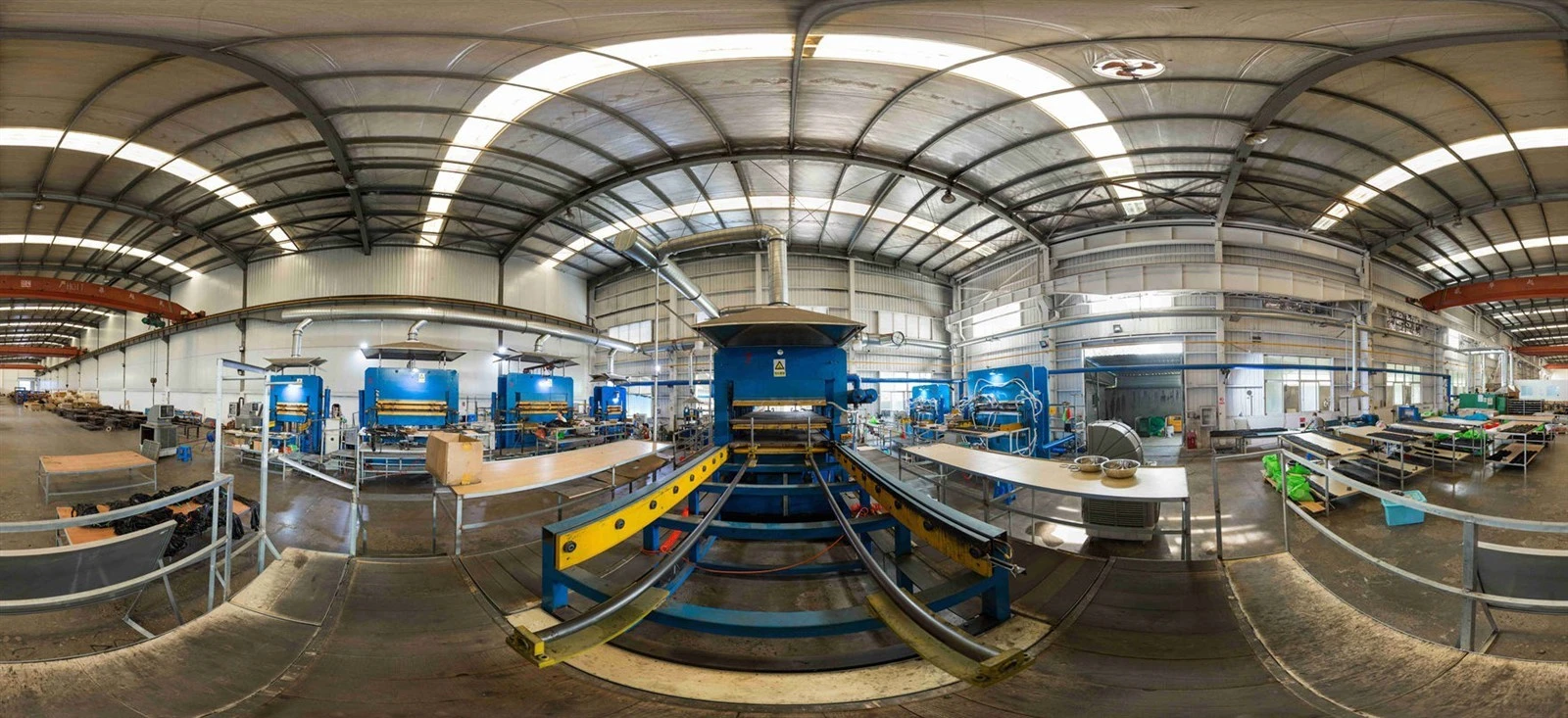
WTSML factory environment reference.
Plate Geometry and Component Accuracy
Production of corrugated heat-transfer plates depends on suitable pressing geometry, dimensions, port openings and sealing interfaces. For replacement projects, these features must be compared against the original equipment configuration.
The factory image gives context for WTSML industrial operations; the precise forming process and tooling for an individual plate model must be confirmed separately.
Applications for Corrugated Plate Heat Exchangers
Appropriately configured units may be considered for industrial cooling, heating, utility systems and heat recovery. Thermal duty, fouling tendency, fluid properties and maintenance access all influence the final equipment choice.
Request a Corrugated Plate Heat Exchanger Selection
Provide fluid compositions, flow rates, inlet and outlet temperature requirements, allowable pressure drops and mechanical constraints for an engineering enquiry.
Request Process Heat Exchanger Quote →Replacement Plate and Gasket Requirements
For gasketed corrugated plate exchangers, replacement components must match the original plate geometry, port arrangement and gasket groove. Chemical compatibility of the gasket compound must also be established for normal operation and cleaning conditions.
Do not assume that two corrugated plates with the same overall dimensions are interchangeable.
Frequently Asked Questions
1. What is a corrugated plate heat exchanger?
It uses pressed corrugations on heat-transfer plates to form channels between the heating and cooling circuits.
2. Why does corrugation geometry matter?
It affects flow passage dimensions, heat-transfer behavior and hydraulic resistance.
3. Are all corrugated plates chevron plates?
No. Corrugation patterns differ among models and equipment designs.
4. Can corrugated plates of equal size be exchanged?
Not automatically. Port layout, gasket groove, formed pattern and mounting details must match.
5. What information is needed for a quotation?
Both process streams, temperatures, flow rates, allowable pressure drops, material requirements and installation details.
Hot Tags: corrugated heat-transfer plates, China corrugated heat-transfer plates manufacturers, suppliers