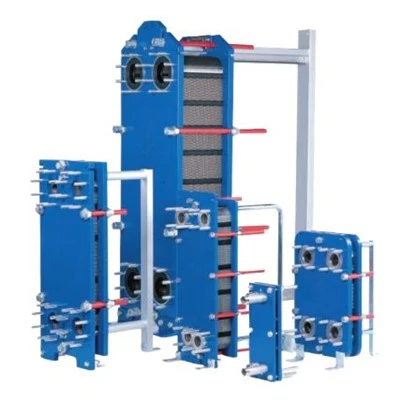
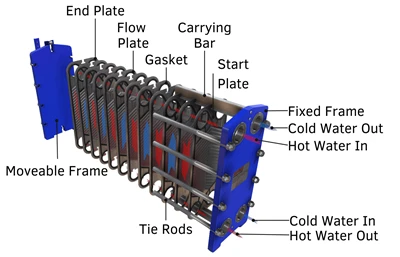
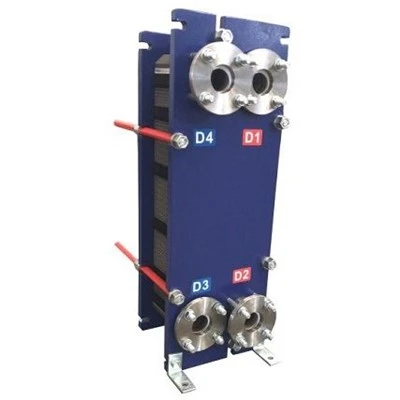
The selection of heat exchanger plate thickness is primarily determined by factors such as operating pressure, design temperature, and the corrosiveness of the medium.
Operating Pressure
The main determining factor for plate heat exchanger plate thickness is the operating pressure. Under normal operating pressures (generally not exceeding 1.0 MPa), plate thickness is typically 0.5 mm. This is because within this pressure range, 0.5 mm plates provide sufficient strength to prevent deformation and leakage due to excessive pressure. However, when the operating pressure exceeds 1.0 MPa, thicker plates, such as 0.6 mm, are generally selected to ensure stable operation of the heat exchanger. Under extremely high pressure conditions, even thicker plates may be required to withstand the pressure, but this will correspondingly increase manufacturing costs.
Design Temperature
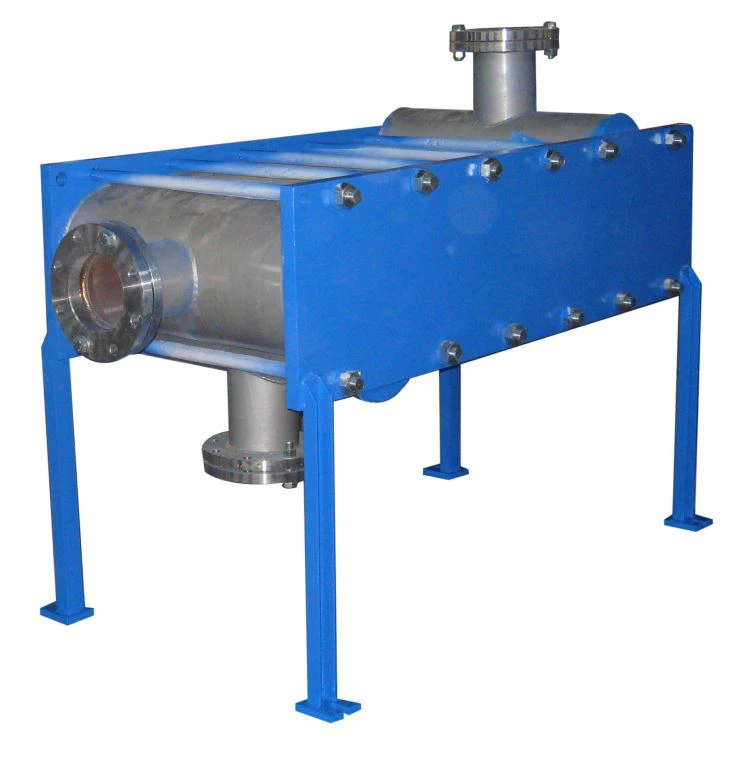
Design temperature is also an important factor to consider when selecting plate thickness. The design temperature of plate heat exchangers generally does not exceed 150°C. When the temperature is too high, the plates may deform due to thermal stress, even leading to leakage. Therefore, under high-temperature and high-pressure conditions, fully welded heat exchangers resistant to high temperatures and pressures are typically selected, with plate thicknesses reaching 1 mm. Plates of this thickness can better withstand the thermal stress caused by high temperatures, ensuring stable operation of the heat exchanger.
Corrosivity of the Medium
The corrosivity of the medium also significantly affects the selection of plate thickness. Under normal water-water, oil-water, and steam-water conditions, a plate thickness of 0.5mm is generally chosen because this thickness meets strength requirements while also facilitating heat transfer. However, when encountering strong acids, strong alkalis, or highly corrosive media, thicker plates, such as 0.6mm or 0.7mm, are typically selected to extend the heat exchanger's service life and prevent plate corrosion perforation. Plates of this thickness offer better resistance to corrosive media, improving the heat exchanger's durability.