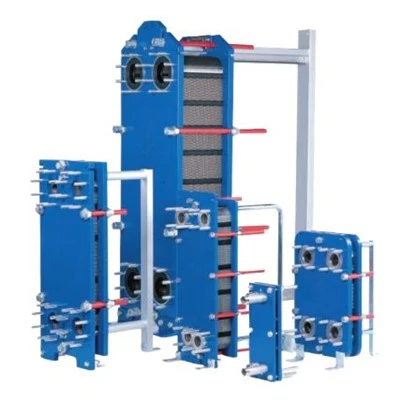
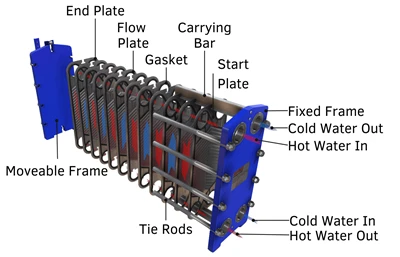
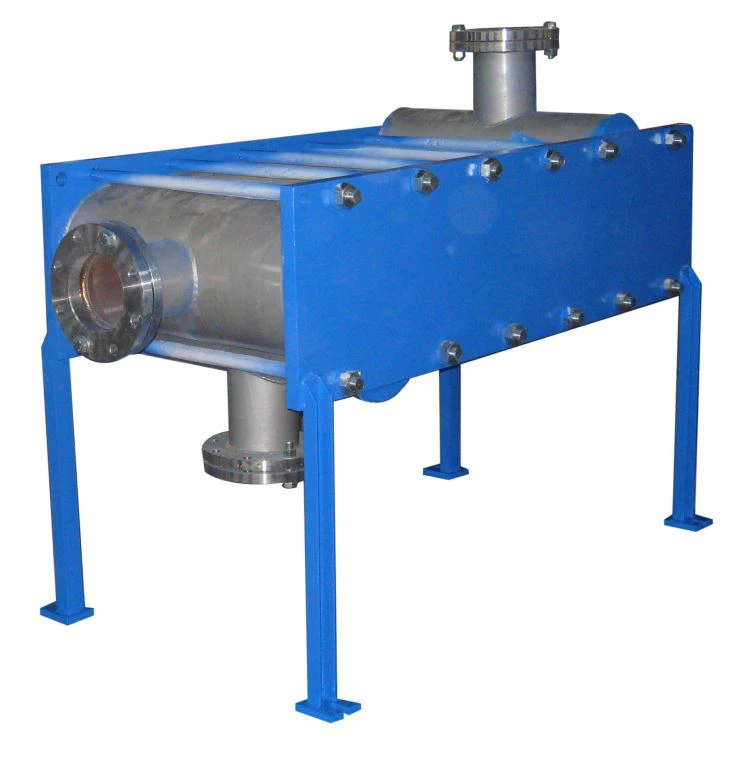
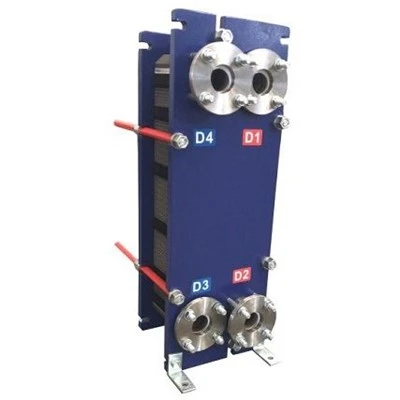
Heat exchanger plates are typically made of sheet metal through a stamping process, with a corrugated surface of a specific shape. These corrugations increase fluid turbulence, thereby improving heat exchange efficiency. Holes are located at the four corners of the plates for media inflow and outflow. The plates are separated by gaskets, forming independent flow channels. The plate thickness is generally between 0.4 mm and 0.8 mm, depending on the specific application.
The choice of plate material depends on the properties of the medium and the operating conditions. Common materials include stainless steel, titanium and titanium alloys, and nickel and nickel alloys. Stainless steel plates are suitable for generally mildly corrosive media and are relatively inexpensive. Titanium and titanium alloy plates have strong corrosion resistance and are suitable for seawater or environments with high chloride ion content. Nickel and nickel alloy plates are suitable for high-temperature or highly corrosive media. Material selection must comprehensively consider the operating environment and economic factors.