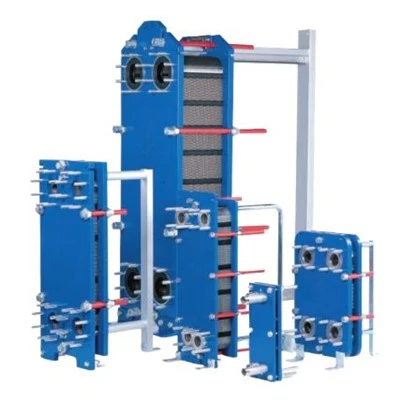
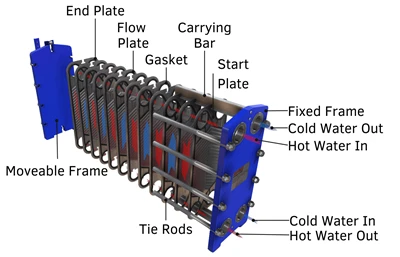
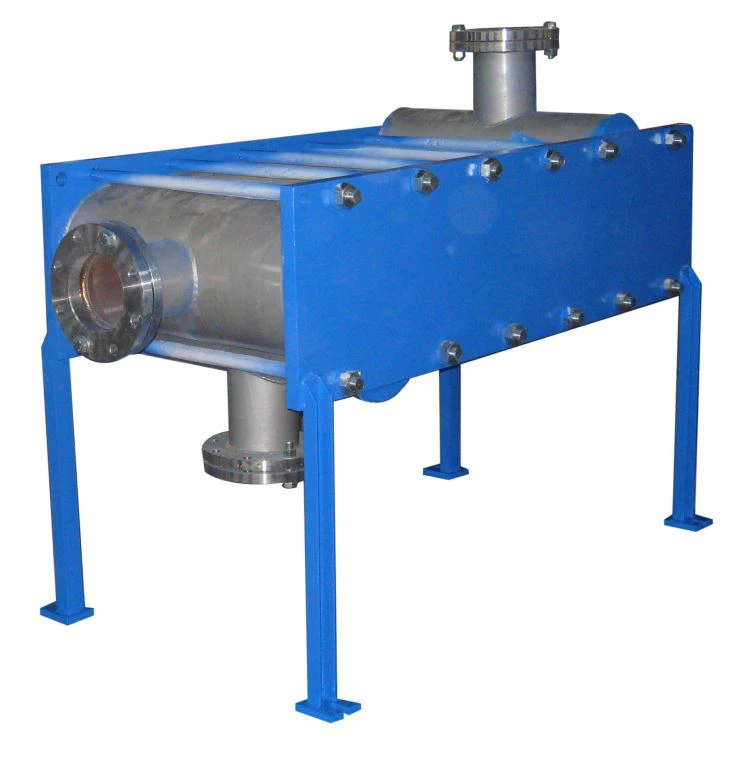
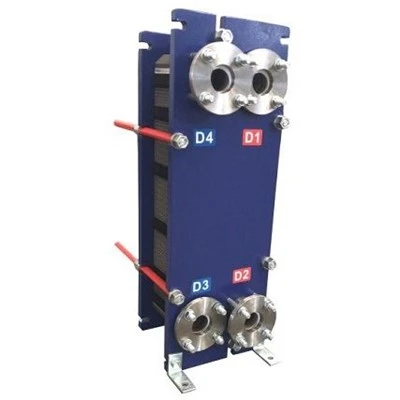
Perforation in heat exchanger plates refers to holes or pits appearing on the plates. The main causes of these perforations are as follows:
- Corrosion: Long-term exposure to acids and alkalis leads to material corrosion, eventually causing perforation.
- Abrasion: Scale or deposits on the plates cause severe erosion when fluid flows over them, accelerating plate wear and ultimately leading to perforation.
- Vibration: Under high temperature and pressure, the plates are prone to vibration. Excessive vibration can cause plates to collide, leading to surface wear and perforation.
- Overpressure: When the pressure exceeds the maximum withstand capability of the plate material, the plates will undergo plastic deformation, resulting in perforation.
Treatment Methods
- Replace the Plate: This method is suitable for cases with severe perforation of the plate. Once a large area of perforation appears on the plate, it must be replaced.
- Fill the Holes: When small holes appear on the plate, try filling the holes with materials such as silver solder to prevent fluid leakage.
- Reduce Corrosion: Add protective measures such as anti-corrosion coatings to reduce the corrosion rate of the plate in acidic, alkaline, and humid environments.
- Reduce Vibration: Take measures such as reducing fluid flow rate and adding vibration damping materials to reduce the degree of vibration of the plate under high temperature and high pressure.