The manufacturing process of gaskets includes steps such as sheet cutting, stamping, edge treatment, and surface treatment. Stamping is the core step, requiring high-precision molds to ensure consistent corrugation shape. Edge treatment includes deburring and chamfering to prevent damage to the gasket during installation. Surface treatment may involve polishing or coating to improve corrosion resistance or reduce scaling. The precision of the manufacturing process directly affects the gasket's sealing performance and service life.
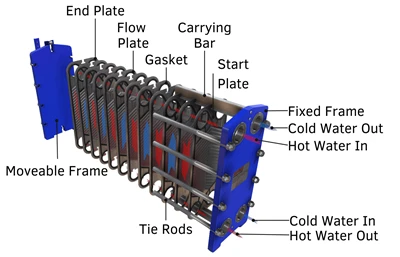
Gaskets are an important component of gaskets, used to prevent media leakage. Gasket materials are typically rubber or synthetic rubber, such as nitrile rubber, EPDM rubber, or fluororubber. Gasket selection must consider the temperature, corrosiveness, and chemical compatibility of the media. Gaskets can be installed using either adhesive or snap-on methods; the former is less expensive, while the latter is easier to replace. The reliability of the seal design is crucial for the safe operation of the equipment.