How to Identify an Unknown Heat Exchanger Plate Before Ordering Replacements
Industrial plants often operate heat exchangers that have been in service for many years. Original drawings may be missing, nameplates may be difficult to read and maintenance records may contain incomplete model numbers.
In these circumstances, a buyer may have only a removed plate, a worn gasket or a few equipment photographs. Reliable identification requires a systematic record of geometry, not a guess based on appearance.

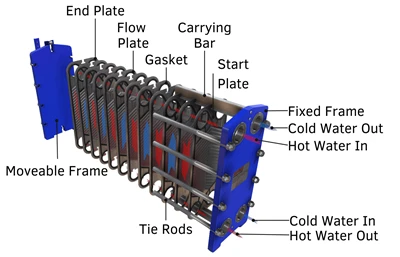
Technical assembly reference image.
Why Visual Similarity Can Be Misleading
Several plate designs may have similar overall dimensions but different port arrangements, corrugation patterns, gasket retention features or mounting details.
An incorrectly matched plate may fail to seal properly, alter fluid routing or prevent the frame from reaching its specified closing dimension.
Seven Details to Record from the Original Plate
1. Complete Equipment Identification
Photograph the equipment nameplate and record the manufacturer, full model, serial information and any known frame designation.
2. Overall Plate Dimensions
Measure total length and width using a consistent reference. Avoid estimating dimensions from a photograph without a scale.
3. Port Locations and Diameters
Record the position and size of the fluid ports. Note whether the plate contains open, closed or special port arrangements.
4. Corrugation Pattern
Capture clear photographs showing the pressed surface, pattern orientation and any distinguishing features of the heat-transfer area.
5. Gasket Groove and Retention
Document the groove profile, port sealing route and the method used to retain the gasket.
6. Hanging and Guiding Features
Photograph the plate edges where they engage the carrying bar and lower guide. These features help establish frame compatibility.
7. Material and Plate Position
Record known alloy information, markings, original thickness and whether the plate occupies a standard, end or special position in the pack.
What Photographs Should a Buyer Send?
| Photograph | What It Helps Verify |
|---|---|
| Whole plate, front and back | Shape, orientation and overall geometry |
| Port area close-up | Port pattern and surrounding sealing features |
| Gasket groove close-up | Seal profile and attachment arrangement |
| Top and bottom edges | Hanging and guide details |
| Plate with measurement reference | Dimensional identification |
| Equipment nameplate and frame | Model identification and installed configuration |
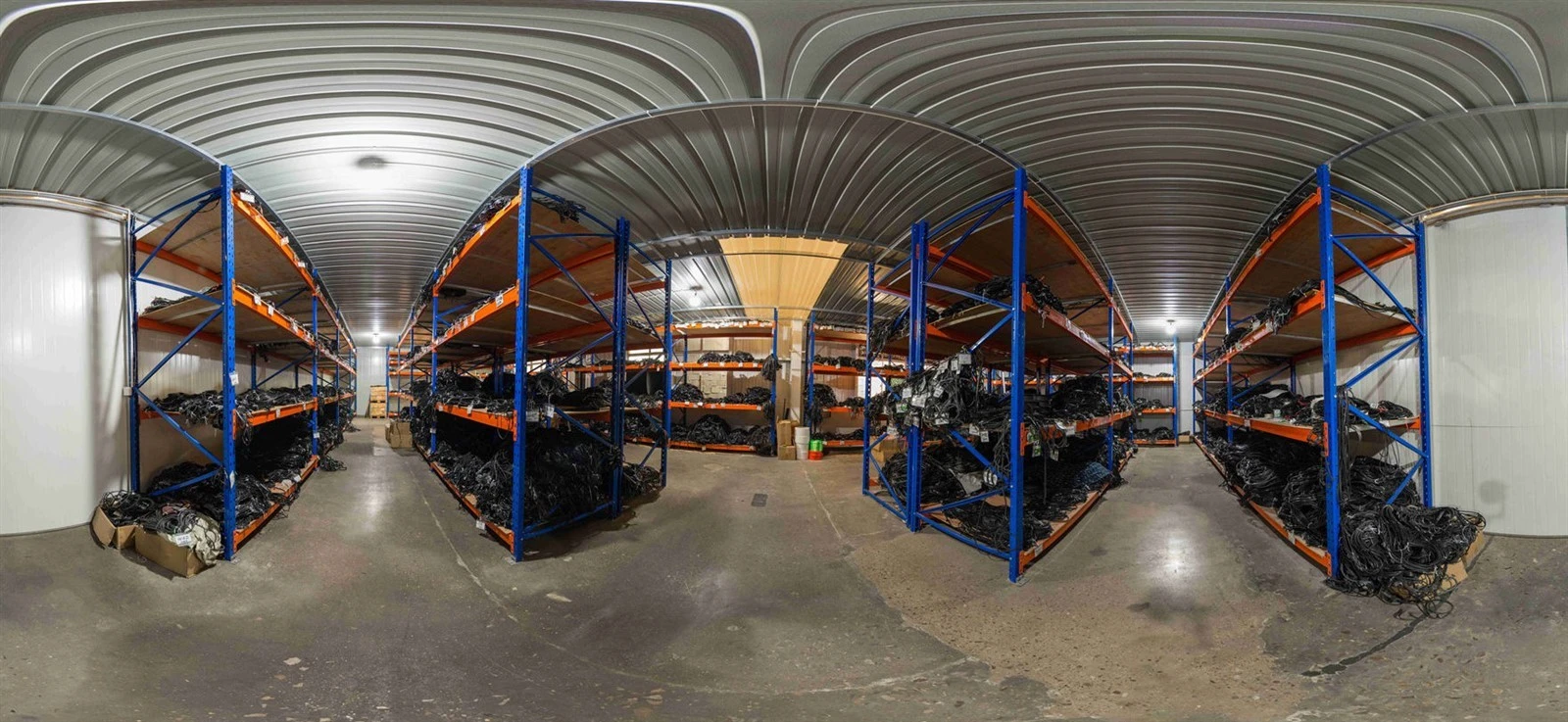
WTSML factory VR photograph.
Confirm the Intended Service Before Approving Replacement Plates
Even when the geometry is identified correctly, the replacement material must be suitable for the operating medium. Information about temperature, pressure and fluid chemistry helps assess the proposed specification.
Where the original equipment has experienced corrosion, premature leakage or repeated maintenance problems, the replacement enquiry should also include the failure history.
Have a Plate but No Model Number?
Send clear plate photographs, measurements, available equipment details and order quantity to WTSML for a replacement identification enquiry.
Submit Plate Identification Request →What If the Existing Plate Has No Visible Markings?
Identification may still be possible using measured geometry and the original frame configuration. However, uncertainty must be resolved before interchangeability can be confirmed.
If the information is insufficient, additional measurements, an original sample or technical drawings may be needed. Do not claim compatibility based solely on a similar catalog photograph.
Frequently Asked Questions
1. Can a plate be identified from one photograph?
Sometimes a photograph helps narrow the possibilities, but reliable matching normally needs additional dimensions and equipment details.
2. Are plates of the same length and width interchangeable?
No. Port geometry, corrugation, sealing and frame mounting features must also match.
3. Is a sample plate useful?
Yes. An original sample may help verify details that are difficult to capture in photographs.
4. Can a different alloy be selected for replacement?
Any material change requires verification against the intended fluid and equipment design requirements.
5. What is needed for a quotation?
Provide the equipment model if known, plate dimensions, detailed photographs, material requirements and quantity.