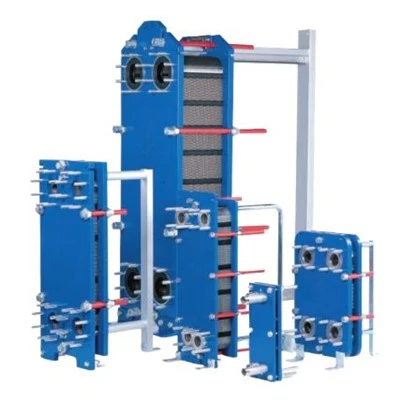
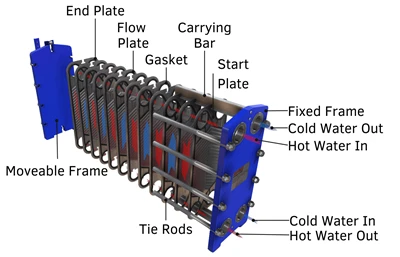
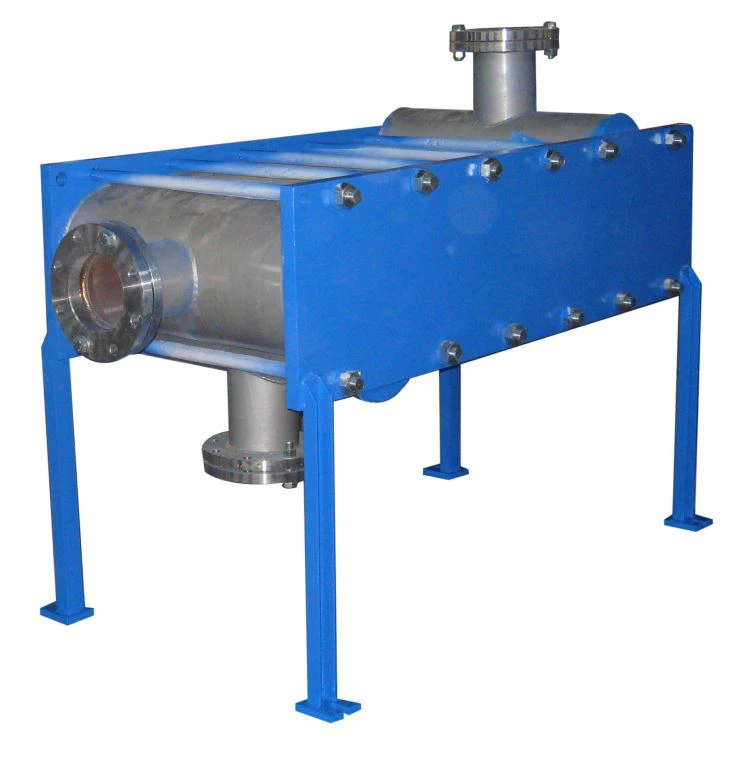
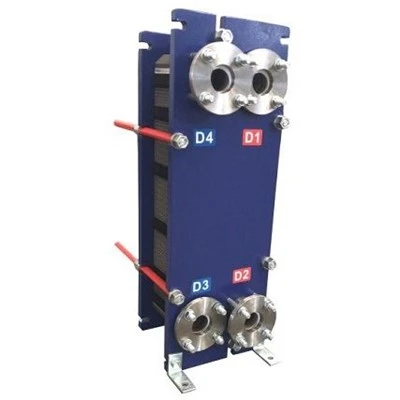
With the continuous maturation of plate heat exchanger technology, the number of manufacturers in the market is increasing, giving consumers more choices but also presenting a series of selection challenges. Therefore, finding a professional manufacturer is crucial.
Industrial plate heat exchangers offer a wide variety of plate types, each with varying plate thicknesses. When selecting plate material and thickness, careful consideration must be given to the specific operating conditions. Inappropriate selection can not only affect performance but may even lead to equipment malfunction.
For 304 stainless steel industrial plate heat exchangers, plate thickness is typically set between 0.4mm and 0.5mm.
306 stainless steel plates are mostly selected with a thickness of 0.5mm to 0.6mm. For high-pressure applications, thicker plates are required.
254SMO (high alloy steel) generally uses a thickness of 0.6mm.
Titanium commonly uses thicknesses of 0.5mm and 0.6mm. Thicker plates are chosen for high-pressure applications, while 0.4mm plates are sometimes used for low-pressure applications.
Hastelloy plates are typically 0.6 mm thick.