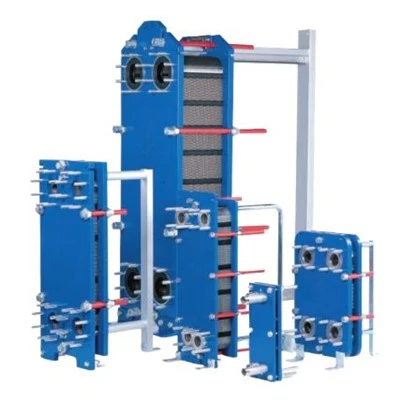
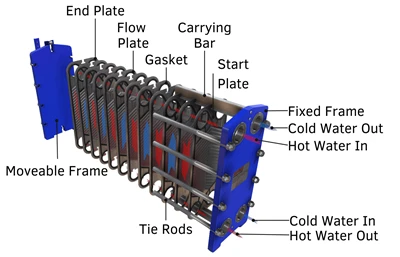
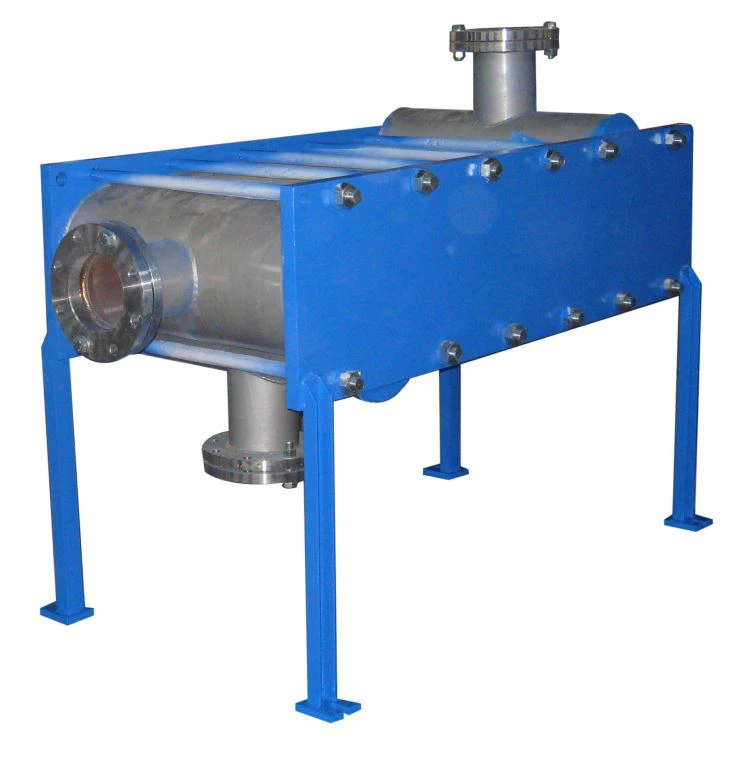
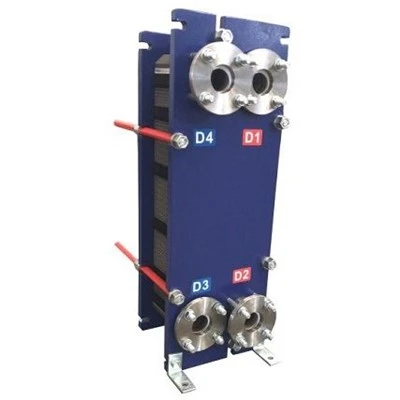
Before installation, ensure the gasket and plate are securely fixed together. Traditionally, adhesive is used, but modern methods can employ a snap-on fastening system. The gasket thickness must be accurate; too thick, and the plate corrugations will not contact, leading to deformation under pressure; too thin, and tightening the bolts will cause the corrugated tips to press against the plate, creating small pits and potential leaks.
The main gasket fixing methods for plate heat exchangers are adhesive, embedded, and snap-on. Adhesive gaskets are applied to the gasket and directly adhered to the mounting groove of the heat exchange plate; this method is simple but relatively cumbersome to install and remove. Embedded gaskets have mounting holes on the heat exchange plate and adhesive pins on the gasket edges; these pins are inserted into the holes during installation, facilitating frequent disassembly and reassembly. Snap-on gaskets use snaps or U-shaped clips on the gasket edges to engage with corresponding structures on the heat exchange plate; this method is convenient for installation and disassembly and provides stable sealing performance. Users should choose the appropriate fixing method based on application requirements and maintenance frequency.