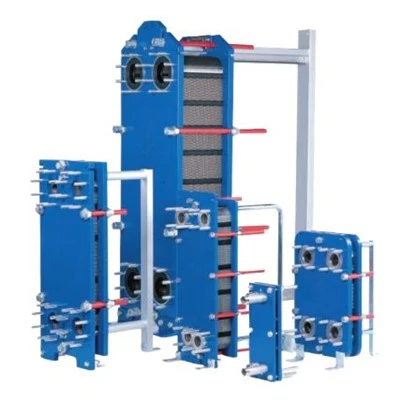
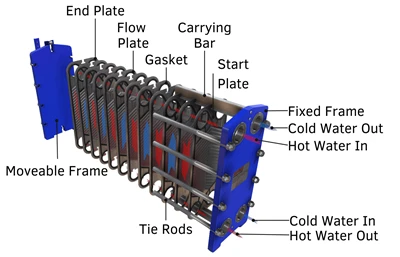
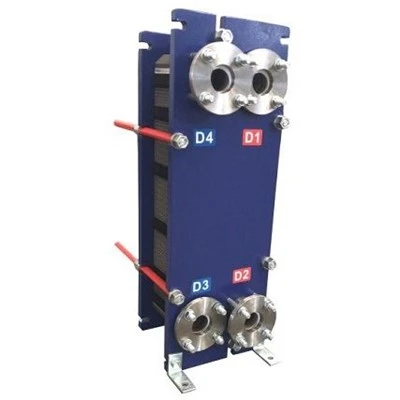
Heat exchanger gaskets are composed of a series of corrugated metal plates stacked together, forming narrow flow channels through which hot and cold fluids exchange heat. The main functions of the gaskets are:
1. Sealing: The gasket is installed in a sealing groove around the plates. When the plates are compressed, the gasket elastically deforms, filling the microscopic unevenness between the plates to form a tight seal, preventing leakage between the two fluids or to the external environment.
2. Flow Diversion: The shape of the gasket determines the flow path of the fluid between the plates. It guides the fluid correctly into the designated flow channels, achieving complete isolation of hot and cold fluids and counter-current or cross-flow heat exchange, avoiding short-circuiting.
3. Buffering and Compensation: During equipment operation, temperature and pressure fluctuate, and the plates undergo slight deformation. The elasticity of the gasket absorbs these changes, compensating for thermal expansion and contraction, and maintaining the stability of the seal.
Gaskets are the core component ensuring the safe, efficient, and leak-free operation of plate heat exchangers. A poor-quality or worn-out gasket can lead to media mixing, reduced efficiency, or even equipment shutdown.