


Identifying the correct replacement plate for a gasketed plate heat exchanger requires more than the equipment model or a similar-looking metal plate. Plate dimensions, port locations, corrugation patterns, gasket grooves, material and installed position must all be considered.
This guide explains how industrial maintenance engineers, distributors and equipment buyers can identify replacement heat exchanger plates, including cases where the original part number is missing.
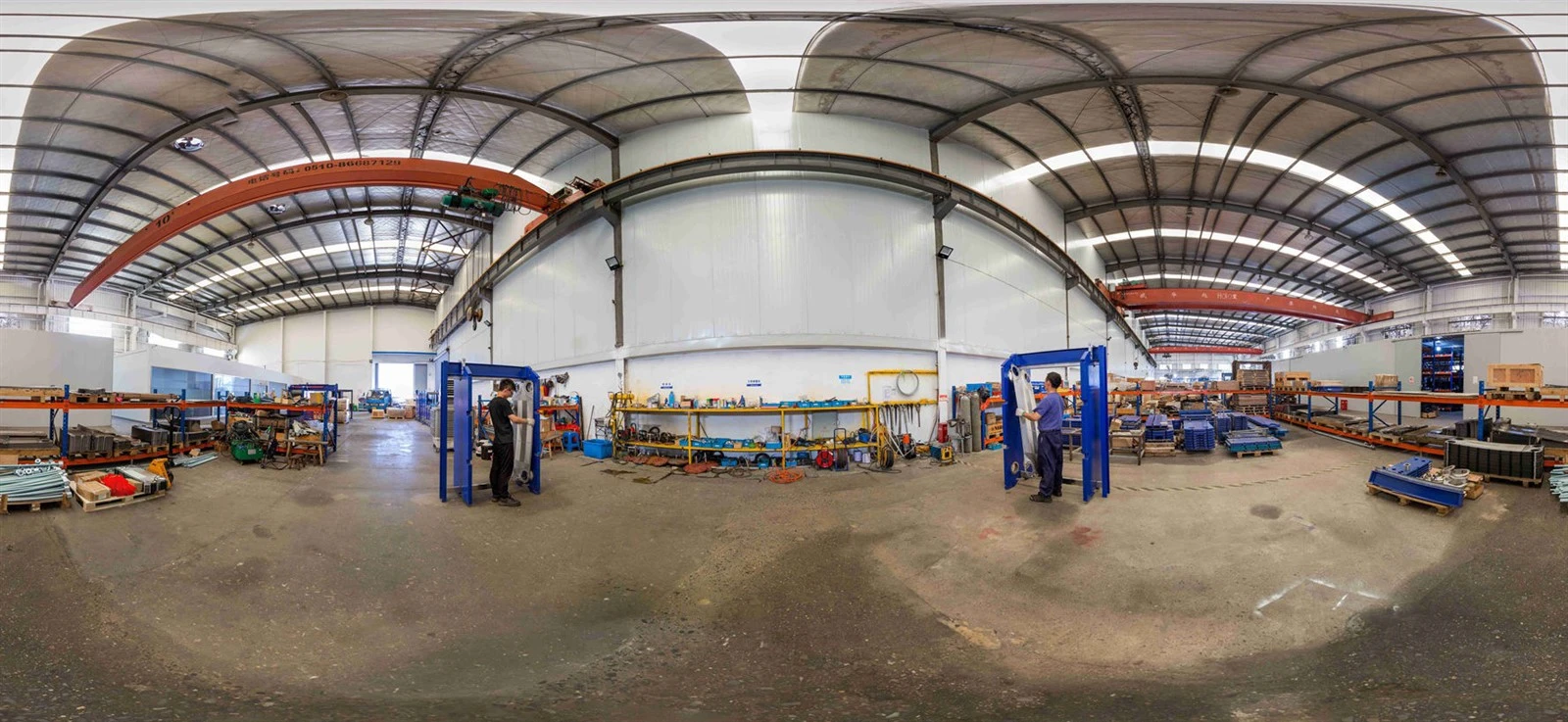
WTSML heat exchanger product and manufacturing reference. Replacement selection requires verification of plate geometry, port configuration and materials.
Why Accurate Replacement Plate Identification Matters
A gasketed plate heat exchanger contains a series of formed metal plates that create alternating flow channels between the heating and cooling fluids.
Although many heat exchanger plates have a similar external appearance, different models may use different corrugation angles, port layouts, channel geometries, plate thicknesses and gasket groove designs.
Using an incorrect replacement plate may affect sealing, flow distribution, plate-pack compression or thermal and hydraulic performance.
Six Essential Features for Identifying Replacement Plates
Equipment Model
Record the manufacturer, complete equipment model, nameplate information and any original plate drawings.
Plate Dimensions
Measure the overall plate length, width, port diameters and port-center distances.
Corrugation Pattern
Compare the chevron angle, pressed geometry, corrugation orientation and plate channel design.
Gasket Groove
Inspect the sealing groove, port-ring layout and gasket fixing features.
Plate Position
Identify whether the plate is a standard flow plate, turning plate or another special position.
Plate Material
Confirm the existing stainless steel, titanium or other alloy specification against the process fluids.
Which Measurements Are Needed for Replacement Plate Matching?
Providing accurate measurements and original component photographs makes it easier to distinguish plates with similar model names or overall dimensions.
| Measurement | Required Information | Purpose |
|---|---|---|
| Plate Length | Overall end-to-end dimension | Confirm plate envelope |
| Plate Width | Maximum plate width | Compare model geometry |
| Port Diameter | Corner opening dimensions | Verify connection openings |
| Port Centers | Horizontal and vertical distances | Confirm port locations |
| Plate Thickness | Verified metal thickness | Check original specification |
| Gasket Groove | Profile and retention geometry | Confirm sealing compatibility |
| Hanging Features | Top and bottom support features | Confirm frame alignment |
How Corrugation and Port Patterns Affect Plate Compatibility
Heat exchanger plates are pressed with corrugation patterns that influence the geometry of the flow channels and the contact between adjacent plates.
Two plates with matching overall dimensions may still use different pressing patterns. A suitable replacement must match the required corrugation, port configuration and gasket interface.
Three Critical Matching Areas
Overall dimensions, corrugation, hanging and alignment features.
Port positions, open or closed openings and flow arrangement.
Gasket groove, port-ring sealing and retention features.
Need Help Identifying Your Heat Exchanger Plates?
Send your existing exchanger information and plate photographs for technical matching and quotation review.
- Complete exchanger brand and model
- Plate dimensions and port measurements
- Photographs of both plate faces
- Gasket groove and corrugation details
- Material, quantity and destination
Can You Identify a Plate Without the Original Part Number?
In some cases, replacement plates can be identified even when their original markings are no longer readable. The identification process may use equipment nameplate data, available drawings, original samples, measured dimensions and component photographs.
However, photographs alone may not establish the exact pressing geometry or material specification. A physical sample or verified drawing may be needed for final matching.
Why Plate Position and Port Arrangement Matter
Not all plates in a gasketed heat exchanger necessarily perform the same function. Depending on the equipment, the plate pack may contain different flow, turning or end-position configurations.
Before disassembly, record the original plate sequence and orientation according to the equipment maintenance procedure.
Replacement plates must match their intended position within the original plate pack.
Choosing the Correct Replacement Plate Material
Heat exchanger plate materials may include various grades of stainless steel, titanium or other application-specific alloys.
Material selection depends on process fluid chemistry, temperature, chloride content, cleaning agents and operating conditions.
For equipment with corrosion or repeated plate failures, review the cause of damage before ordering the same material again.
When Should a Damaged Heat Exchanger Plate Be Replaced?
Cleaning can remove certain deposits, but it cannot restore a cracked, perforated or severely deformed plate.
Corrosion and Pinholes
Localized penetration may create leakage or process cross-contamination.
Cracks and Deformation
Mechanical damage can affect the plate's strength and fit.
Damaged Gasket Groove
Sealing surfaces may no longer support reliable gasket seating.
Damaged Port or Hanging Area
Distorted support or port features can affect correct alignment.
Replacement Plate RFQ Checklist
The following information helps suppliers review the exact replacement requirements before quotation.
- Exchanger brand and complete model
- Equipment nameplate photograph
- Original plate photographs, front and back
- Overall plate dimensions
- Port diameters and center distances
- Corrugation and gasket groove details
- Required plate position and orientation
- Existing material specification if known
- Operating fluid and cleaning conditions
- Required quantity and destination country
Frequently Asked Questions
The complete model provides an important reference, but some exchangers may have different plate variants. Dimensions, corrugation, port configuration and material should also be confirmed.
2. How can I identify a heat exchanger plate without markings?Provide equipment nameplate information, accurate measurements, photos of both plate faces and close-ups of the ports, gasket groove and corrugation. A physical sample may also be required.
3. Are heat exchanger plates with identical dimensions interchangeable?Not automatically. They may have different pressing patterns, port arrangements, gasket grooves, hanging features or material specifications.
4. Can I replace one damaged plate instead of the complete plate pack?Individual replacement may be possible when the exact component configuration is identified and the remaining equipment is suitable for continued service.
5. Should replacement gaskets be ordered together with plates?Evaluate the condition and reuse suitability of the existing gaskets. Replacement gaskets must match the plate groove, retention arrangement, materials and process conditions.
Related Products and Resources
This article provides general technical guidance for gasketed plate heat exchanger replacement. Actual compatibility, material selection, operating limits and maintenance procedures must be verified against the applicable equipment documentation.
