


No single gasket elastomer is best for all plate heat exchangers. EPDM, NBR, HNBR and FKM have different chemical and temperature characteristics, which also vary by compound formulation. Selection requires the actual process fluid, additives, temperatures, pressure, cleaning agents and plate-groove design-not only the equipment brand.
EPDM: when it may be considered
EPDM is often evaluated for compatible water-based duties, including certain heating and cooling services. Its suitability must be checked against the actual formulation and full process chemistry. Do not assume that all EPDM grades have the same allowable temperature, steam resistance, compression behavior or cleaning compatibility.
NBR and HNBR: understand the differences
NBR (nitrile rubber) can be useful for selected compatible oily or hydrocarbon-containing services; compatibility depends on the exact fluid. HNBR is a different elastomer family with its own performance profile. A drawing that says NBR does not automatically authorize an HNBR substitution. Check the supplier compound specifications and the real duty.
FKM: chemically demanding service
FKM is a family of fluoroelastomers; "Viton" is a brand name used for certain fluoroelastomer compounds. Some formulations suit particular chemical exposures, but FKM should not be treated as universally resistant. Verify concentration, mixed media, transients and cleaning chemicals instead of relying on a generic materials chart.
Retention and gasket geometry matter just as much
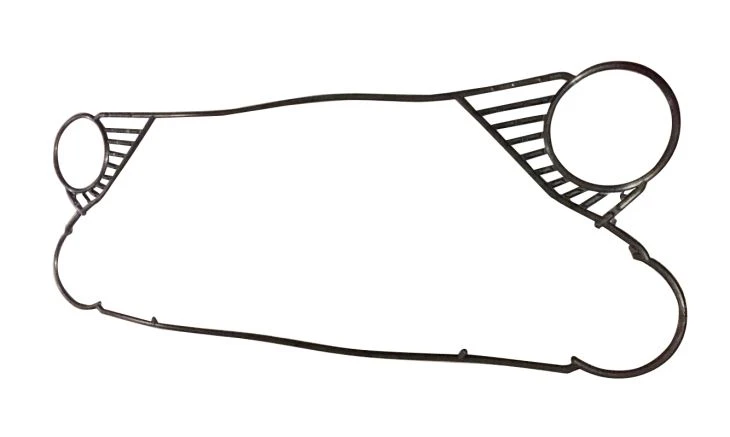
A chemically suitable gasket can still leak if its profile, port seals, clip features or bonded arrangement do not fit the original plate. Inspect the gasket groove and compare the complete outline. Glue-on and clip-on retention systems are not freely interchangeable.
Consider cleaning and shutdown conditions
Clean-in-place chemicals may differ from the production fluid. Hot cleaning solutions, flushing media, long shutdowns and rapid thermal cycling can all affect gasket selection. Include cleaning concentration and exposure duration in the enquiry.
Recommended RFQ details
Provide the exchanger model, plate and gasket photos, both process fluids and concentrations, normal and maximum temperatures, operating pressure, cleaning conditions, existing gasket grade if known and total gasket quantity. Ask for the exact compound grade and applicable documentation before confirming an order.
Frequently Asked Questions
Is high-temperature EPDM the same as standard EPDM?
No. Grade descriptions do not replace compound-specific service limits and documentation.
Can an NBR gasket be replaced with FKM without other changes?
Not automatically. Check fluid compatibility, gasket geometry, sealing performance and installation procedure.
How do I identify an unknown installed gasket?
Use the original bill of materials, model documentation and material markings where available; photographs alone cannot reliably identify a compound.
Send operating conditions, equipment model, photos and required quantity. WTSML can review the information needed for a quotation and component matching.
Request Technical Support → View Our Products →Related resources: Heat Exchanger Gaskets → Plate Gasket Replacement → Maintenance Repair →
Technical background: WTSML PHE Technical Knowledge archive. Specific material, performance and maintenance recommendations must be confirmed for the actual equipment.
