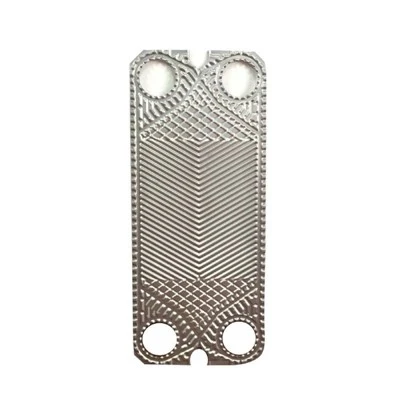
APV Stainless Steel Plates Matched to the Existing Pack
APV stainless steel plates are independently manufactured replacement components for identified gasketed plate heat exchanger configurations. Correct replacement requires the pressed pattern, port arrangement, gasket groove, orientation, stainless grade, thickness, and position to match the existing plate pack.
Plate Compatibility
- Overall plate dimensions and edge profile
- Port diameter and center spacing
- Corrugation pattern and plate orientation
- Gasket groove and retention geometry
- Hanging points, material, and thickness
Stainless Steel Suitability
- Fluids and concentrations on both circuits
- Chloride exposure where relevant
- Normal and cleaning temperatures
- Cleaning chemicals and contact time
- Previous pitting or corrosion history
Confirm the Stainless Grade Before Production
| Selection factor | Information to provide | Why it matters |
|---|---|---|
| Alloy grade | Existing material record, plate marking, purchasing specification, or analysis where necessary | Prevents substitution with an unconfirmed stainless steel grade. |
| Fluid chemistry | Media on both circuits, concentrations, additives, pH where available, and contaminants | Supports assessment of general and localized corrosion risks. |
| Chlorides | Chloride level where relevant, fluid temperature, and exposure pattern | Chlorides can increase the risk of localized pitting and crevice corrosion. |
| Temperature | Normal, maximum, cleaning, start-up, and shutdown temperatures | Temperature can accelerate corrosion and affect alloy suitability. |
| Cleaning | Chemical name, concentration, temperature, contact time, and frequency | Cleaning conditions may be more corrosive than normal operation. |
| Failure history | Photographs and locations of pitting, cracking, erosion, deposits, or perforation | Existing damage helps determine whether the previous material remains appropriate. |
When Another Plate Material May Need Evaluation
Compatible Stainless Duties
Stainless steel is commonly evaluated for HVAC, water, food-processing, and compatible industrial-fluid services after confirming alloy and chemistry.
Chloride-Rich Conditions
Where chloride or seawater exposure makes the selected stainless grade unsuitable, titanium may require evaluation against the full operating environment.
Demanding Chemicals
Selected nickel alloys may be considered for particular chemical duties after reviewing composition, concentration, temperature, and corrosion requirements.
The Stainless Plate Must Match More Than Its Outline
Corrugation Pattern
The pressed geometry forms the flow channels and contact points. Pattern, depth, and orientation must correspond with adjacent plates.
Port Configuration
Open and closed ports determine flow routing. Channel, turning, transition, start, and end plates may use different arrangements.
Gasket Groove
The field seal, port rings, diagonal sections, vents, clips, and tabs must accept the confirmed gasket profile.
How to Confirm an APV Stainless Steel Plate
Identify the Exchanger
Provide the APV model, nameplate photograph, serial information, design data, and maintenance records.
Record Plate Markings
Photograph all stamped, embossed, etched, or printed identification on the front and rear surfaces.
Measure the Plate
Include overall dimensions, port diameter, port centers, thickness record, edges, and hanging-point details.
Document the Pattern
Send full-face photographs showing corrugations, orientation, port openings, gasket groove, and plate handing.
Confirm the Material
Provide the recorded stainless grade, fluid chemistry, cleaning media, chloride exposure, and corrosion history.
Define the Order
Confirm plate types, quantities, gasket requirements, spare allowance, labeling, and destination.
Inspect Damaged Plates Before Reordering
Damage to Record
- Pitting or perforation locations
- Crevice corrosion near deposits or gasket areas
- Cracks at corrugations or contact points
- Erosion near ports or high-velocity areas
- Discoloration, scale, or unusual deposits
- Deformed edges, grooves, or hanging points
Operating Data to Compare
- Which circuit contacted the damaged surface
- Fluid composition and concentration changes
- Normal and peak operating temperatures
- Cleaning chemicals and cleaning frequency
- Periods of stagnation or intermittent operation
- Previous plate and gasket service history
Verify the Stainless Plates Before Rebuilding the Pack
Compare Geometry
Compare dimensions, ports, corrugations, gasket groove, hanging features, orientation, and thickness records.
Verify Material
Check the confirmed stainless specification and maintain material identification for mixed-material or multi-exchanger orders.
Match the Gaskets
Confirm gasket profile, elastomer, retention method, port sealing, and plate orientation before closing the exchanger.
Stainless Steel Plates Prepared for Maintenance Orders
Manufacturing and Inspection
WTSML operates a 3,500 m² facility with precision stamping, rubber molding, CNC machining, and final-inspection workshops. Production is managed under an ISO 9001-certified quality management system.
- Reference geometry and port arrangement checked before production
- Material and order identification maintained during processing
- Formed plates visually and dimensionally inspected before packing
Order and Packaging Options
Plates can be grouped by exchanger, plate type, orientation, material specification, gasket requirement, or purchase-order line.
- Separate labels for mixed plate types and materials
- Corresponding compatible gasket sets grouped with plates
- Confirmed private-label and export-packaging requirements
APV Stainless Steel Plate FAQ
How do I identify the correct APV stainless steel plate?
Provide the exchanger model, nameplate, plate markings, dimensions, port measurements, front and rear photographs, stainless grade, thickness record, gasket details, orientation, and plate-pack position.
Which stainless steel grade should be used?
The grade should be confirmed from equipment records and checked against both fluids, chlorides where relevant, temperatures, cleaners, contaminants, and corrosion history. Do not assume the grade from appearance alone.
Is stainless steel suitable for seawater or high-chloride water?
Not necessarily. Chloride level, temperature, exposure conditions, deposits, and cleaning chemistry require review. Titanium or another material may need evaluation where stainless steel is unsuitable.
Can one APV stainless steel plate be replaced individually?
Individual replacement may be possible when the exact plate type, corrugation, orientation, port layout, stainless grade, thickness, gasket configuration, and plate position are confirmed.
Can stainless plates be supplied with compatible gaskets?
Yes. Provide the required gasket material, retention method, process conditions, plate quantities, and whether the gaskets should be packed separately or fitted to the confirmed plates.
Are these original APV stainless steel plates?
No. They are independently manufactured replacement plates intended for confirmed compatible APV gasketed plate heat exchanger configurations. The APV name is used only to identify compatibility requirements.
Confirm the Stainless Grade and APV Plate Geometry
Send the exchanger model, plate markings, front and rear photos, dimensions, stainless grade, thickness, fluids, cleaning conditions, gasket requirement, quantity, and destination.
Hot Tags: apv stainless steel plates, China apv stainless steel plates manufacturers, suppliers, APV Compatible Plates, apv plate, APV Plate Heat Exchanger Plates, APV Replacement Plates, APV Stainless Steel Plates, heat exchanger plates