


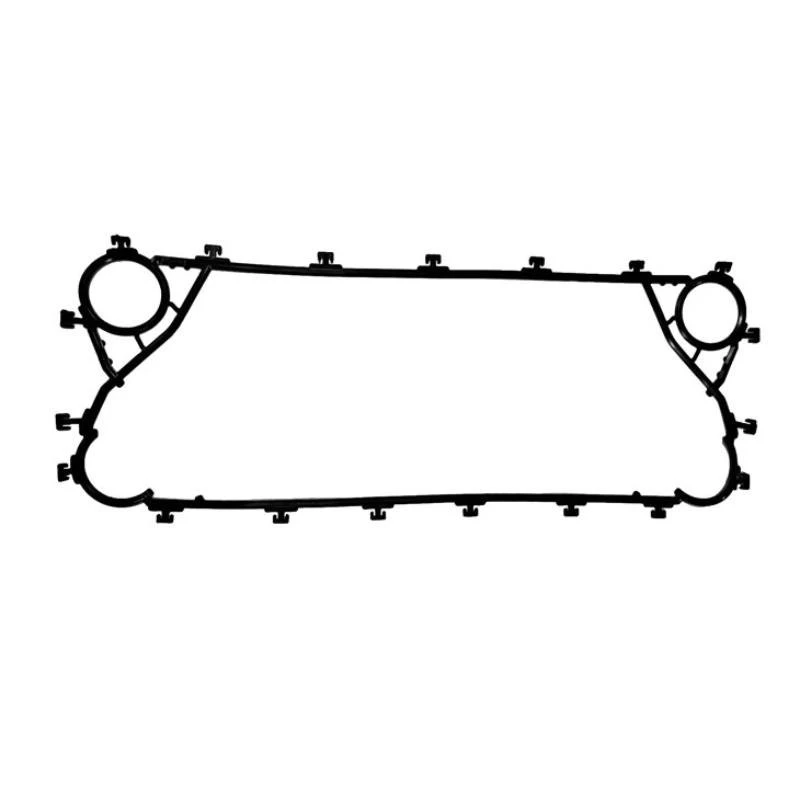
Cetetherm EPDM Gaskets
Energy Efficiency in District Heating Is Measured by Temperature Difference
In modern district heating systems, overall performance is not only defined by heat transfer capacity, but also by the temperature difference between supply and return lines.
A higher-than-expected return temperature often indicates reduced system efficiency and increased energy loss across the network.
WTSML manufactures OEM-compatible Cetetherm EPDM gaskets designed to help maintain stable hydraulic separation and support optimized thermal performance in low-temperature systems.
Why Return Temperature Becomes a Key Performance Indicator
Energy operators monitor return temperature because it directly reflects system efficiency.
When return temperature rises above design values, it may indicate:
- Reduced heat transfer efficiency
- Flow imbalance inside the plate pack
- Partial sealing degradation
- Micro-leakage between channels
- Reduced thermal gradient utilization
Even small deviations can significantly impact network-wide energy performance.

Manufacturing Focused on Hydraulic Stability
WTSML ensures consistent performance through:
- Precision mould design
- Stable EPDM compound formulation
- Dimensional accuracy control
- Batch consistency management
- Groove-fit verification
- Long-term production stability
Engineering Support for System Efficiency
WTSML supports energy operators and EPC contractors with:
- Return temperature diagnosis support
- Flow distribution evaluation
- Plate heat exchanger efficiency analysis
- Gasket condition assessment
- System optimization recommendations
Sealing Performance Influences Flow Separation
In a plate heat exchanger, each gasket plays a critical role in separating hot and cold channels.
If sealing performance is not fully stable, it may lead to:
- Localized bypass flow
- Reduced effective heat transfer area
- Uneven flow distribution
- Increased mixing risk at micro-level
- Decreased ΔT efficiency
These effects accumulate across the system and impact overall energy performance.
Low-Temperature Operation Requires Higher Stability
Modern district heating systems are increasingly designed for low-temperature operation to improve energy efficiency.
In these systems:
- Temperature differences are smaller
- Flow sensitivity is higher
- Efficiency losses are more visible
- System balance is more critical
Therefore, sealing consistency becomes more important than ever.
Seasonal Variation Amplifies Efficiency Loss
During winter peak load and transitional seasons, system behavior becomes more unstable:
- Rapid load changes
- Variable flow demand
- Temperature fluctuations
- Control system adjustments
These conditions can expose weak points in sealing performance and flow stability.
Supporting the Transition to High-Efficiency Energy Systems
As district heating systems move toward lower operating temperatures and higher efficiency targets, component stability becomes increasingly important.
If you are sourcing Cetetherm EPDM gaskets, WTSML provides OEM-compatible solutions designed to support hydraulic stability and improved energy efficiency in modern heating networks.
Hot Tags: cetetherm epdm gaskets, China cetetherm epdm gaskets manufacturers, suppliers, Cetetherm Compatible Gaskets, Cetetherm EPDM Gaskets, Cetetherm NBR Gaskets, Cetetherm Plate Heat Exchanger Gaskets, Cetetherm Replacement Gaskets, Cetetherm Viton Gaskets

