


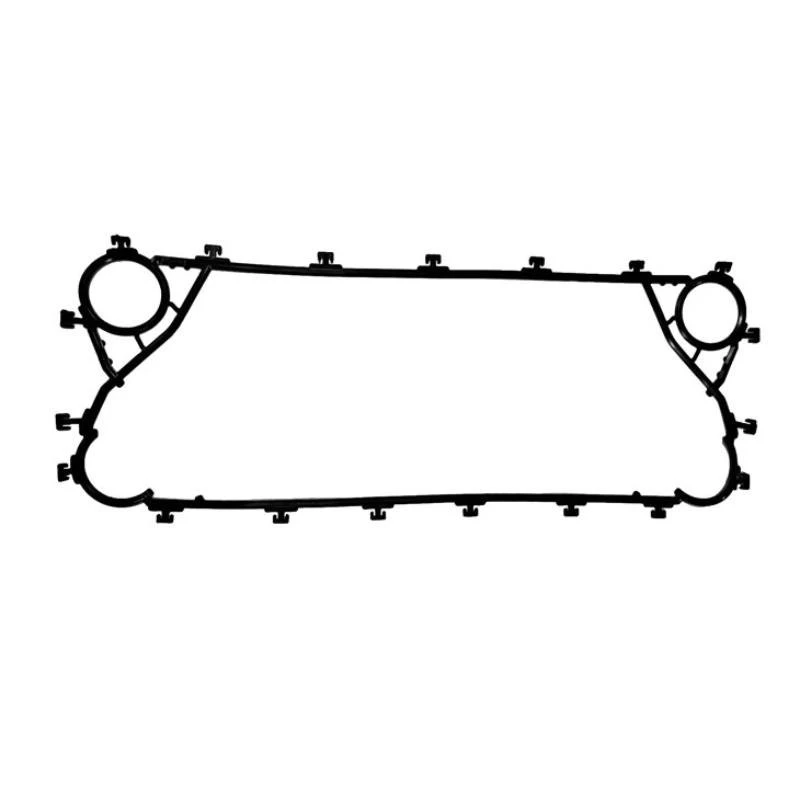
Hisaka Viton Gaskets
High-Pressure Chemical Service Creates Unique Mechanical Stress
In chemical processing applications, Hisaka plate heat exchangers are often exposed to a combination of elevated pressure and aggressive chemical media.
While Viton (FKM) is widely selected for its chemical resistance, long-term sealing performance is not determined by material compatibility alone. Mechanical stress at the gasket groove plays a critical role in system reliability.
WTSML manufactures OEM-compatible Hisaka Viton gaskets designed to improve resistance against seal extrusion and groove stress deformation under demanding operating conditions.
Seal Extrusion Is a Mechanical Failure, Not a Chemical One
In many high-pressure chemical systems, gasket damage appears at the edges rather than the sealing surface.
This is typically caused by:
- Excessive internal pressure
- Insufficient groove retention force
- Localized stress concentration
- Repeated pressure cycling
- Thermal expansion mismatch between plates and gasket
These factors can cause the gasket to slowly deform and extrude from its seating area.

Typical Applications
OEM-compatible Hisaka Viton gaskets manufactured by WTSML are widely used in:
- Chemical reactors cooling systems
- Solvent recovery units
- Fine chemical production lines
- Pharmaceutical intermediate processing
- High-pressure industrial heat exchange systems
- Corrosive media circulation systems
Manufacturing Focused on Structural Stability
WTSML improves long-term sealing reliability through:
- Precision mould engineering
- High-performance FKM compound selection
- Dimensional groove-fit verification
- Controlled curing process
- Batch consistency control
- Final inspection under load-relevant criteria
Why Viton Alone Is Not Enough in High-Pressure Systems
Even high-performance FKM materials have physical limits when exposed to combined chemical and mechanical loading.
Failure modes may include:
- Edge nibbling or cutting
- Permanent groove deformation
- Progressive loss of sealing contact
- Micro-extrusion under cyclic pressure
- Localized hardening in stressed zones
This means chemical resistance alone does not guarantee long-term sealing stability.
Groove Design and Stress Distribution Matter
The geometry of the plate groove directly affects gasket lifespan.
Key influencing factors include:
- Groove depth tolerance
- Edge radius sharpness
- Compression ratio control
- Plate alignment accuracy
- Pressure distribution across sealing line
Small variations in these parameters can significantly change sealing behavior under high pressure.
Pressure Cycling Accelerates Mechanical Degradation
Chemical processes often involve:
- Reactor start-up and shutdown cycles
- Batch-based pressure changes
- Flow switching between vessels
- Temperature and pressure fluctuations
These repeated cycles can gradually weaken the gasket's resistance to extrusion.
Engineering Support for High-Pressure Failure Cases
When gasket damage appears at edges or only in specific zones, the issue is often system-related rather than material-related.
WTSML provides engineering support for:
- Extrusion failure analysis
- Groove compatibility review
- Pressure condition evaluation
- Plate condition inspection guidance
- Material vs mechanical failure differentiation
Improve Reliability in Chemical Processing Systems
Reliable sealing in high-pressure chemical environments requires more than chemical resistance-it requires control of mechanical stress within the gasket groove.
If you are sourcing Hisaka Viton gaskets, WTSML can provide OEM-compatible solutions engineered to reduce extrusion risk and support stable long-term operation in demanding chemical applications.
Hot Tags: hisaka viton gaskets, China hisaka viton gaskets manufacturers, suppliers, Hisaka Compatible Gaskets, Hisaka EPDM Gaskets, hisaka gaskets, Hisaka NBR Gaskets, Hisaka Replacement Gaskets, Hisaka Viton Gaskets

