


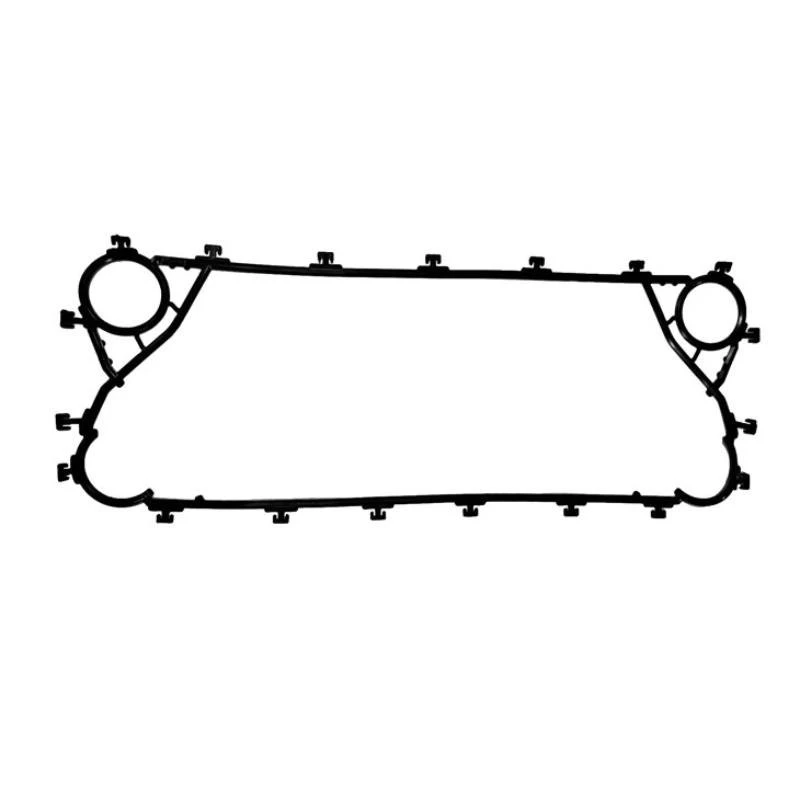
GEA Plate Heat Exchanger Gaskets
Most gasket replacements begin with the same problem: a heat exchanger that suddenly starts leaking after months or even years of stable operation.
In many cases, the plate itself is still in good condition. The real cause is often a gasket that has gradually lost its sealing ability due to temperature, pressure, chemical exposure or natural aging.
WTSL manufactures replacement GEA plate heat exchanger gaskets that help restore sealing performance while avoiding the cost of replacing the complete heat exchanger.
Instead of simply supplying spare parts, we help customers understand why gasket failure occurs and how to prevent the same issue from happening again.

The Leak Is Only the Result - Not the Root Cause
Many users assume that replacing the gasket alone will permanently solve leakage.
However, repeated failures usually indicate that another factor has been overlooked.
Typical causes include:
- Incorrect gasket material
- Uneven plate tightening
- Excessive operating temperature
- Chemical attack
- Aging caused by long shutdown periods
- Plate deformation
- Incorrect gasket profile
Identifying the actual cause before ordering replacement parts often saves both time and maintenance costs.
Need Technical Assistance?
If your GEA plate heat exchanger has developed leakage, do not assume the gasket material is the only issue.
Send us photos of the plate, gasket or equipment nameplate together with your operating conditions.
Our engineers will help identify the likely cause of failure and recommend a compatible replacement gasket that matches your maintenance requirements.
Five Common Gasket Failure Modes
1. Rubber Hardening
Continuous exposure to heat gradually reduces gasket elasticity.
A hardened gasket can no longer maintain sufficient sealing pressure between adjacent plates.
2. Swelling
Certain oils and aggressive chemicals cause rubber to expand beyond its original dimensions.
This may create installation difficulties or uneven compression.
3. Cracking
Repeated thermal cycling eventually produces surface cracks, especially around ports and corners where stress is concentrated.
4. Compression Set
After years under compression, some elastomers fail to recover their original thickness.
Reduced recovery leads directly to sealing failure.
5. Mechanical Damage
Improper removal tools or careless maintenance frequently damage locking clips and sealing edges.
Even small tears may develop into significant leaks once pressure increases.
How WTSL Reduces Failure Risks
Every replacement gasket is manufactured with a focus on installation consistency rather than simple dimensional copying.
Our engineering process emphasizes:
- Stable rubber compound formulation
- Accurate molding dimensions
- Consistent locking structure
- Uniform sealing profile
- Batch traceability
- Export quality inspection
These measures help improve compatibility with corresponding GEA plate heat exchanger models.
Hot Tags: gea plate heat exchanger gaskets, China gea plate heat exchanger gaskets manufacturers, suppliers, GEA Compatible Gaskets, GEA EPDM Gaskets, gea gaskets, GEA Plate Heat Exchanger Gaskets, GEA Replacement Gaskets, GEA Viton Gaskets