


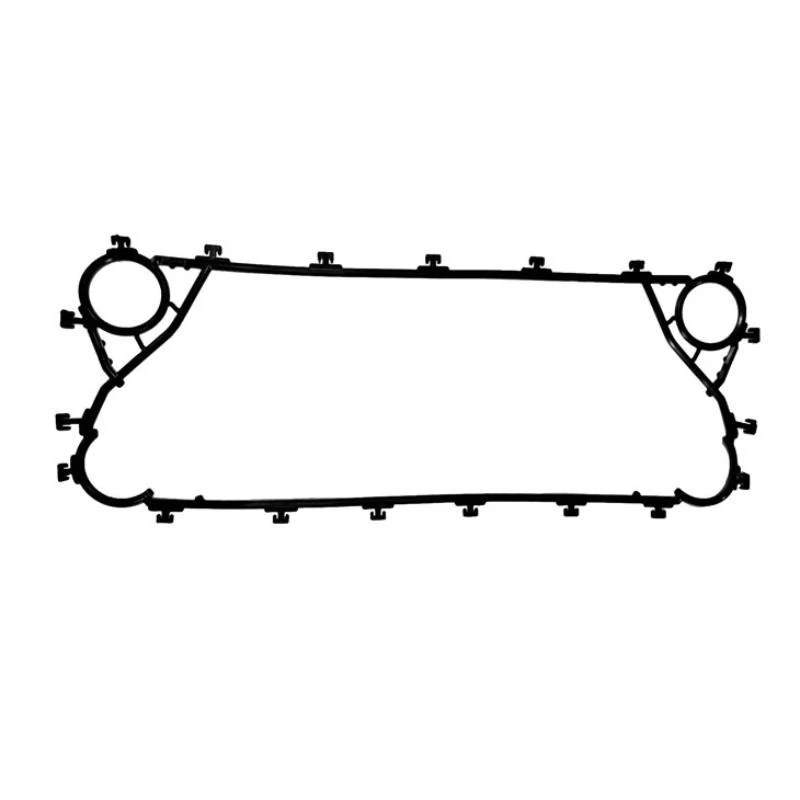
Tranter Plate Heat Exchanger Gaskets
Correct Installation Starts Before Assembly
Many sealing problems are blamed on the gasket itself, but the root cause often appears before the plate pack is even tightened.
A replacement gasket must match the plate profile precisely so it sits naturally in the gasket groove without stretching, twisting or lifting. If the gasket cannot seat correctly before assembly, achieving a reliable seal after tightening becomes much more difficult.
WTSL manufactures OEM-compatible replacement gaskets for Tranter plate heat exchangers with dimensional accuracy designed to support efficient installation and dependable sealing.
Why Some New Gaskets Leak Immediately
A newly installed gasket should not leak simply because it is new.
Immediate leakage is often linked to one or more of the following:
- Incorrect gasket profile for the plate
- Incomplete seating inside the groove
- Uneven tightening across the plate pack
- Damaged or contaminated sealing surfaces
- Incorrect closing dimension during reassembly
Before replacing the gasket again, it is worth checking whether the installation process or gasket identification is the actual source of the problem.

Engineering Support During Replacement Projects
Maintenance projects often involve more than supplying replacement parts.
Our engineering team can assist with:
- Gasket profile verification
- Material recommendations
- Compatibility review
- Sample identification
- Replacement planning
- Technical consultation before ordering
This support helps reduce installation uncertainty and minimise costly maintenance delays.
Compression Accuracy Matters
Plate heat exchangers rely on controlled compression to create an effective seal.
If compression is insufficient, leakage may occur around ports or sealing channels. Excessive compression, on the other hand, can shorten gasket life by placing unnecessary stress on the elastomer.
During maintenance, technicians should verify:
- Plate pack closing dimension
- Uniform tightening sequence
- Plate alignment
- Frame condition
- Bolt condition
These checks help ensure that the gasket performs as intended once the unit returns to service.
Small Installation Details That Influence Sealing
Reliable installation often depends on details that are easy to overlook.
Examples include:
- Removing old adhesive residue where applicable
- Cleaning gasket grooves before fitting
- Confirming correct plate orientation
- Inspecting locking tabs or clips
- Avoiding unnecessary stretching during installation
Paying attention to these steps can reduce rework and improve sealing consistency.
Selecting the Correct Gasket Before Installation
Successful installation starts with accurate identification.
Useful information includes:
- Heat exchanger model
- Plate model
- Existing gasket sample
- Plate photographs
- Operating medium
- Existing gasket material
Where documentation is incomplete, WTSL can assist by reviewing photos or physical samples to confirm the correct replacement profile before production.
Improve Installation Success Before Your Next Shutdown
A gasket that fits correctly from the start can save valuable maintenance time and reduce the likelihood of repeated disassembly.
If you are sourcing Tranter plate heat exchanger gaskets, send WTSL your equipment model, gasket sample or plate photographs. We will help confirm the correct profile and recommend a replacement solution designed for accurate installation and reliable long-term sealing.
Hot Tags: tranter plate heat exchanger gaskets, China tranter plate heat exchanger gaskets manufacturers, suppliers, Tranter Compatible Gaskets, Tranter EPDM Gaskets, tranter gaskets, Tranter NBR Gaskets, Tranter Plate Heat Exchanger Gaskets, Tranter Viton Gaskets