


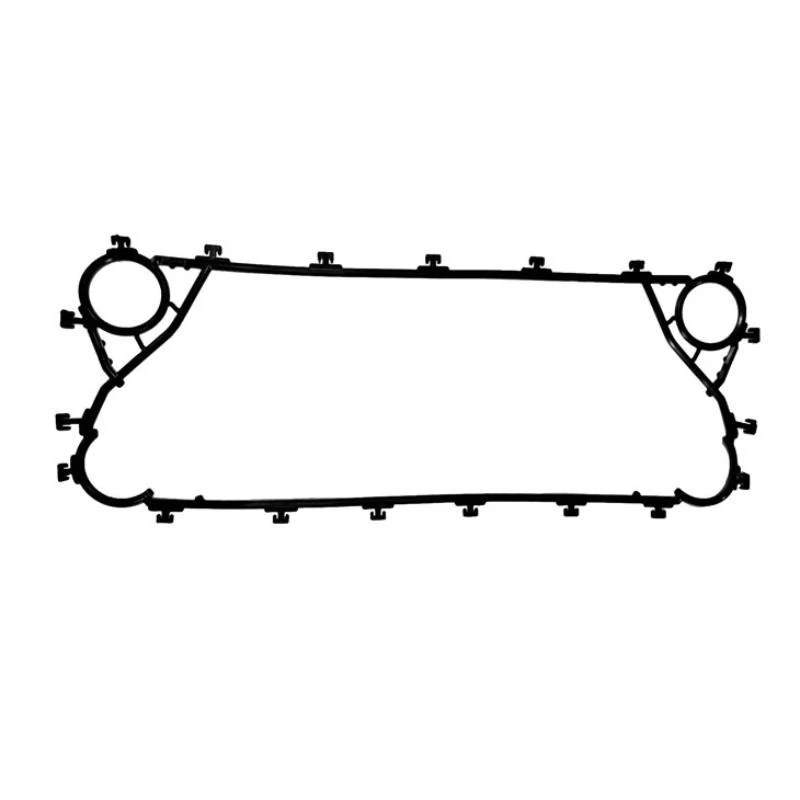
Alfa Laval Viton Gaskets for Demanding Process Conditions
Alfa Laval Viton gaskets are independently manufactured FKM replacement seals matched to confirmed Alfa Laval gasketed plate heat exchanger models. FKM is considered for selected chemicals, hydrocarbons, oils and elevated-temperature duties where the process conditions exceed the practical suitability of standard elastomers.
Reliable sealing depends on more than material choice. The molded profile must fit the plate groove and retain its sealing contact under compression, pressure and thermal cycling. WTSML therefore confirms the plate model, gasket geometry and complete exposure conditions before production.
Provide for FKM Review
- Alfa Laval exchanger model
- Plate code and gasket photos
- Complete chemical names
- Concentration and additives
- Continuous and peak temperatures
- Cleaning media and exposure time
Where FKM Gaskets May Be Considered
The application name alone cannot confirm compatibility. Submit each process and cleaning fluid with concentration, temperature and exposure duration.
Chemical Processing
Selected chemical heating, cooling and heat-recovery duties after full compatibility review.
Hydrocarbon Service
Selected hydrocarbon processes where the fluid and additives suit the proposed FKM grade.
High-Temperature Oils
Compatible process- and lubricating-oil circuits operating beyond standard compound conditions.
Process Heat Recovery
Heat-recovery duties involving demanding fluids on one or both sides of the plate pack.
Repeated Thermal Cycling
Selected services with recurring temperature changes within confirmed compound limits.
Material Reassessment
Compound review after the old gasket shows swelling, hardening or chemical attack.
Alfa Laval Viton Gasket Supply Specification
| Specification | Supply or Confirmation Basis | Buyer Information Required |
|---|---|---|
| Product type | OEM-compatible FKM replacement gasket for Alfa Laval gasketed plate heat exchangers | Complete exchanger model |
| Gasket profile | Matched to plate groove, sealing ribs and port geometry | Plate code, photographs, drawing or sample |
| Material | FKM compound selected for reviewed operating conditions | Chemical names, concentrations, additives and exposure time |
| Attachment | Matched to the corresponding plate and gasket-retention design | Images of clips, tabs or bonded sections |
| Plate position | Start, channel and end-plate arrangements where applicable | Plate sequence and total plate count |
| Temperature conditions | Confirmed for the proposed FKM formulation and process media | Continuous, peak, startup and cleaning temperatures |
| Inspection | Appearance, profile consistency and order identification checks | Any agreed project-specific inspection requirements |
| Packaging | Standard export packing or agreed custom labels and packaging | Unit number, project code or private-label format |
A single universal temperature or chemical-resistance value is not applied to every FKM formulation. Final approval requires the complete operating cycle.
FKM Is Not Suitable for Every Fluid
Typical FKM Review Contexts
FKM is commonly evaluated for compatible duties involving:
- Selected oils and hydrocarbon fluids
- Selected acids and process chemicals
- Elevated-temperature process media
- Chemical heat-recovery applications
- Conditions exceeding standard elastomer capability
Conditions Requiring Careful Review
The specific FKM formulation must be checked for:
- Steam or prolonged hot-water exposure
- Amines and alkaline media
- Polar solvents and ketones
- Mixed or unidentified chemicals
- High-temperature cleaning solutions
Check both heat exchanger circuits and the cleaning process. The most aggressive gasket exposure may occur during cleaning rather than normal operation.
Data Needed to Match the Alfa Laval Plate
- Complete heat exchanger nameplate photograph
- Alfa Laval model and plate identification code
- Front and rear photographs of an intact gasket
- Close images of port rings and attachment points
- Plate dimensions when identification is incomplete
- Plate count and required gasket quantity
- Existing gasket arrangement and attachment method
Why Profile Accuracy Matters
The gasket develops sealing contact only after it is compressed within the plate groove. A mismatched profile can create uneven compression, displaced port seals or insufficient contact stress.
- Use the plate groove as the geometric reference.
- Do not stretch a gasket to force it into position.
- Check every port ring before plate assembly.
- Confirm start and end arrangements separately.
Control Compression, Pressure and Thermal Cycling
Factors Affecting the Seal
- Correct gasket profile and plate sequence
- Suitable FKM formulation for every fluid
- Uniform plate-pack compression
- Controlled pressure changes during startup
- Temperature changes within confirmed conditions
Before Returning to Service
- Inspect plate grooves for damage and residue.
- Confirm that each gasket sits flat in its groove.
- Follow the specified tightening sequence and dimension.
- Check for displaced gaskets around every port.
- Commission the system without uncontrolled pressure shock.
From Model Identification to FKM Gasket Packing
Identify the Plate
Model, plate code, photographs, dimensions and samples are reviewed.
Review FKM
Chemicals, concentrations, temperatures and cleaning cycles are assessed.
Confirm the Order
Profile, compound, arrangement, quantity and labels are agreed.
Inspect and Pack
Finished gaskets are checked and separated by the confirmed order details.
Alfa Laval Viton Gasket FAQ
What applications are Alfa Laval Viton gaskets considered for?
FKM is evaluated for selected chemical, hydrocarbon, oil and elevated-temperature duties after the exact process and cleaning conditions are reviewed.
Are these genuine Alfa Laval or Chemours Viton gaskets?
No. They are independently manufactured, OEM-compatible FKM replacement gaskets. Any specific branded-compound requirement must be stated and confirmed separately.
Is FKM compatible with every process chemical?
No. FKM formulations have specific limitations. Provide the chemical name, concentration, temperature and exposure duration before selecting the compound.
What temperature can an Alfa Laval FKM gasket withstand?
The allowable temperature depends on the FKM formulation, process fluid and exposure cycle. Submit continuous, peak and cleaning temperatures for confirmation.
Is FKM always better than NBR or EPDM?
No. Each elastomer has different strengths and limitations. The correct choice is the material compatible with the actual fluids, temperatures and cleaning process.
Can an older Alfa Laval gasket be matched from a sample?
Sample-based assessment may be possible. An intact gasket, its corresponding plate, equipment nameplate and plate dimensions provide the strongest identification basis.
Can complete Alfa Laval FKM gasket sets be supplied?
Yes, subject to profile availability and application review. Provide the exchanger model, plate count and arrangement so all required gasket configurations can be confirmed.
Alfa Laval is referenced solely to identify equipment compatibility. WTSML FKM gaskets are independently manufactured and are not represented as original Alfa Laval products. Viton® is a registered trademark of The Chemours Company.
Confirm the Alfa Laval Model and FKM Compatibility
Send the model, plate code, gasket photographs, complete chemical information, temperatures, plate count, quantity and destination.
Hot Tags: alfa laval viton gaskets, China alfa laval viton gaskets manufacturers, suppliers, Alfa Laval Compatible Gaskets, Alfa Laval EPDM Gaskets, alfa laval gaskets, Alfa Laval NBR Gaskets, Alfa Laval Plate Heat Exchanger Gaskets, Alfa Laval Viton Gaskets


